Eastern Wolf

- Origin
- Canada
- Type
- Wild canid
- Size
- Large
- Weight
- 24–30 kg (53–67 lb)
- Colors
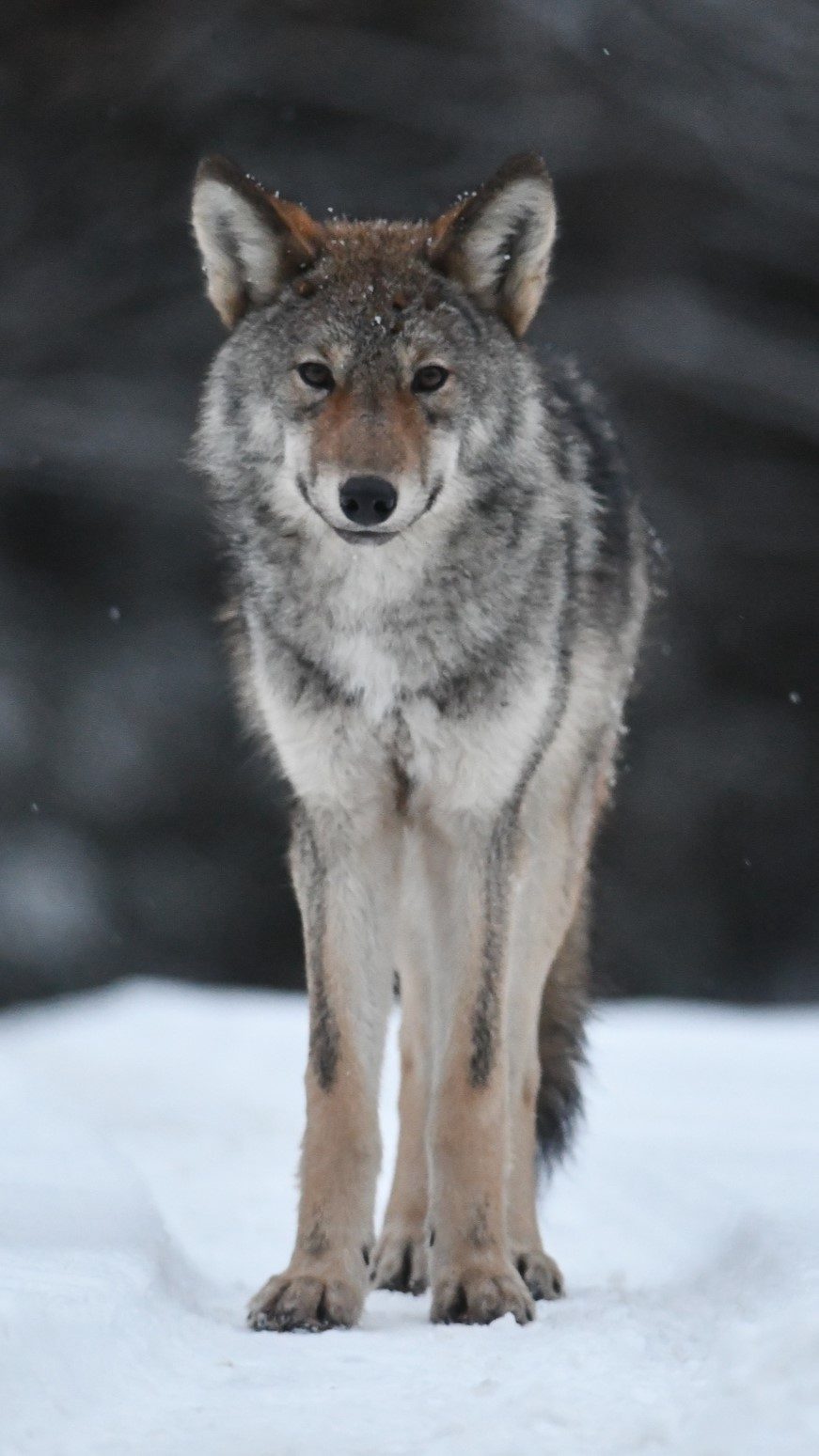
- Grizzled grayish-brown mixed with cinnamon, with rufous or cream flanks and chest
- Life span
- 3–4 years on average in the wild, up to 15
- Status
- Threatened in Canada
The eastern wolf (Canis lycaon or Canis lupus lycaon) is a wild canid of the Great Lakes region and southeastern Canada. In size and build it falls between the gray wolf and the coyote. Scientists disagree on what it is: a subspecies of the gray wolf, a close relative of the red wolf, a species of its own, or the product of old and recent mixing between gray wolves and coyotes. Whatever the answer, it is regarded as distinct and worth conserving.
Range and habitat
The eastern wolf once ranged across southern Quebec, most of Ontario, the Great Lakes states, New York State and New England. Two forms are recognised today. The larger Great Lakes wolf lives in the northern halves of Minnesota and Wisconsin, the Upper Peninsula of Michigan, southeastern Manitoba and northern Ontario. The smaller Algonquin wolf lives in central and eastern Ontario and in southwestern Quebec north of the St. Lawrence River, and is most concentrated in Algonquin Provincial Park and nearby protected areas. Where the two meet, they mix.
Appearance
The coat is typically a grizzled grayish-brown mixed with cinnamon. The flanks and chest are reddish or cream, and the nape, shoulders and tail are a blend of black and gray. Black individuals are rare, unlike among gray wolves. Females average 23.9 kg (53 lb) and males 30.3 kg (67 lb). This middling size is thought to be an adaptation to hunting medium-sized prey.
Behavior
Eastern wolves hunt mainly white-tailed deer and beavers, and occasionally moose. Packs in Voyageurs National Park also eat blueberries through much of July and August. Packs keep clear of one another, and only lone wolves sometimes enter another pack’s territory, which averages 118 to 185 square km (46 to 71 square miles). Young wolves may leave the pack as early as 15 weeks of age, much sooner than gray wolves. The average lifespan is three to four years, with a maximum of 15.
Classification
The name Canis lycaon was published in 1775 by the German naturalist Johann Schreber and was the first given to any North American member of the genus. The wolf was later reclassified as a subspecies of the gray wolf, and it was listed that way in the 2005 edition of Mammal Species of the World. In 2021 the American Society of Mammalogists treated it as a species in its own right.
Genetic studies have pointed in different directions. Some find that the eastern wolf split from a common ancestor with the coyote long ago and is close to the red wolf. Others find it to be a gray wolf with coyote ancestry: studies using whole genomes, begun in 2016, put that ancestry at about 25% in the Great Lakes wolf and 40% in the Algonquin wolf.
Conservation
Before Europeans arrived there may have been 64,500 to 90,200 eastern wolves. Settlers in New England campaigned against them from the first years of the colonies, with bounties and wolf pits, and by the early 19th century few remained in southern New Hampshire and Vermont.
In Algonquin Provincial Park an average of 49 wolves a year were killed between 1909 and 1958. The Ontario government protected them in 1959, when 500 to 1,000 remained in and around the park. A research cull in 1964 and 1965 removed 36% of the park’s wolves just as coyotes were moving in, and interbreeding with coyotes increased. Protection was extended to the land around the park by 2001, and by 2012 the genetic makeup of the park’s wolves had largely returned to what it had been in the mid-1960s.
Canada lists the eastern wolf under its Species at Risk Act, and in 2015 its wildlife committee classed the wolves of central and eastern Ontario and southwestern Quebec as threatened. The main danger is hunting and trapping outside protected areas, which leaves wolves short of mates and leads them to breed with eastern coyotes.
Facts on this page were checked against Wikipedia and may have changed since.