Fennec Fox

- Origin
- North Africa
- Type
- Wild canid
- Size
- Toy
- Weight
- 1–1.9 kg (2.2–4.2 lb)
- Coat
- Dense and soft, with furred paw pads
- Colors
- Sand-colored, with a black-tipped tail
- Life span
- About 10 years in the wild; up to 14 in captivity
- Status
- Least Concern (IUCN)
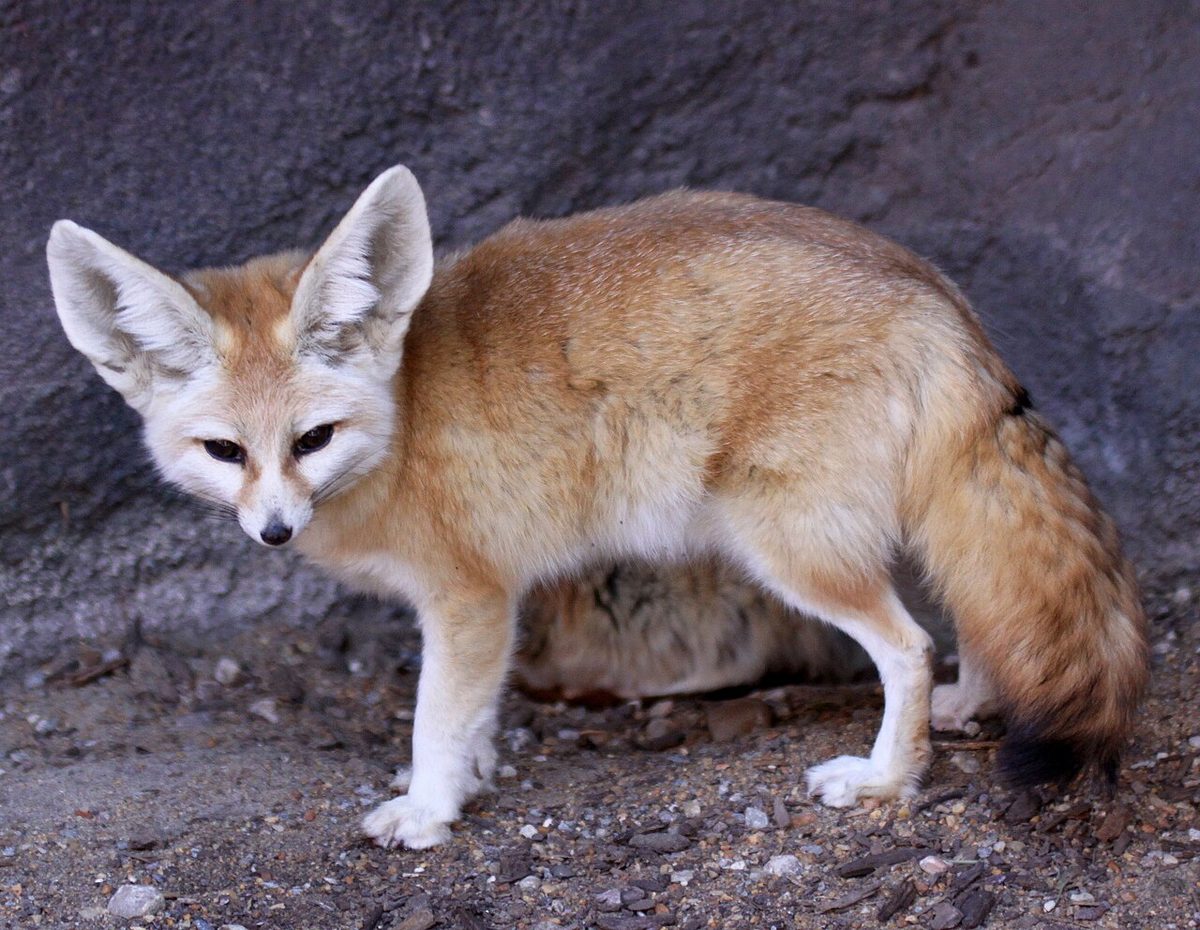
The fennec fox (Vulpes zerda) is a small wild fox of the deserts of North Africa. It is the smallest member of the dog family, and it is known for its very large ears, which help it lose heat and hear prey under the sand. Its coat, ears and kidneys are all adapted to a life with high temperatures and little water.
Range and habitat
The fennec lives throughout the Sahara, from Morocco and Mauritania to northern Sudan and across Egypt to the Sinai Peninsula. It keeps to small dunes and wide, treeless stretches of sand with sparse grasses, sedges and low shrubs.
Appearance
The fur is sand-colored; it reflects sunlight by day and holds warmth at night. The nose is black, the tapering tail has a black tip, and dark streaks run from the inner corner of each large, dark eye down the slender muzzle. The ears, the largest for body size of any canid, carry reddish stripes on the back and are densely haired inside. Thick fur covers the pads of the paws, which helps on hot sand.
Females measure 34.5–39.5 cm (13.6–15.6 in) from head to rump, with a tail of 23–25 cm (9.1–9.8 in) and ears of 9–9.5 cm, and weigh 1–1.9 kg (2.2–4.2 lb). Males are slightly larger, with ears of about 10 cm, and weigh at least 1.3 kg (2.9 lb).
Behavior
Fennecs are active mainly at night, which keeps them out of the worst heat and saves water. They dig dens in the sand. In firm soil a den can cover 120 square meters and have up to 15 entrances, and families sometimes link their dens; in loose sand a den may be a single chamber.
The fennec is an omnivore. It hunts alone, digging for small rodents, lizards and insects, and also eats small birds and their eggs, fruit, leaves, roots and tubers. It gets much of its water from its food but drinks when water is at hand.
Fennecs mate for life. They breed once a year, and after a pregnancy of about 50 to 52 days the female gives birth, between March and June, to one to four pups. Both parents care for the young, and older pups stay with the family after a new litter arrives. Eagle-owls take pups, and jackals and striped hyenas are reported to prey on fennecs as well.
Conservation
The species was classed as Least Concern on the IUCN Red List in 2015, and it is listed in CITES Appendix II. It is legally protected in Morocco and Western Sahara, Algeria, Tunisia and Egypt. In North Africa fennecs are commonly trapped for show or for sale to tourists, and new settlements in southern Morocco have pushed them out of some areas. They are also bred commercially as exotic pets. Captive animals are susceptible to canine distemper and often develop repetitive pacing in small enclosures.
Facts on this page were checked against Wikipedia and may have changed since.