Canadian Eskimo Dog
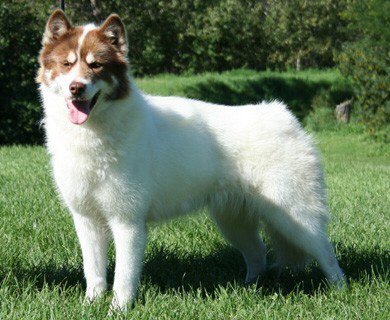

- Origin
- Canada
- Type
- Sled dog
- Size
- Large
- Height
- 50–70 cm (20–28 in)
- Weight
- 18–40 kg (40–88 lb)
- Coat
- Very thick and dense, with a soft undercoat, stiff guard hairs and a mane at the neck
- Colors
- Any color, with or without markings
- Status
- Recognised by the FCI and the Canadian Kennel Club; threatened with extinction
The Canadian Eskimo Dog, also called the Canadian Inuit Dog or qimmiq (the Inuit word for dog), is a working dog of the Arctic. The Inuit used it to pull sleds and to hunt. Genetic studies treat it as the same breed as the Greenland Dog, since the two have not yet grown apart enough to count as separate breeds.
History
The breed descends from dogs that came from Siberia with the Thule people around AD 1000, who depended on them for transport. A 2015 study found that the Inuit dogs of Canada and Greenland share a heritage that predates colonization and are distinct from Siberian Huskies and Alaskan Malamutes. Genetic testing has shown no recent wolf ancestry.
The Inuit used the dogs to haul people and supplies, to find seal holes and sometimes to hunt polar bears. Polar expeditions of the 19th and early 20th centuries also sought them out, and about 20,000 lived in the Canadian Arctic in the 1920s. By the 1960s working teams were becoming rare, as snowmobiles took over and canine diseases spread. Between 1950 and 1970 the Royal Canadian Mounted Police also killed Inuit sled dogs, with estimates ranging from 1,200 to 20,000. The reasons remain disputed, and in 2019 the Canadian government apologized to the Inuit of Baffin Island.
The American Kennel Club dropped the breed from its registry in 1959 because so few were left. In 1972 the Eskimo Dog Research Foundation began buying dogs from remote Inuit camps, where about 200 remained, and breeding from them. A 2008 estimate put the purebred population at only 300.
Today the dogs pull sleds for tourists and are used in polar bear hunts, which in the Northwest Territories and Nunavut must by law be carried out by dog team or on foot. Nunavut adopted the Canadian Inuit Dog as its official animal in 2000.
Appearance
This is a powerfully built, athletic dog, made for hard work more than speed. Like other spitz types it has upright triangular ears and a heavily feathered tail carried over the back. Males stand 58–70 cm and weigh 30–40 kg. Females are finer boned, at 50–60 cm and 18–30 kg.
The coat is very thick, with a soft undercoat and coarse guard hairs, and a mane around the neck that is fuller in males. Almost any color is seen, and no color or pattern should dominate. Solid white, silver and black dogs are common, as are white dogs with colored patches and dark dogs with a white mask.
Temperament
The breed is described as loyal, tough, brave, intelligent and alert. It is affectionate and gentle and bonds deeply with its owner. Sled dogs often had to forage and hunt for themselves, so many have a strong prey drive. They enjoy cold weather, often choosing to sleep outside in winter, and like most spitz dogs they can be very vocal.
Facts on this page were checked against Wikipedia and may have changed since.