Welsh Springer Spaniel

- Origin
- Wales
- Type
- Gundog
- Size
- Medium
- Height
- 43–48 cm (17–19 in)
- Weight
- 16–20 kg (35–45 lb)
- Coat
- Straight, flat and soft, with light feathering
- Colors
- Rich red and white only
- Life span
- About 14 years
- Status
- Recognised by the FCI, AKC and The Kennel Club
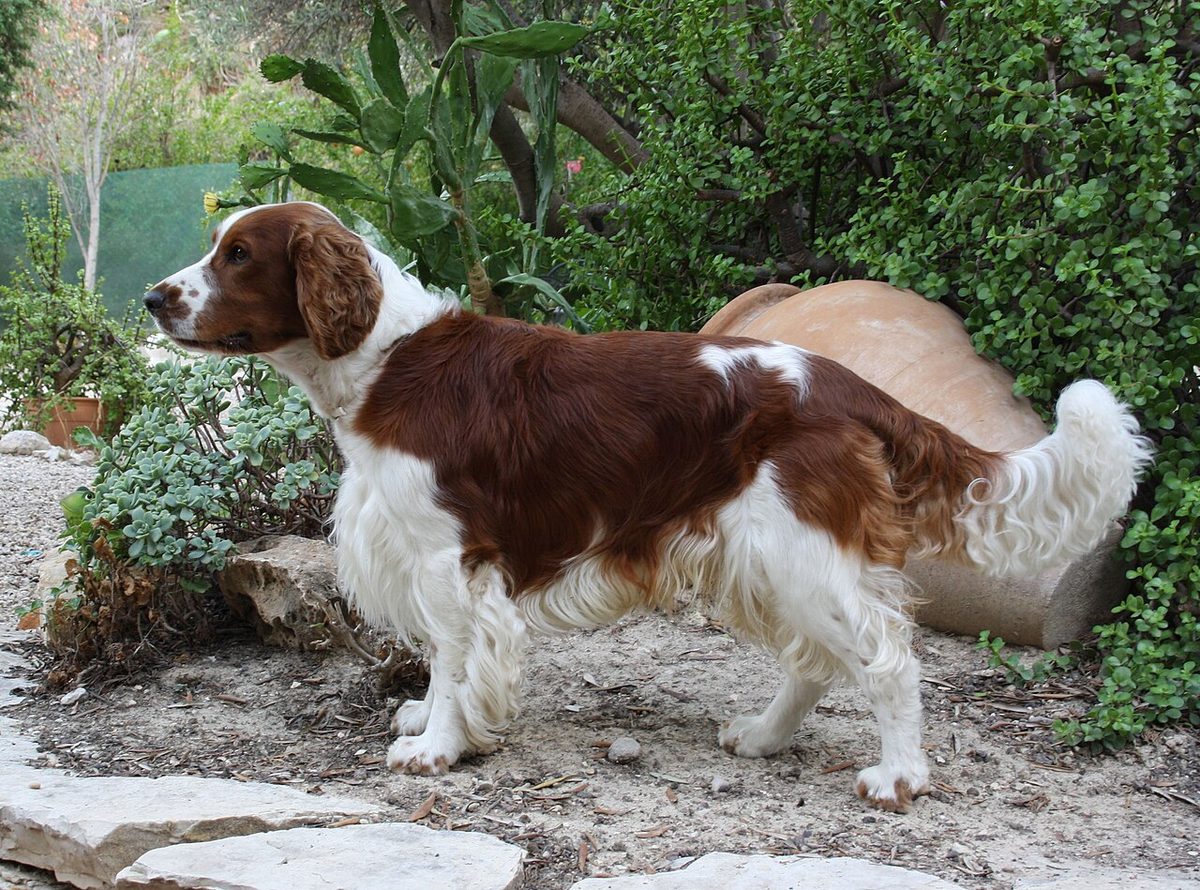
The Welsh Springer Spaniel is a working spaniel from Wales, bred to flush, or “spring”, game. It resembles the English Springer Spaniel, with which it is often confused, but it is slightly smaller, rarer, and always red and white.
History
The breed’s origin is unknown. Red and white spaniels much like it appear in many old pictures and prints, and in 1570 John Caius described spaniels that were white with red spots. These Land Spaniels are thought to have reached the Welsh valleys, where local sportsmen kept them pure. The dog was once called the Welsh Starter and sprang game for hunters with falcons.
It was little known until 1900, when A. T. Williams of Ynysygerwn won the team stake at the Sporting Spaniel Club Trials, and dogs from his kennel kept winning around the United Kingdom in the following years. The Kennel Club recognized the breed in 1902 under its present name; until then it had been shown with the English Springer. The American Kennel Club followed in 1906.
After World War I no dogs with registered parents were left in Britain, and the modern breed was rebuilt from unregistered dogs by breeders of the 1920s and 1930s. In the United States the breed was thought to have vanished after the wars and had to be reintroduced. UK registrations fell to 299 in 2016, which placed it on The Kennel Club’s list of Vulnerable Native Breeds.
Appearance
This is a compact, solidly built dog made for hard work and endurance, slightly longer than it is tall. Males stand 46 to 48 cm (18 to 19 in) at the withers and females 43 to 46 cm (17 to 18 in), and weight averages 16 to 20 kg (35 to 45 lb).
The coat is straight, flat and soft. There is feathering on the backs of the legs, the chest and the underside, and lighter feathering on the ears and tail. The only color is rich red and white, in any pattern, and the white may be flecked with red. Unlike the English Springer, the breed has not split into show and field types.
Temperament
The Welsh Springer is active, loyal and affectionate. It is friendly and demonstrative with the whole family, children especially, and accepts other household pets. With strangers it may bark, or be aloof and cautious. It learns quickly but can be headstrong. Some become clingy and suffer separation anxiety when left alone.
Care and health
As a dog bred for work, it needs regular exercise; without enough, it may seem hyperactive.
The breed is generally healthy, and a 2024 UK study found a life expectancy of 14 years. Hip dysplasia is more common than average: a 1997 survey of over a hundred breeds ranked it 14th worst for hip scores. Its hanging ears make it prone to ear infections. Eye problems include entropion, in which the eyelid rolls inward and the lashes rub the eye, and narrow-angle glaucoma, an inherited condition that can cause blindness.
Facts on this page were checked against Wikipedia and may have changed since.