Field Spaniel

- Origin
- England
- Type
- Gundog
- Size
- Medium
- Height
- About 46 cm (18 in)
- Weight
- 18–25 kg (40–55 lb)
- Coat
- Moderately long single coat with feathering
- Colors
- Black, liver or roan, sometimes with tan points
- Life span
- About 13 years
- Status
- Recognised by the FCI and The Kennel Club; a Vulnerable Native Breed in the UK
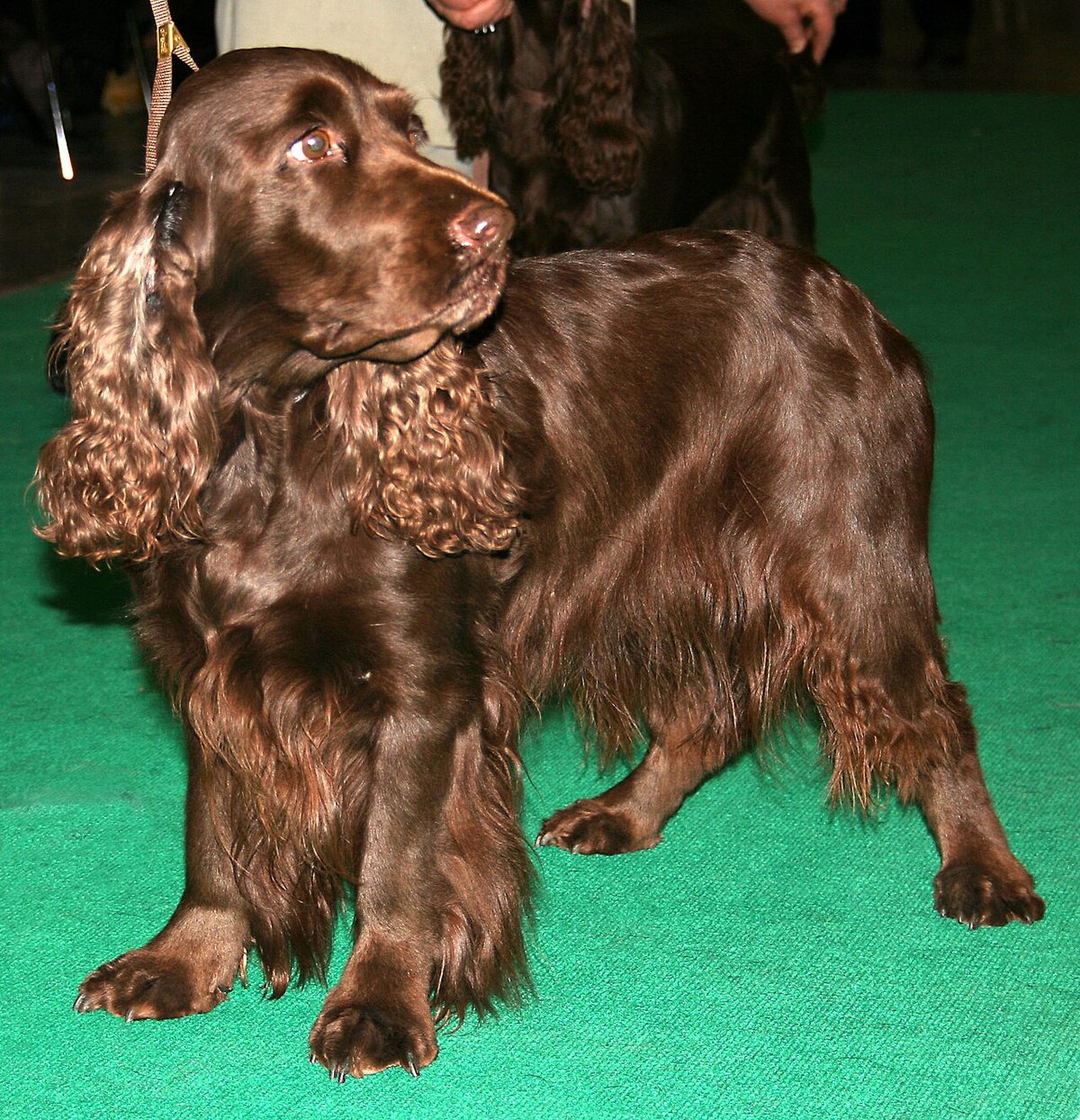
The Field Spaniel is a medium-sized English spaniel with a dark, single-layered coat. It began in the late 19th century as an all-black show dog and was rebuilt in the mid-20th century into a longer-legged spaniel better suited to work in the field. It is now a rare breed.
History
The first Field Spaniels were bred by show competitors trying to produce an all-black spaniel. Their methods drew criticism, and one early breeder, Thomas Jacobs, answered that no purebred black spaniel had ever been shown to exist and that, like most sporting dogs, his were the product of various crosses.
Sportsmen had little use for the early dogs. Their dark coats were hard to see when hunting, and their long, low bodies did not move easily through cover. Phineas Bullock developed the low-slung type by crossing in the Sussex Spaniel and the English Water Spaniel, and it did well in the show ring in the 1870s, though it looked almost exactly like a Sussex apart from the head. Basset Hound blood was later added as well. By 1909 the average Field Spaniel weighed 16 to 20 kg.
Genetic health problems followed, and English Springer Spaniels were brought in to correct them. That produced the longer-legged dog known today. Most modern Field Spaniels trace back to four dogs from the 1950s.
The breed remains rare even in Britain. The Kennel Club registered only 51 in 2009, the lowest figure of any spaniel breed, and lists it as a Vulnerable Native Breed.
Appearance
A Field Spaniel stands about 46 cm at the withers and weighs 18 to 25 kg, which puts it between the English Cocker and the English Springer in size. The coat is solid black or liver, or roan. Some dogs have tan points, and white on the throat and chest may be ticked.
The coat is moderately long and has no undercoat, with feathering on the chest, belly, ears and backs of the legs.
Temperament
Field Spaniels are active and inquisitive and make good companions. They are patient with children, like to stay close to the family and, when socialized, get on with other dogs. They are generally docile and independent, and less excitable than Cocker Spaniels. Left alone with nothing to do for long stretches, they can become bored and destructive. They do well in agility and in hunting.
Care and health
The coat is lighter than a Cocker Spaniel’s but still needs grooming to keep mats from forming.
A 2024 UK study found a life expectancy of 13.1 years. The breed is predisposed to several eye conditions, including cataracts, retinal atrophy and retinal dysplasia, and hip dysplasia has appeared in British lines. In a Kennel Club health survey, cancer was the leading cause of death, followed by old age.
Facts on this page were checked against Wikipedia and may have changed since.