Pembroke Welsh Corgi

- Origin
- Wales
- Type
- Herding
- Size
- Small
- Height
- 25–30 cm (10–12 in)
- Weight
- 10–14 kg (22–31 lb)
- Coat
- Medium-length, thick, weather-resistant double coat
- Colors
- Red, sable, fawn, black and tan, black and white
- Life span
- About 13 years
- Status
- Recognised by the FCI, AKC, The Kennel Club and UKC
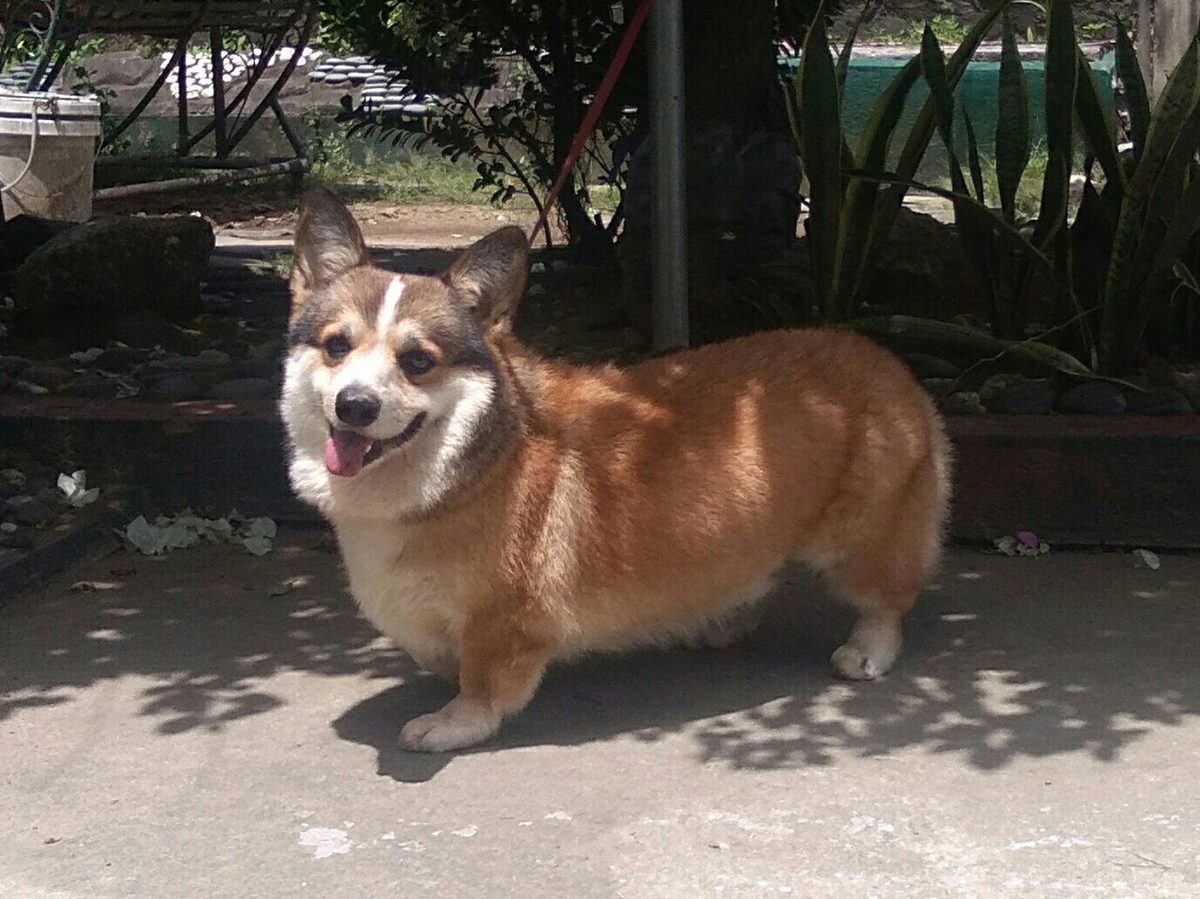
The Pembroke Welsh Corgi is a short-legged cattle herding dog from Pembrokeshire in Wales. Corgi joins the Welsh words for dwarf and dog. It is one of two Welsh Corgi breeds, the other being the Cardigan, and it is widely known as the breed Queen Elizabeth II preferred; she owned more than 30 during her reign.
History
The Pembroke is usually traced to the Flemish settlements planted in Pembrokeshire after the Norman invasion of Wales, with a lineage dated back to 1107. The settlers are thought to have brought spitz-type dogs from the continent. Small, agile and short-legged, these dogs were used by both the Flemish and the Welsh to herd cattle.
Pembrokes and Cardigans were first shown together in 1925 under Kennel Club rules, and the Corgi Club was founded in Carmarthen that December. The Kennel Club recognised them in 1928 as a single breed, the Welsh Corgi, and separated the two in 1934.
The breed is popular in the United States, where it ranked 15th in American Kennel Club registrations in 2024. In Britain it declined: it was placed on The Kennel Club’s watch list in 2009 and on its list of vulnerable native breeds in 2014, when yearly registrations fell below 300. It came off the at-risk list in 2018.
Appearance
The Pembroke is shorter in body than the Cardigan, with smaller ears and slightly straighter legs. The head is fox-like, and the firm, medium-sized ears stand erect and taper to a rounded point. Dogs measure about 25–30 cm (10–12 in) and weigh roughly 10–14 kg (22–31 lb).
The thick double coat ranges from red or sandy to brown and black, sometimes with white. Some Pembrokes are born with a naturally short tail. Most others were traditionally docked in the first days of life, a practice now illegal in many countries, including the United Kingdom. The Kennel Club, the United Kennel Club and the FCI allow full tails in the show ring.
Temperament
Pembrokes like to be part of family life and tend to follow their owners around. They are eager to please and quick to learn, though their intelligence and stubborn streak can make training a challenge; Stanley Coren ranked the breed 11th in The Intelligence of Dogs. They are alert and inclined to bark, so they also serve as watchdogs. Most are friendly with people, children and other pets, especially if socialized young. They love to chase moving things, and young dogs may nip at ankles, as they were bred to do with cattle.
Care and health
The coat sheds heavily all year, most of all in spring and autumn, but is easy to keep with regular brushing. Pembrokes have a hearty appetite and gain weight easily, so they need exercise.
A 2024 UK study found a life expectancy of 13.2 years. The Pembroke is a true dwarf breed, and its build can lead to health problems. Conditions seen in the breed include monorchidism, Von Willebrand’s disease, hip dysplasia, degenerative myelopathy and inherited eye problems such as progressive retinal atrophy.
Facts on this page were checked against Wikipedia and may have changed since.