Welsh Corgi
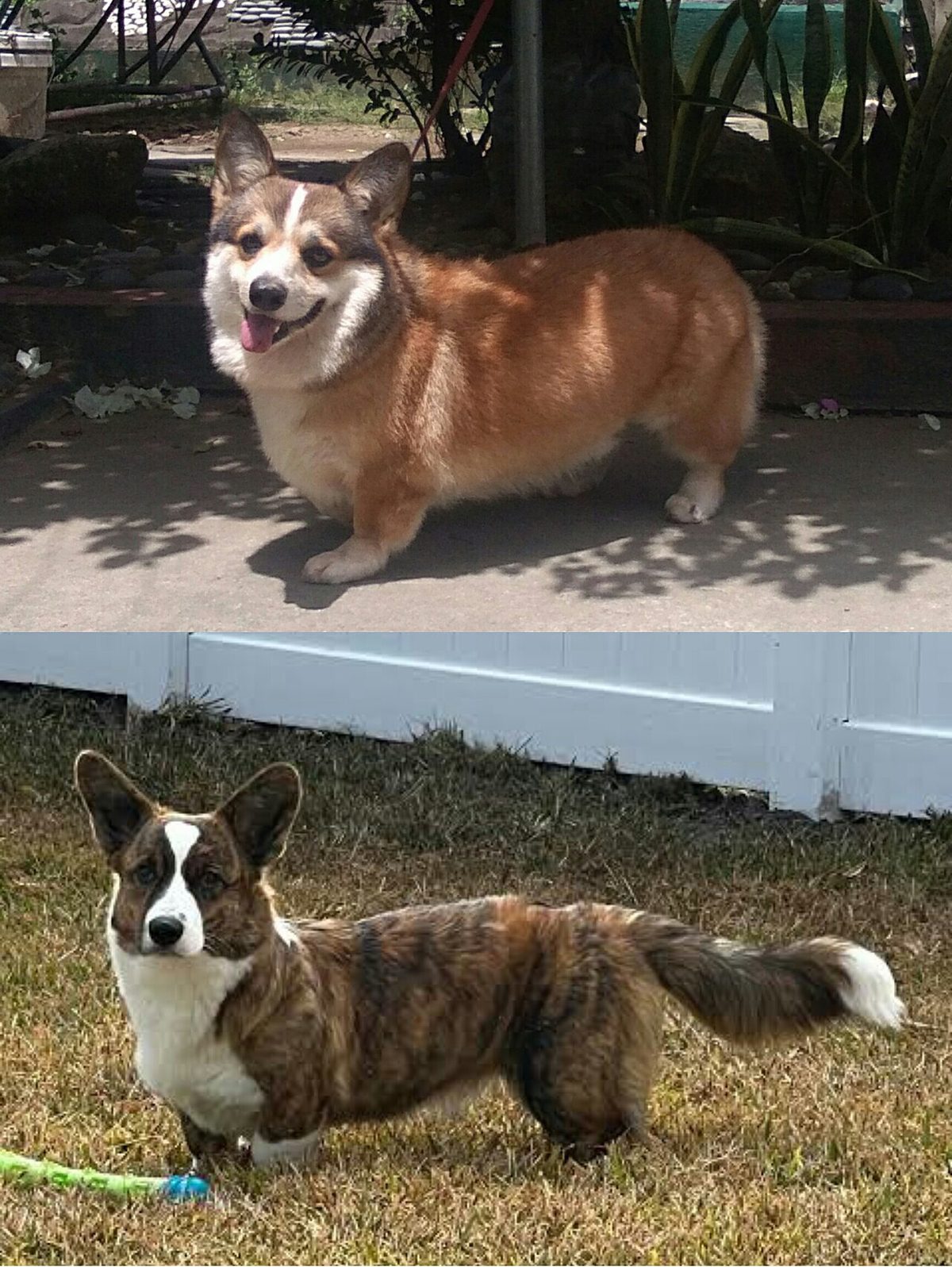

- Origin
- Wales
- Type
- Herding
- Size
- Small
- Height
- 25–32 cm (10–12.5 in)
- Weight
- Up to 17 kg (38 lb)
- Coat
- Medium length, weather-resistant double coat
- Colors
- Red, sable, fawn, brindle, black and tan or blue merle, usually with white markings
- Life span
- About 12 years
- Status
- Two breeds, the Pembroke and the Cardigan, recognised separately by The Kennel Club and AKC
The Welsh Corgi is a small type of herding dog from Wales. It is a type made up of two separate breeds, the Pembroke Welsh Corgi and the Cardigan Welsh Corgi, named after neighboring farming counties in West Wales. The name comes from the Welsh words for dwarf and dog.
History
Corgis were cattle dogs of the kind called heelers: they nipped at the heels of cattle to keep them moving, and their low build and agility let them dodge the hooves. Accounts of their origin differ. The Pembroke has been put down to dogs that came with Flemish weavers in the Middle Ages, and the Cardigan to dogs brought by Norse settlers, sharing an ancestor with the Swedish Vallhund. In the 19th century hill farmers moved from cattle to sheep, work that did not suit the Corgi.
Corgis first appeared in the show ring in Wales in 1925, the year the Welsh Corgi Club was formed and a standard written. The two kinds were judged together until 1934, when The Kennel Club recognised each as a breed. The American Kennel Club began registering Corgis in 1934.
The Pembroke has always been the more popular, helped by Queen Elizabeth II, who owned more than 30 Pembrokes and Corgi-Dachshund crosses, all descended from Susan, a dog given to her for her 18th birthday in 1944. Even so, both breeds have spent time on The Kennel Club’s list of Vulnerable Native Breeds, the Cardigan from 2006 and the Pembroke from 2013 until 2016.
Appearance
Both breeds have short legs, a long body carried close to the ground, a fox-like head and a water-resistant coat that sheds about twice a year.
The Cardigan is the larger, standing 27–32 cm at the withers and weighing 14–17 kg. It is heavier in bone, with large rounded ears and a long, fox-like tail. Its double coat is of medium length and slightly harsh, and it comes in more colors, including shades of red, sable and brindle, black with tan or brindle points, and blue merle. White markings are expected, but white should not predominate.
The Pembroke has pointed ears and stands 25–30 cm; males should weigh no more than 14 kg and females 11 kg. Its tail is short, either naturally or, in the past, by docking. Its colors are red, sable, fawn, tan and black, each with or without white markings.
Temperament
Corgis are described as intelligent, strong and sturdy, with the stamina for a day’s work on the farm. Today they compete in agility, obedience and herding events.
Care and health
A 2004 Kennel Club survey found a median age at death of a little over 12 years for both breeds, with cancer and old age the main causes. Kidney failure or urethral obstruction accounted for more deaths among Pembrokes. More than a quarter of the Pembrokes surveyed had an eye condition, against 6.1% of Cardigans. Eye problems seen in Corgis include progressive retinal atrophy, glaucoma and cataracts. Hip dysplasia also occurs.
Facts on this page were checked against Wikipedia and may have changed since.