Welsh Terrier

- Origin
- Wales
- Type
- Terrier
- Size
- Small
- Height
- Up to 39 cm (15.5 in)
- Weight
- 9–10 kg (20–22 lb)
- Coat
- Hard, wiry outer coat over an insulating undercoat
- Colors
- Tan with a black or grizzle saddle
- Status
- Recognised by the FCI and The Kennel Club
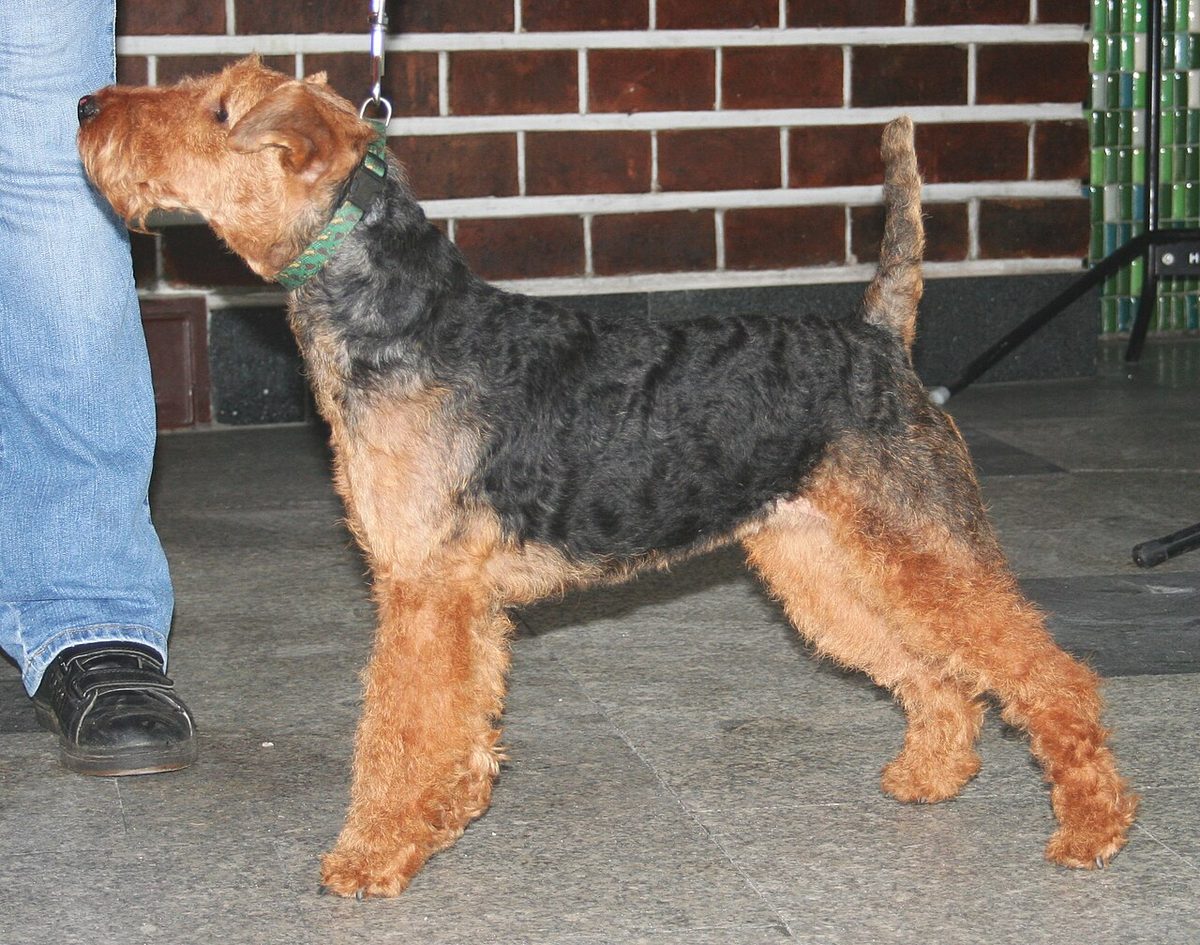
The Welsh Terrier is a sturdy, compact, wire-coated terrier believed to have originated in Wales in the 1700s. It was bred to hunt fox, badger and rodents in the remote mountains of the north. Over the last century it has been bred mainly for the show ring, but it has kept a terrier’s strength of character. It looks much like a small Airedale Terrier.
History
The Welsh Terrier has been claimed to be the oldest existing dog breed in the United Kingdom. As a working dog first and foremost, it came late to the show ring and was not officially registered as a breed until the 19th century. It has since won Best in Show at Crufts four times, most recently in 1998.
Today it is on The Kennel Club’s list of breeds in danger of dying out. Only about 300 puppies are registered in a year, while the most popular breeds are registered in the tens of thousands.
Appearance
The Welsh Terrier is tan on the head, legs and underside, with a black or sometimes grizzle saddle. Some females are a plain darker tan all over. Puppies are born almost entirely black and change to the adult colors during their first year.
It stands up to 39 cm (15.5 in) tall and weighs 9 to 10 kg (20 to 22 lb). The outline is square, as tall as it is long, and the whiskers and beard give the long face a brick-like shape. The tail was usually docked until the practice was prohibited in the United Kingdom in 2006; a natural tail is only about an inch longer.
The coat has two layers: an undercoat for insulation and a harsh top coat that keeps out dirt, rain and wind.
Temperament
This is a typical terrier: happy, lively, and seldom shy or timid, though it can have an attitude. It is generally friendly with people and other dogs but will not back down from what it takes as a challenge. It can be a devoted friend, and does as well in a city as in the country.
Welsh Terriers were bred to hunt on their own, which made them assertive, stoic and inclined to make their own decisions. Obedience is therefore a long-term project that needs constant reinforcement. The breed ranks 101st in Stanley Coren’s The Intelligence of Dogs.
They are full of energy and need regular exercise and something to occupy them; a run around the yard is not enough, and a bored Welsh Terrier may get into mischief. They enjoy chasing toys, swimming and digging, and some bark a great deal. They get along well with children and love to play, though they may tug at trouser legs and bowl little ones over. Early socialization with a wide range of people, dogs and experiences is important.
Care and health
The coat does not shed, but it needs regular brushing and hand stripping. Left ungroomed, it can fade and thin as the old hair loses its color and texture.
The Welsh Terrier is a durable, healthy dog. Some studies suggest an inherited tendency to primary lens luxation, which can lead to glaucoma. Onychodystrophy, a disorder that leaves the nails weak and brittle, is relatively common in the breed.
Facts on this page were checked against Wikipedia and may have changed since.