Dutch Shepherd Dog
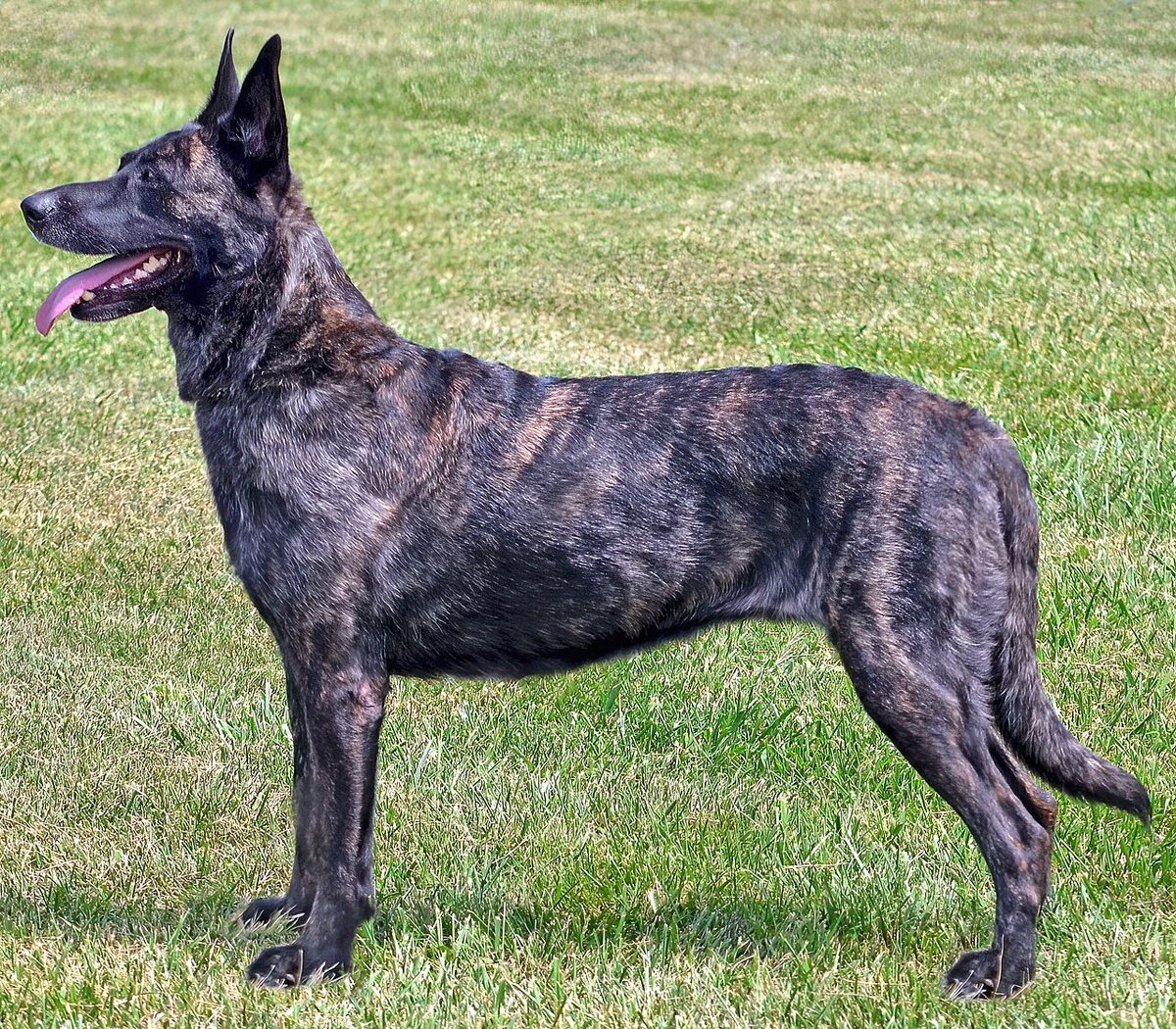

- Origin
- Netherlands
- Type
- Herding
- Size
- Large
- Height
- 55–63 cm (22–25 in)
- Weight
- 23–32 kg (50–70 lb)
- Coat
- Short, long or rough, each with a woolly undercoat
- Colors
- Gold or silver brindle
- Status
- Rare; recognised by the FCI and UKC, and in the AKC Miscellaneous Class
The Dutch Shepherd is a herding dog from the Netherlands. Shepherds and farmers there needed a versatile dog that asked for little and could cope with a hard, meager life, and the breed grew out of the working dogs that suited them.
History
The Dutch Shepherd began as a natural type of shepherd’s dog in the rural Netherlands. Its main task was to keep flocks of sheep off the crops by patrolling the edges of roads and fields, and to go with them to common meadows, markets and ports. On the farm it gathered cows for milking, pulled milk carts and gave warning of strangers.
The first breed standard was written in 1898 and allowed any color. In 1914 only brindle was permitted, to set the breed apart from the then-similar German and Belgian Shepherds.
By about 1900 most sheep flocks had gone from the Netherlands, and the dogs moved into the newly popular field of dog training, working as police dogs, search and tracking dogs and guide dogs for the blind. Modern farming cut numbers further, and the Second World War nearly finished the breed: breeding stopped, dogs starved or were taken to Germany by the military, and many bloodlines died out. After the war breeders brought in new blood, including, in 1959, a Belgian Laekenois for the rough-haired variety.
The breed is still rare. In the United States the United Kennel Club has registered it since publishing a standard in 1995, and the American Kennel Club moved it to its Miscellaneous Class in January 2017. Abroad it is best known for police work through the Dutch KNPV program, founded in 1907.
Appearance
Dutch Shepherds stand 55–63 cm (22–25 in) at the withers and weigh on average 23–32 kg (50–70 lb).
There are three coat types. The short-haired coat is hard and close, with a visible ruff, breeches and tail plume. The long-haired coat is long, straight and harsh, with feathering on the forelegs and a heavily coated tail. The rough-haired coat is dense, harsh and tousled, with a beard, whiskers and coarse eyebrows. All three have a woolly undercoat.
The only color is brindle on a gold or silver base, which can range from light sand to chestnut red. A black mask is preferred.
Temperament
Dutch Shepherds are highly active, independent and very trainable, with a strong herding drive and the ability to work on their own at a task.
Care and health
The short coat needs occasional combing, and daily brushing during the spring and fall sheds. The long coat needs grooming about once a week. The rough coat is brushed thoroughly once a week and hand-stripped twice a year.
Most genetic problems are uncommon in the breed. Those confirmed include allergies (atopy), masticatory myositis, pannus, cryptorchidism and inflammatory bowel disease. Rough-haired dogs must be screened for goniodysplasia, an eye condition that can lead to blindness. An inherited inflammatory myopathy, a painful muscle disease that appears at three to eight months, was mapped in 2018 and has a DNA test.
Facts on this page were checked against Wikipedia and may have changed since.