Puli
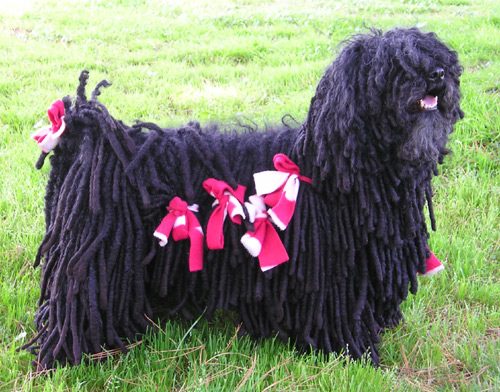

- Origin
- Hungary
- Type
- Herding
- Size
- Small
- Height
- 42–43 cm (16.5–17 in)
- Weight
- About 10–11 kg (23–25 lb)
- Coat
- Long and corded
- Colors
- Usually black; also white, gray or cream
- Status
- Recognised by the FCI
The Puli is a small to medium herding dog from Hungary, known for a long coat that forms tight cords much like dreadlocks. The plural is Pulis or Pulik. The Komondor, also Hungarian, looks similar but is far larger.
History
The Magyars probably brought the Puli to Hungary in the 9th century, and it has worked sheep on the Hungarian plain ever since. Nomadic shepherds prized their dogs and would pay as much as a year’s wages for one.
The Puli usually worked alongside the Komondor. The Puli herded and watched the flock by day, and the big white Komondor guarded it at night. If wolves or bears attacked, the Puli raised the alarm and the Komondors came to fight.
Around the start of the 20th century, as intensive farming replaced open shepherding, the Puli had less herding to do and became a house dog. Emil Raitsitz of Hungary’s veterinary college first studied the breed in the 1920s. After the Second World War it lost popularity as a pet and has not regained it. In 1935 the U.S. Department of Agriculture imported four Pulis to Beltsville, Maryland, for herding dog trials.
Appearance
The Puli is a solid-colored dog, usually black. White, gray and cream are less common, and some cream dogs have a black mask. Females stand about 42 cm (16.5 in) at the withers and males about 43 cm (17 in); females weigh 23–25 pounds and males a little more.
The cords form as undercoat and outer coat mat together in a controlled way. They may be thin or thick, flat or round, and in an older dog can reach the ground.
Temperament
The Puli is intelligent, active and playful, keeping puppy-like ways all its life. It is loyal and devoted to its owners, friendly with children, and wary of strangers, which makes it a fair guard. It is also sensitive, and can be tough and headstrong. Despite the bulky coat it is fast, agile and able to turn sharply, and Pulis compete in agility, obedience and herding trials. Some work as police dogs.
Care and health
The coat sheds little or not at all, but it takes a great deal of work to keep the cords clean and neat. It can also be clipped short for easy care and will grow back.
Pulis need plenty of exercise and space and do best in a house with a garden. Kept shut in for long periods they may become restless and overactive, or shy and withdrawn. Obedience training and socialization should begin young.
Facts on this page were checked against Wikipedia and may have changed since.