Drentsche Patrijshond
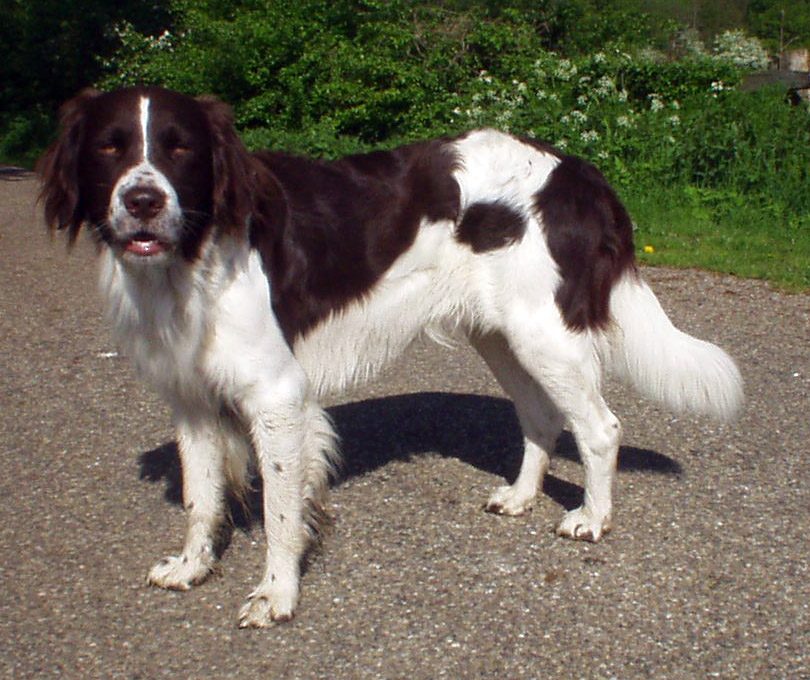

- Origin
- Netherlands
- Type
- Gundog
- Size
- Large
- Height
- 55–63 cm (21.5–25 in)
- Weight
- 25–33 kg (55–73 lb)
- Coat
- Dense, medium-long, with feathering
- Colors
- White with brown markings
- Status
- Recognised by the FCI and UKC; in the AKC Foundation Stock Service
The Drentsche Patrijshond is a versatile pointing dog from the Dutch province of Drenthe. In English it is called the Dutch Partridge Dog, or simply the Drent. It looks something like both a spaniel and a setter, points and retrieves, and works as well in marshes as in the field. About 5,000 dogs are registered with the Dutch breed club.
History
The breed goes back to the 16th century and the Spioenen, or Spanjoelen, dogs that reached the Netherlands from Spain by way of France. It is related to the Small Münsterländer of Germany and the Epagneul Français of France. The Dutch called these dogs partridge dogs, and they appear in 17th-century paintings such as Gabriel Metsu’s The Hunter’s Present, of about 1658 to 1660, which shows a large, stocky dog leaning against the hunter’s knee.
Three hundred years ago Drenthe was unusual in letting ordinary landowners hunt. The mayor, the farmer and other landowners bred dogs for their own small-game shooting. Where many hunting breeds were made by and for the nobility and did nothing but hunt, the Drent was expected to hunt all kinds of game, keep watch, play with the children and sometimes pull a dog-cart.
The type was kept apart from other dogs in rural Drenthe for centuries without any paperwork. The Dutch Kennel Club approved the first standard in 1943, and the Fédération Cynologique Internationale recognises the breed on that basis. The United Kennel Club in the United States recognises it too. In November 2010 the American Kennel Club added it to its Foundation Stock Service, which opened AKC hunt tests and agility events to registered Drents from 2011.
Appearance
The Drent stands 55 to 63 cm (21.5 to 25 in) at the withers and weighs 55 to 73 lb (25 to 33 kg) on average. The coat is white with brown markings: mostly white, with large brown patches, usually including one over the rump above the tail. No white should touch the eyes or appear on the ears. A large mantle across the back is allowed but less wanted. The coat is of medium length, with feathering on the legs and longer hair on the front of the chest, so it looks longer than it is.
Temperament
In the field the Drent has a strong hunting instinct and can be very driven. It hunts birds and small mammals such as rabbit, hare and fox. At home it tends to be more relaxed than many hunting breeds. It is loyal, closely attached to its family and sweet-natured, especially with children.
Care and health
The Drent likes working beside a hunter and being outdoors with people. Several brisk walks will also do, and it settles quietly afterwards, but it is not a sedentary dog and needs enough exercise.
Health concerns in the breed may include progressive retinal atrophy and hereditary stomatocytosis. Screening of breeding dogs for hip dysplasia, elbow dysplasia and hereditary eye disorders is recommended.
Facts on this page were checked against Wikipedia and may have changed since.