Saarlooswolfhond
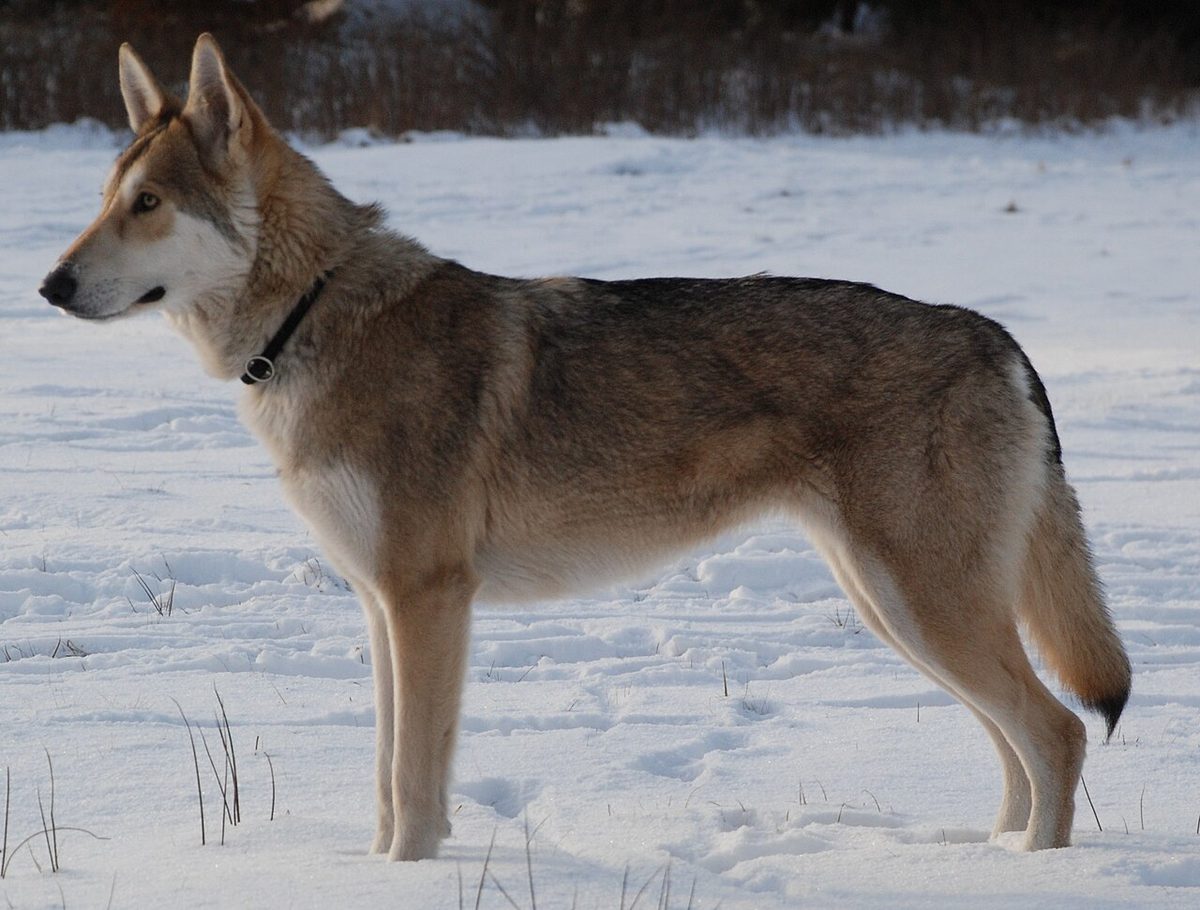

- Origin
- Netherlands
- Type
- Other
- Size
- Large
- Height
- 60–75 cm (24–30 in)
- Weight
- Up to 45 kg (100 lb)
- Coat
- Short and dense
- Colors
- Wolf-gray, forest brown or white
- Status
- Recognised by the FCI; in the AKC Foundation Stock Service
The Saarlooswolfhond, or Saarloos Wolfdog, is a wolfdog breed from the Netherlands. It began in 1935 with the crossing of a German Shepherd and a gray wolf from Siberia, and the offspring were then bred back to German Shepherds. In build, coat and movement it still looks very much like a wolf.
History
Leendert Saarloos (1884–1969) was a Dutch zoologist and dog breeder. He believed the German Shepherd had become too domesticated, and hoped to make a better working dog by breeding back some of its more natural qualities. In 1935 he mated a male German Shepherd with a female Eurasian gray wolf, then crossed the offspring back to German Shepherds to arrive at a dog that was one quarter wolf.
The result did not prove useful as a working dog. It found its place as a companion that stays close to nature.
The Dutch Kennel Club recognised the breed in 1975 and named it for its creator. The FCI followed in 1981. In April 2026 it was added to the American Kennel Club’s Foundation Stock Service.
Genetic studies bear out the breed’s history. A 2015 study found the Saarloos more closely associated with the gray wolf than any other breed, and a 2019 study put its wolf ancestry at 18 to 33%.
Appearance
The Saarlooswolfhond is strongly built and athletic, with medium bone and a muscular body. Males stand 65 to 75 cm (26 to 30 in) tall and females 60 to 70 cm (24 to 28 in), and the dog weighs up to 45 kg (100 lb). It is light on its feet and moves with an elegant stride. The head and expression are wolf-like.
The coat is short and dense and protects well against the weather. There are three colors: wolf-gray, forest brown and white. Wolf-gray is the most common because it is dominant. White is recessive and so uncommon, though it is accepted.
Temperament
A Saarlooswolfhond needs thorough socialization before twelve weeks of age if it is to grow up behaving well around people and other dogs.
Care and health
The population is very closely related. A study by Wageningen University, requested after the two Dutch breed clubs raised the matter with the Dutch Kennel Club in 2010, found that inbreeding would threaten the breed’s survival if nothing were done. The researchers advised a broad, controlled outcross program to improve vitality, fertility and genetic variety, and the kennel club approved it in 2012.
The program uses dogs of other FCI breeds, chosen by vote of the club members, and “look-alikes”, dogs that resemble a Saarloos but have no recognised pedigree. Each cross is health-screened and the best of each generation are bred back to purebred Saarloos dogs; the fourth generation receives a full pedigree. By January 2019 outcrosses had been made with the White Swiss Shepherd, Siberian Husky, Ibizan Hound, Norwegian Elkhound and a Northern Inuit Dog look-alike.
Facts on this page were checked against Wikipedia and may have changed since.