Keeshond

- Origin
- Netherlands
- Type
- Spitz
- Size
- Medium
- Height
- 40–48 cm (16–19 in)
- Weight
- 14–18 kg (30–40 lb)
- Coat
- Dense double coat with a thick ruff
- Colors
- Gray and black with pale gray or cream undercoat, cream legs and dark spectacles
- Life span
- About 12 years
- Status
- Recognised by the AKC and The Kennel Club; the FCI treats it as the Wolfspitz, a German Spitz
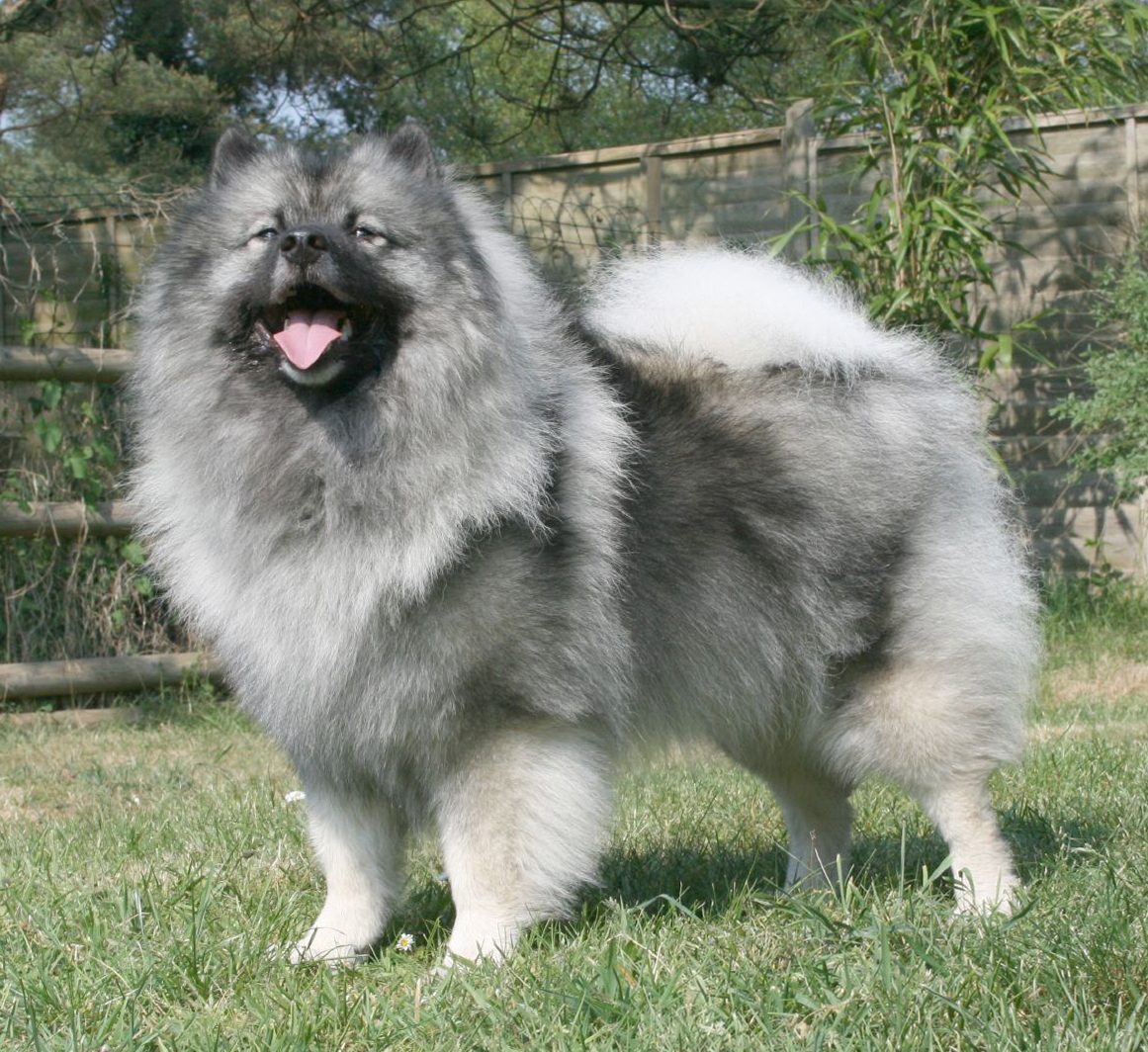
The Keeshond (plural Keeshonden) is a medium-sized spitz with a plush silver and black coat, a ruff and a tightly curled tail. It used to be called the Dutch Barge Dog because it was so often seen as a watchdog on barges on the canals and rivers of the Netherlands. Its closest relatives are the German spitzes, from the Large Spitz down to the Pomeranian.
History
The breed is named after Cornelis (Kees) de Gyselaer, an 18th-century leader of the Dutch Patriots who rebelled against the House of Orange. The dog became the rebels’ symbol, and when the House of Orange returned to power it almost disappeared. In the Netherlands, keeshond is the word for all German spitzes. Its origin is debated: many English sources place it in the Netherlands, while the FCI counts it as part of the German Spitz family and regards the Wolfspitz and the Keeshond as the same breed.
A standard for the Wolfspitz was posted at the Berlin dog show of 1880. In the 1920s Baroness van Hardenbroeck began rebuilding the breed in the Netherlands, and the Dutch Keeshond club was founded in 1924. In England the Dutch Barge Dog Club was formed in 1925 and accepted by the Kennel Club in 1926, when the name changed to Keeshond. Carl Hinderer brought his German kennel to the United States in 1923 and campaigned for recognition; the AKC accepted the breed in 1930.
Appearance
The Keeshond is sturdily built, with a wedge-shaped head, medium-length muzzle and small, dark, pointed ears. The AKC standard calls for a height of 43 to 46 cm and a weight of 14 to 18 kg. Long, straight, harsh hair stands out from a thick, downy undercoat. The ruff is fuller in males, the hind legs carry trousers, and the tail forms a plume.
The color is a mix of gray, black and cream. The outer hairs are tipped with black, the undercoat is pale gray or cream, and the legs and feet are cream. Dark lines running from the outer corner of each eye toward the ear, called spectacles, are a hallmark of the breed.
Temperament
Keeshonden are affectionate family dogs that are good with children and generally get along with other dogs. They stick close to their people, often following an owner from room to room. They are alert, with a loud bark, but are not aggressive toward visitors. A dog shut out in a yard away from its family is unhappy and may become a nuisance barker. The breed ranks 18th in Stanley Coren’s The Intelligence of Dogs and is used in agility, obedience and as a comfort dog.
Care and health
The coat needs regular line brushing. The undercoat is shed heavily once a year in males and twice in females. The coat should never be shaved, because it insulates against both heat and cold.
Keeshonden are generally healthy. Conditions known in the breed include hip dysplasia, luxating patellas, epilepsy, Cushing’s disease, diabetes, primary hyperparathyroidism and hypothyroidism. A 2024 British study found a life expectancy of 12.3 years.
Facts on this page were checked against Wikipedia and may have changed since.