Irish Water Spaniel

- Origin
- Ireland
- Type
- Gundog
- Size
- Large
- Height
- 56–61 cm (22–24 in)
- Weight
- 20–30 kg (45–65 lb)
- Coat
- Dense, tight curls with a smooth face and tail
- Colors
- Liver to chocolate brown with a purplish tint
- Life span
- 10–12 years
- Status
- Recognised by the FCI and AKC; a vulnerable native breed
The Irish Water Spaniel is the tallest of the spaniels and one of Ireland’s nine native dog breeds. It was bred to hunt waterfowl and upland birds on the marshes, bogs and rivers of Ireland. Landowners and minor gentry who could not keep a whole team of dogs valued it because it did the work of pointer, setter, retriever and spaniel in one. It is now rare, with only a few thousand dogs, and is classed as a vulnerable native breed.
History
The modern breed was developed in Ireland in the 1830s. Its acknowledged founder, Justin McCarthy of Dublin, left no breeding records, so its ancestry is unknown. There is a case that its forebears came from Persia and reached Ireland through Spain. The Poodle, Portuguese Water Dog, Barbet and the extinct English Water Spaniel have all been proposed as relatives, mostly on looks alone.
Appearance
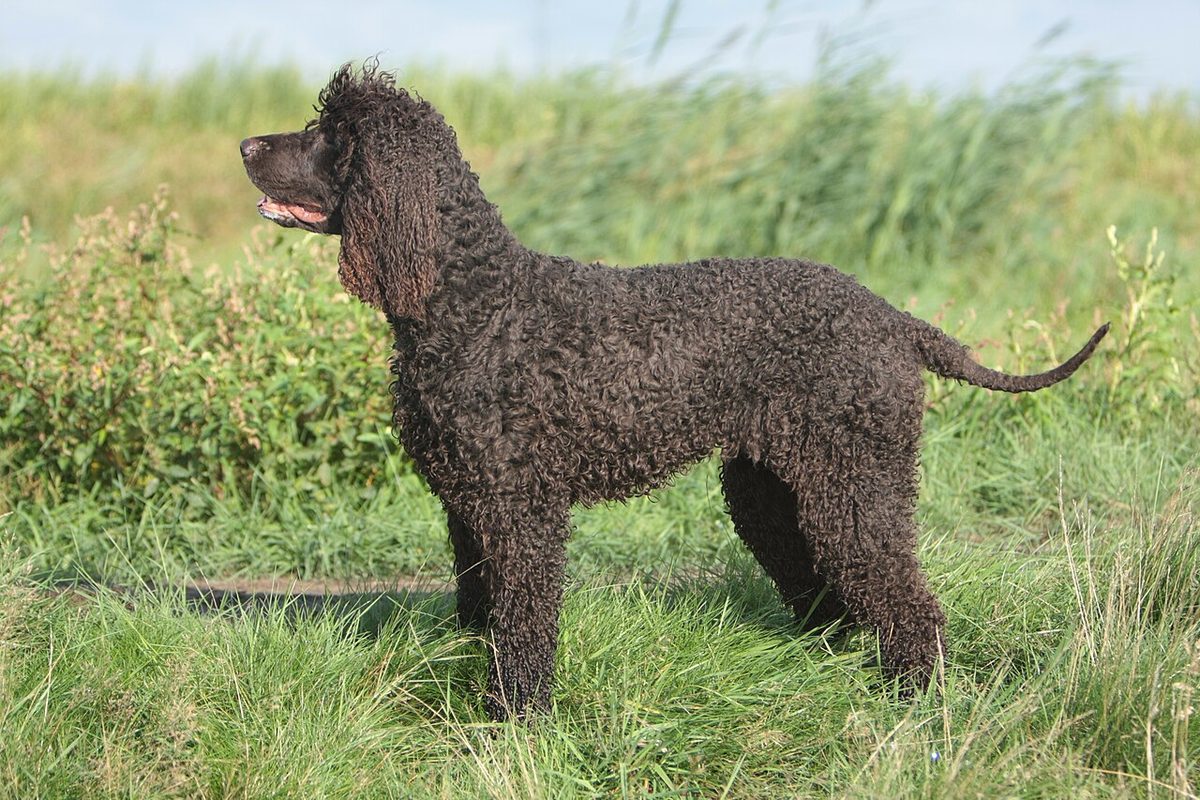
This is a sturdy, cobby, strongly built dog. The coat is a mass of dense curls with a natural oiliness, and it sheds very little. A topknot of long, loose curls falls from the crown and often covers the eyes, and there is a beard at the back of the throat, often with sideburns. The face is smooth. So is the tapering “rat tail”, apart from a few inches of curls at its base. The color is liver to chocolate brown with an unusual purplish tint. The eyes are almond-shaped and deep hazel, and the feet are webbed.
Dogs stand 56 to 61 cm (22 to 24 in) and weigh 25 to 30 kg (55 to 65 lb), with females somewhat lighter.
Temperament
The Irish Water Spaniel is active, willing and energetic, loyal and eager to please, and fairly easy to train from a young age. Its intelligence and inquisitive nature have earned it the name of the clown of the spaniels, since it often finds surprising ways of doing ordinary things. It is usually very good with respectful children and other pets, and is alert without being aggressive. Some dogs are wary of strangers if not socialized early, and not every one can be trusted with cats or small animals.
The breed is happiest with work to do. Owners use it in the shooting field, obedience, agility, tracking and the show ring.
Care and health
The coat should be combed through to the skin every week or two and scissored every six to eight weeks. Regular wetting helps it form the correct ringlets. Ears, teeth and nails need routine care. The dog needs walks and exercise two or three times a day, and one that goes without may turn mischievous.
Lifespan is about 10 to 12 years; a 2024 UK study found 10.8 years. Hip dysplasia affects about 30% of the breed and elbow dysplasia about 18%. Around 14% have chronic ear infections, probably because of the long, drooping ears, and about 10% have seizures. Alopecia and, occasionally, distichiasis also occur.
Facts on this page were checked against Wikipedia and may have changed since.