Labrador Retriever
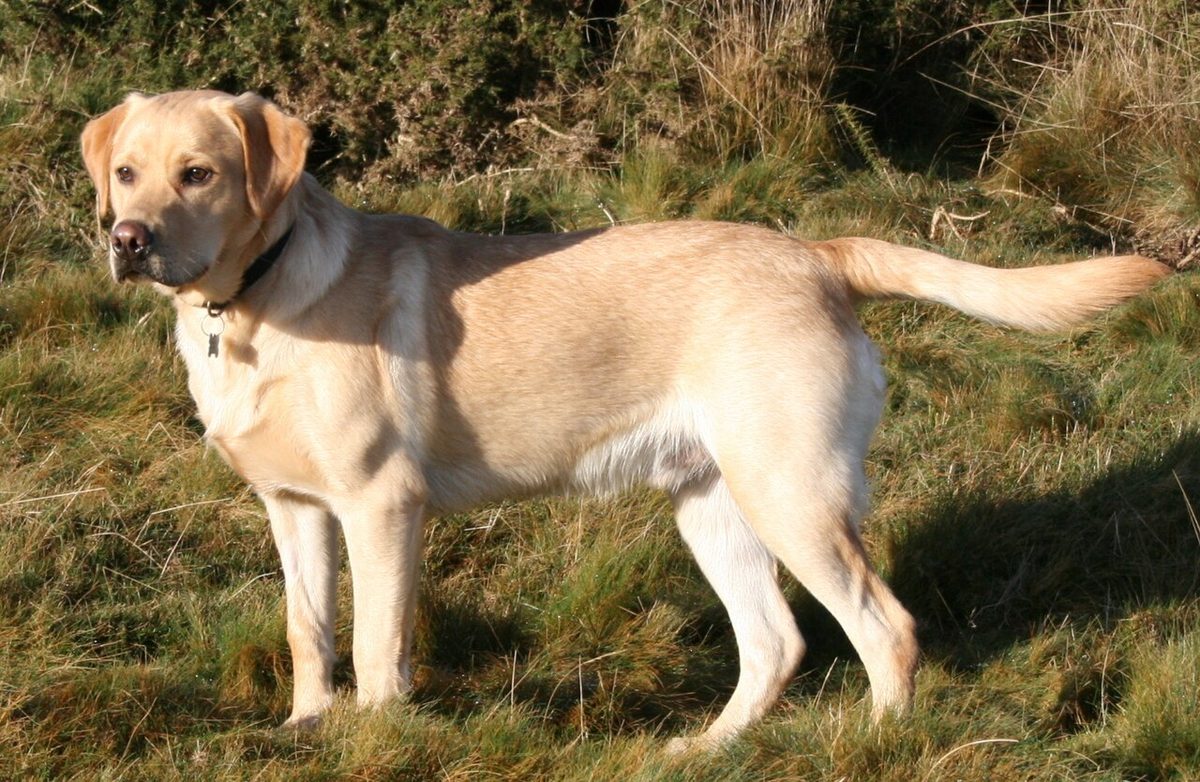

- Origin
- Great Britain
- Type
- Gundog
- Size
- Large
- Height
- 54–62 cm (21.5–24.5 in)
- Weight
- 25–36 kg (55–80 lb)
- Coat
- Short, dense, weather-resistant double coat
- Colors
- Black, yellow or chocolate
- Life span
- 11–13 years
- Status
- Recognised by the FCI, AKC and The Kennel Club
The Labrador Retriever is a British gundog, developed in the United Kingdom from St. John’s water dogs brought over from Newfoundland and named after the Labrador region of that colony. It was bred to retrieve game on land and in water. Today it is one of the most commonly kept dogs in many countries.
History
The breed goes back at least to the 1830s, when St. John’s water dogs arrived in Britain on ships trading between Canada and Poole in Dorset. The 10th Earl of Home and his nephews, the 5th Duke of Buccleuch and Lord John Scott, imported them as gundogs, and the 2nd Earl of Malmesbury bred them for wildfowling. They were crossed with British hunting dogs.
In the 1880s the 3rd Earl of Malmesbury, the 6th Duke of Buccleuch and the 12th Earl of Home worked together to establish the breed. Two dogs given by Malmesbury to Buccleuch, Buccleuch Avon and Buccleuch Ned, were mated to females descended from the original imports, and their offspring are the ancestors of all modern Labradors.
Liver, now called chocolate, puppies were recorded at the Buccleuch kennels in 1892, and the first yellow on record was born in 1899. The Kennel Club recognised the breed in 1903, and the first American Kennel Club registration came in 1917.
Appearance
The Labrador is a medium-large dog, powerful and muscular, about as long in the body as it is tall. The AKC asks for males of 55 to 62 cm and females of 55 to 60 cm; The Kennel Club and the FCI give a narrower 54 to 57 cm. Ideal weights are 25–36 kg for males and 25–32 kg for females.
The head is broad, with kind, expressive brown or hazel eyes and ears that hang close. The coat is short and dense without being wiry, and slightly oily, which makes it water-resistant. The thick tail is likened to an otter’s, and the paws are fully webbed. The three colors are solid black, yellow (from creamy white to fox red) and chocolate; all can turn up in one litter.
Temperament
Labradors are typically friendly, energetic and playful. They are content as companions but intelligent, and they need both exercise and things to occupy their minds. A soft mouth lets them carry game without damaging it.
Those qualities suit them to many jobs. They have a high success rate as guide dogs, making up about 60 to 70 percent of guide dogs in the United States, and they work as assistance, therapy, detection, search-and-rescue, water-rescue and military dogs.
Care and health
A UK study put average life expectancy at 13.1 years; an Italian study in 2024 found 11 years. Chocolate Labradors were found to live about 10 percent less long than other colors and to have more health problems.
Labradors are somewhat prone to hip and elbow dysplasia, especially larger dogs. Eye conditions include progressive retinal atrophy, cataracts, corneal dystrophy and retinal dysplasia. The breed is predisposed to chronic hepatitis and other liver and gall bladder disease. It can also suffer from exercise-induced collapse and from obesity.
Facts on this page were checked against Wikipedia and may have changed since.