Sakhalin Husky
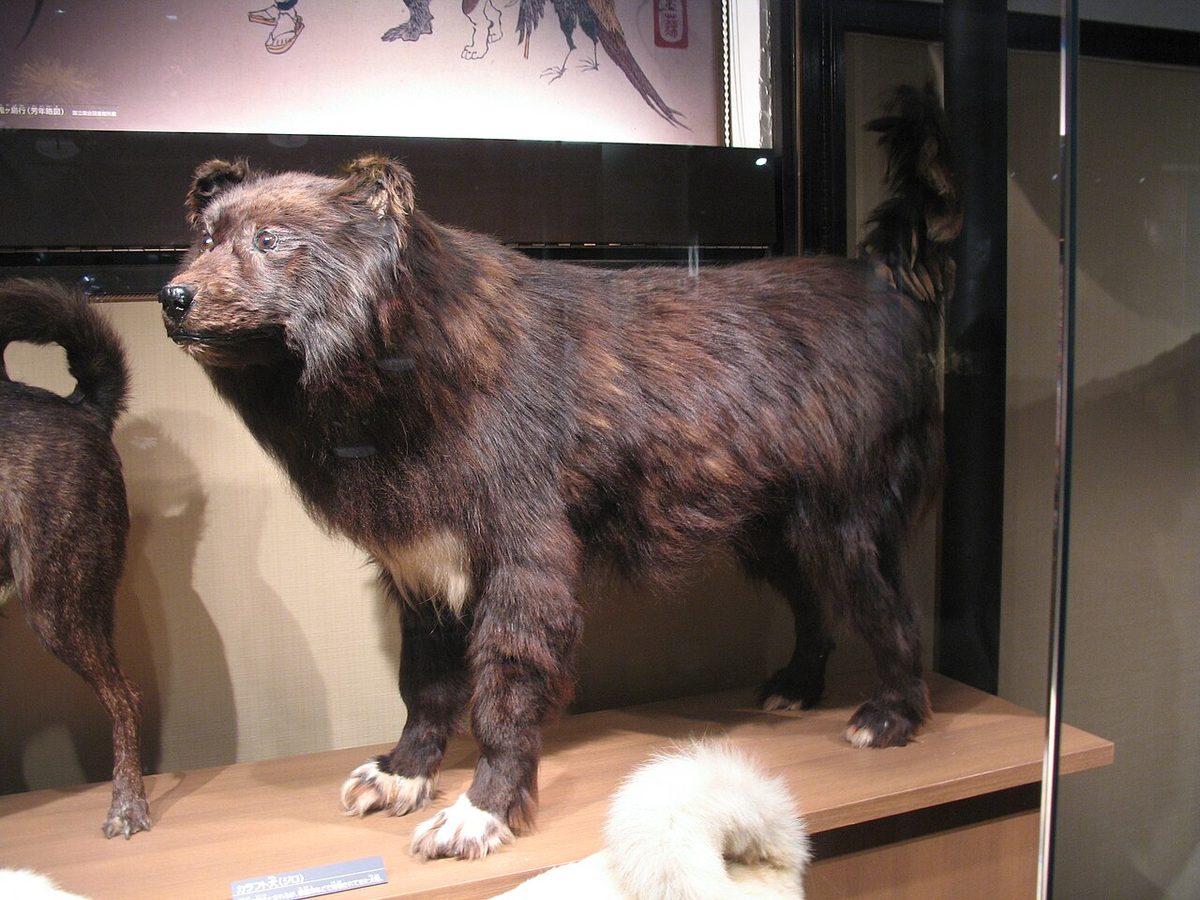

- Origin
- Sakhalin
- Type
- Sled dog
- Size
- Large
- Height
- 56–66 cm (22–26 in)
- Weight
- 30–40 kg (66–88 lb)
- Coat
- Thick double coat
- Colors
- Black, red, gray or brindle
- Status
- Critically endangered landrace; no breed standard
The Sakhalin Husky is a sled dog from Sakhalin Island and the nearby coast of mainland Russia. It is a landrace, not a formal breed, and has no breed standard. Known in Japanese as Karafuto Ken, it was bred mainly to pull sleds and was also used for hunting bear and for fishing. It is critically endangered, with about 20 dogs left on the island.
History
The Nivkh people developed the dog over centuries as a hardy sled and hunting animal. In a region with no roads and severe winters, dog teams were the only dependable way to move mail, food, medicine and people, and in hard winters they crossed the frozen Strait of Tartary to the mainland. A team was a measure of wealth, and dogs were given to settle debts. The Japanese explorer Mamiya Rinzō reported in 1808 and 1809 that every family in northern Sakhalin, rich or poor, kept dogs.
Polar explorers used them too. Robert Falcon Scott took 33 Sakhalin Huskies on his Terra Nova expedition to Antarctica, noting that they were shorter than other sled dogs and struggled in deep snow.
Soviet policies of the 1920s and 1930s ended the Nivkh way of life, and dogs across northern Sakhalin were destroyed. The Red Army tried the dogs as pack animals in the Second World War but found their taste for salmon made them costlier to feed than horses.
In 1958 a Japanese Antarctic expedition had to abandon 15 Sakhalin Huskies, chained, at Showa Station. Almost a year later two of them, Taro and Jiro, were found alive and became famous.
Snowmobiles reduced the need for the dogs further. By 2011 only seven were known, owned by the musher Sergei Lyubykh, who died in 2014. His student Oleg Seliverstov has continued the effort to restore them.
Appearance
The Sakhalin Husky has a long body, a strong frame and well-developed muscles under a thick double coat. It stands 56 to 66 cm at the withers and weighs 30 to 40 kg. The face is triangular with amber eyes and pricked ears, the paws are large, and the tail is held straight or bent slightly to one side. The Nivkh used to dock the last third of the tail so that harnessed dogs could not grab one another’s.
Coats are black, red, gray or brindle. Black was preferred because it shows up best in a snowstorm.
These are freighting dogs. They can pull more than 70 kg over 100 to 150 km at 10 to 11 km/h.
Temperament
The Sakhalin Husky is calm, intelligent and loyal, and is not known to be aggressive toward people or other dogs. It has a strong prey drive and can catch fish for itself. Mail drivers of the 19th century praised its ability to hold a course across ice floes in a blizzard.
Care and health
Like other sled dogs, it needs a great deal of exercise. The dogs were traditionally fed fish, seal and bear fat. They are described as generally healthy and resistant to disease.
Facts on this page were checked against Wikipedia and may have changed since.