Siberian Husky

- Origin
- Siberia
- Type
- Sled dog
- Size
- Medium
- Height
- 51–60 cm (20–23.5 in)
- Weight
- 16–27 kg (35–60 lb)
- Coat
- Thick double coat
- Colors
- All colors from black to pure white, with many markings
- Life span
- About 12 years
- Status
- Recognised by the FCI, AKC, UKC and The Kennel Club
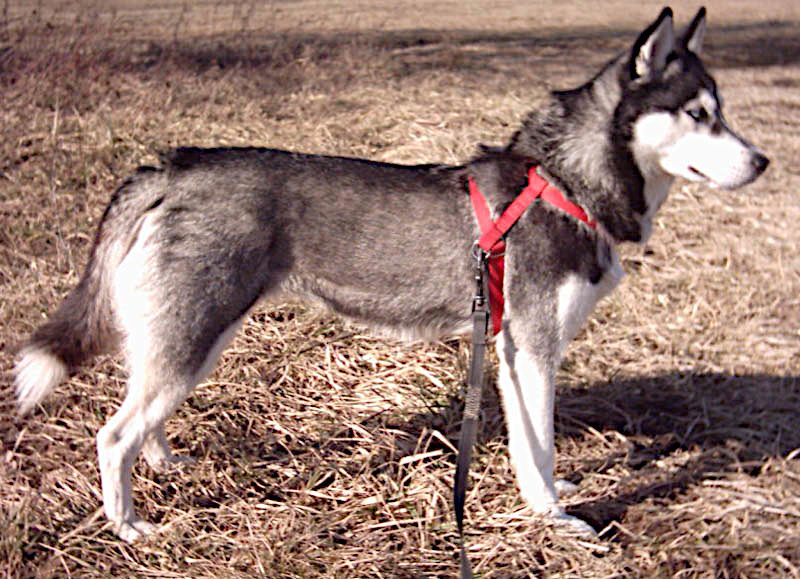
The Siberian Husky is a medium-sized working sled dog of the spitz family. It was developed by the Chukchi people of the Chukchi Peninsula in the Russian Far East to pull sleds and keep them company. It is known for its thick double coat, upright triangular ears and striking markings, and is smaller than the Alaskan Malamute it resembles. Most are now kept as pets, though many still pull sleds for racing and recreation.
History
The Chukotka sled dog, used by the Chukchi since prehistoric times, is the ancestor of the breed. From the 1890s to the 1930s these dogs were imported to Alaska in large numbers. The Russian fur trader William Goosak brought them to Nome during its gold rush, and settlers called them Siberian Huskies to tell them apart from other northern dogs. Smaller and faster than the heavy freighting dogs then in use, they soon dominated the 408-mile All-Alaska Sweepstakes. Leonhard Seppala was the leading breeder and racer of the time.
The breed became famous through the 1925 serum run to Nome, a relay of dog teams that carried diphtheria serum more than 600 miles. Balto led the final leg, while Seppala’s lead dog Togo covered the longest and most dangerous stretch and became a foundation dog of the breed.
Exports from Siberia stopped in 1930, the year the American Kennel Club recognized the breed. The United Kennel Club followed in 1938, at first under the name Arctic Husky. Siberian Huskies went with Richard Byrd’s Antarctic expedition in 1933 and served in the United States Army’s Arctic search and rescue unit in World War II. A 2024 genetic study found four distinct populations today: show, pet and racing Siberian Huskies, and Seppala Siberian Sleddogs.
Appearance
Males stand about 53 to 60 cm and weigh 20 to 27 kg. Females stand 51 to 56 cm and weigh 16 to 23 kg. The undercoat is dense and slightly wavy, with a longer topcoat of straight guard hairs, and the coat withstands temperatures of −50 to −60 °C. All colors from black to pure white are allowed, often with white legs, a white tail tip and masks or spectacles on the face. Merle is not permitted.
The eyes are almond-shaped and may be brown or blue, one of each, or mixed. The nose can fade in winter, which is called snow nose. The tail is heavily furred, and a sleeping dog curls it over its nose for warmth.
Temperament
The Siberian Husky is friendly and gentle and is classed as good with children. It usually howls instead of barking. It has high energy, needs a lot of exercise and craves the company of people and other dogs. Huskies are known escape artists that dig under, chew through or jump fences, so a fence of 6 ft (1.83 m) is recommended. Dogs left without enough to do can be destructive. Many are given up to shelters by owners who chose the breed for its looks.
Care and health
The coat needs weekly grooming. A 2024 UK study found a life expectancy of 11.9 years. Health problems are mainly genetic: seizures, congenital laryngeal paralysis and eye defects including juvenile cataracts, corneal dystrophy, glaucoma and progressive retinal atrophy. Hip dysplasia is uncommon, found in about two percent of dogs tested. Racing dogs may suffer gastric ulcers and bronchitis, the so-called ski asthma.
Facts on this page were checked against Wikipedia and may have changed since.