Cairn Terrier
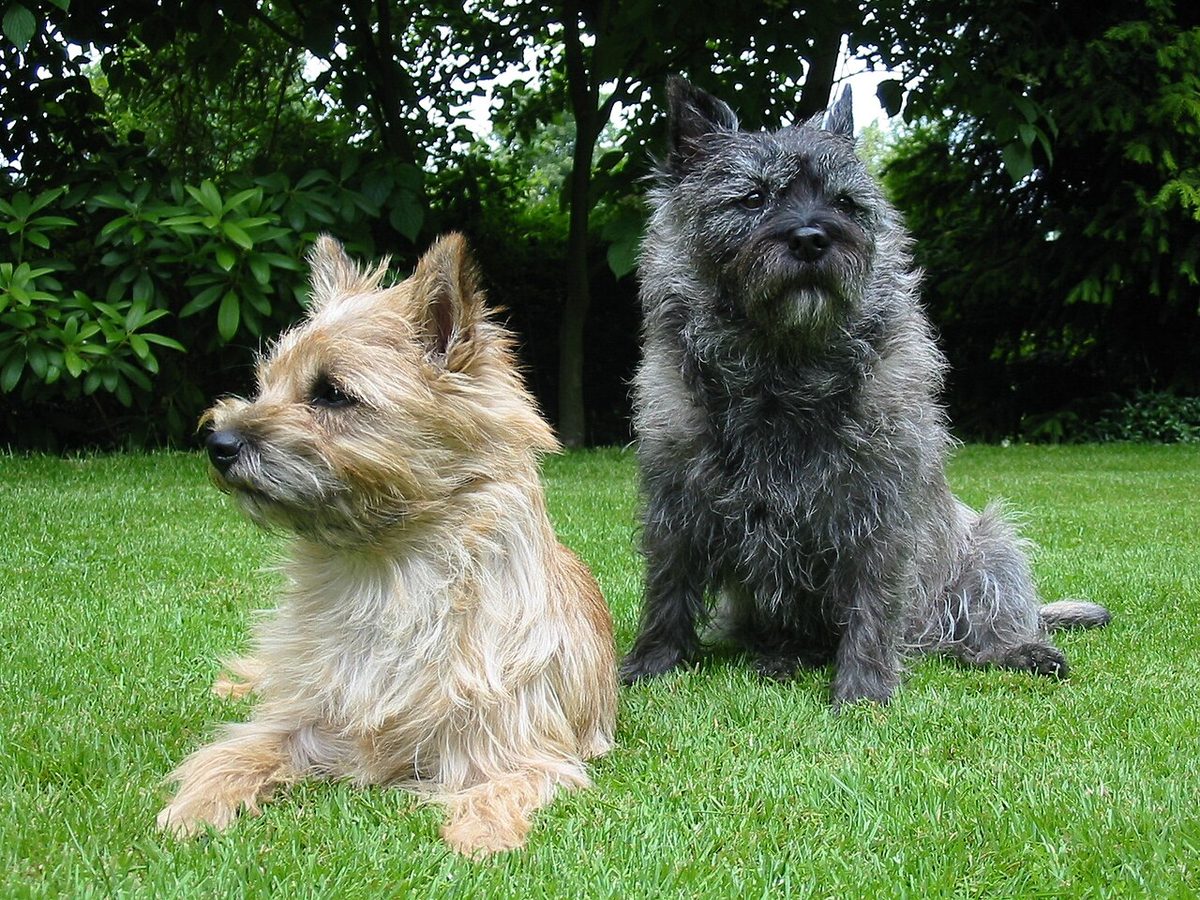

- Origin
- Scotland
- Type
- Terrier
- Size
- Small
- Height
- 28–31 cm (11–12 in)
- Weight
- 6–7.5 kg (13–17 lb)
- Coat
- Harsh, shaggy outer coat over a soft, dense undercoat
- Colors
- Cream, wheaten, red, sandy, gray or brindle
- Life span
- 13–14 years
- Status
- Recognised by the FCI, AKC and The Kennel Club
The Cairn Terrier is a small, shaggy terrier from the Scottish Highlands and the Isle of Skye, and one of Scotland’s earliest working dogs. It takes its name from cairns, the piles of stones where these terriers often flushed out vermin.
History
Before 1873 all the terriers of Scotland were lumped together as Scottish Terriers. In its early days as a separate breed the Cairn was called the short-haired Skye Terrier, the name under which it first appeared at official shows in the United Kingdom in 1909. Breeders of the Skye Terrier objected, the Kennel Club would not accept the name, and Cairn Terrier was adopted as a compromise.
The American Kennel Club registered the breed in 1903. In the United Kingdom the Kennel Club gave it a separate register in 1912, when 134 dogs were registered and the breed was granted championship status. White Cairns could once be registered, but after 1917 the American Kennel Club required them to be registered as West Highland White Terriers. The FCI definitively accepted the breed in 1963. The Cairn has since fallen out of fashion in its homeland, and the Kennel Club now classes it as a Vulnerable Native Breed.
Appearance
The Cairn has a double coat: a harsh, weather-resistant, shaggy outer layer over a soft, dense, downy undercoat. A well-groomed dog still looks rough and ready. Colors include cream, wheaten, red, sandy, gray and brindle, while pure black, black and tan, and white are not permitted by many kennel clubs. Brindle dogs often change color over their lives, turning steadily more black or more silver with age.
The ideal height is about 28 to 31 cm, with weight in proportion, usually around 6 to 7.5 kg. The breed looks somewhat like the Norwich Terrier, though with shaggier fur.
Care and health
A French study in 2015 found a life expectancy of 13.42 years, and a UK study in 2024 found 14 years, above the average for purebred dogs.
Hereditary problems seen in the breed include cataracts, corneal dystrophy, entropion, lens luxation, ocular melanosis and progressive retinal atrophy in the eyes; hip dysplasia, luxating patella, Legg-Calvé-Perthes disease and craniomandibular osteopathy, also called lion jaw, in the bones and joints; and diabetes mellitus, hypothyroidism, portosystemic shunt, Krabbe disease, von Willebrand disease, bronchoesophageal fistula and soft-tissue sarcoma. The breed is also prone to atopic dermatitis.
Facts on this page were checked against Wikipedia and may have changed since.