Toy Fox Terrier

- Origin
- United States
- Type
- Terrier
- Size
- Toy
- Height
- 21.5–29 cm (8.5–11.5 in)
- Coat
- Short, fine and glossy
- Colors
- Mostly white with a black and tan, chocolate and tan, tan or black head and markings
- Life span
- About 13 years
- Status
- Recognised by the UKC and AKC
The Toy Fox Terrier is a small terrier from the United States, descended directly from the larger Smooth Fox Terrier. It has been registered as a breed of its own since 1936. It has been both a farm dog and a house pet, valued for catching rodents.
History
The breed is believed to have begun in the United States in the early 1900s. Small fox terriers were at times crossed with other breeds, such as the Toy Manchester Terrier, the Chihuahua and the Italian Greyhound. The Toy Fox Terrier of today, though, is thought to be the result of careful breeding from small Smooth Fox Terriers without such crosses. Some breeders trace their dogs back to Foiler, the first fox terrier registered by The Kennel Club in Britain, around 1875.
Before 1936 the United Kennel Club registered these dogs as Smooth Fox Terriers. That year it gave them their own name and breed status, in its Terrier Group. The American Kennel Club recognized the breed in 2003 and placed it in the Toy Group.
Appearance
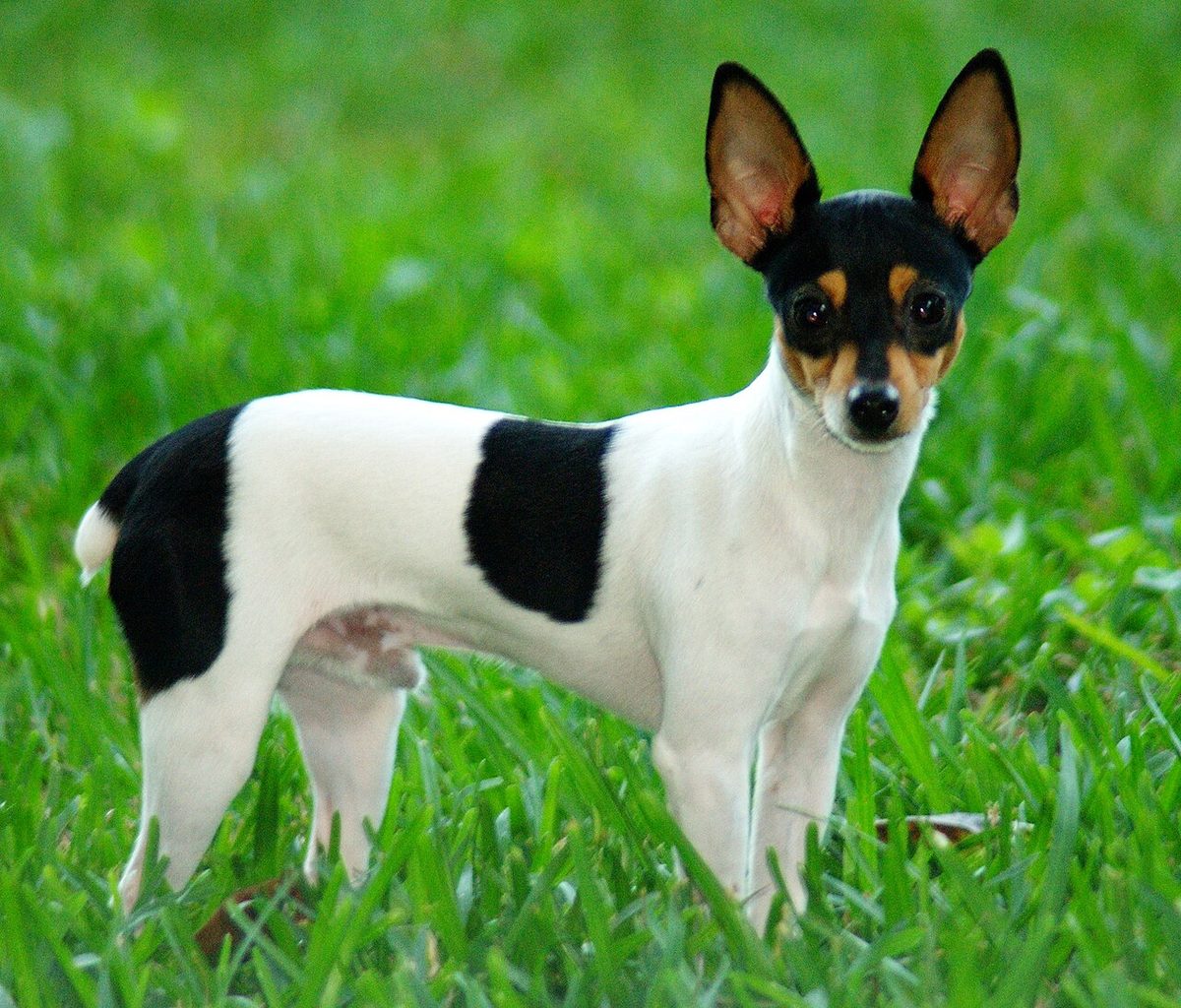
The Toy Fox Terrier is a small, muscular, athletic dog standing 21.5–29 cm (8.5–11.5 in) at the shoulder. It has V-shaped ears, large eyes and a short tail set high. Breeders often dock the tail a few days after birth.
The coat is short, fine and glossy. The body is mostly white and the head mostly solid in color. There are four patterns: tricolor, with black and tan on the face; chocolate, in which chocolate takes the place of black; white and tan, with no black; and white and black, with no tan. The United Kennel Club does not allow chocolate dogs to be shown.
Temperament
Toy Fox Terriers are active, like other terriers, though usually less so than a Jack Russell Terrier. They are loyal to their owners and considered easy to train, which once made them a favorite with circus clowns. They are regarded as a good match for older owners and as companions for people with disabilities. Well-trained dogs tend not to bark much.
Care and health
Like other toy breeds, the Toy Fox Terrier is prone to patellar luxation, Legg–Calvé–Perthes syndrome and von Willebrand disease.
A 2024 study in the United Kingdom, based on 52 deaths, found a life expectancy of 12.9 years.
Facts on this page were checked against Wikipedia and may have changed since.