Scottish Deerhound

- Origin
- Scotland
- Type
- Sighthound
- Size
- Giant
- Height
- 71–80 cm (28–32 in) or more
- Weight
- 34–50 kg (75–110 lb)
- Coat
- Harsh and wiry, 8–10 cm (3–4 in) long
- Colors
- Shades of gray, blue-gray preferred
- Life span
- About 10 years
- Status
- Recognised by The Kennel Club
The Scottish Deerhound, or simply the Deerhound, is a large sighthound once bred to hunt red deer by coursing. It looks like a Greyhound but is bigger and heavier-boned, with a rough coat.
History
Large dogs chasing a deer appear on the Hilton of Cadboll Stone, carved about 1,200 years ago, but no link has been shown between such images and the modern breed. The Deerhound became widely known under its present name only in the early 19th century, as a relative of regional greyhound types such as the Highland greyhound. It was once thought to descend from old Gaelic hounds and so to be close kin to the Irish Wolfhound. In fact it was the main foundation breed when the modern Irish Wolfhound was created in the late 19th century.
In deer coursing, one or two hounds were brought as close as possible to the deer and then slipped to run one down by sheer speed, usually within a few minutes. After the clan system declined the dogs became sporting animals for landowners and nobles, though ordinary people bred and hunted with them too. Fast and silent, they were valued by nobility and poachers alike.
The breed’s most precarious time came toward the end of the 19th century. Large estates were broken up, and with modern rifles the fashion turned to stalking and shooting, which needed only a slower tracking dog. Few estates kept Deerhounds, and the breed was left to a handful of enthusiasts who made it a show dog.
Deerhounds were also used in North America on wolves and coyotes, and in Australia, along with crosses such as the Kangaroo Dog, on kangaroo and wild boar.
Appearance
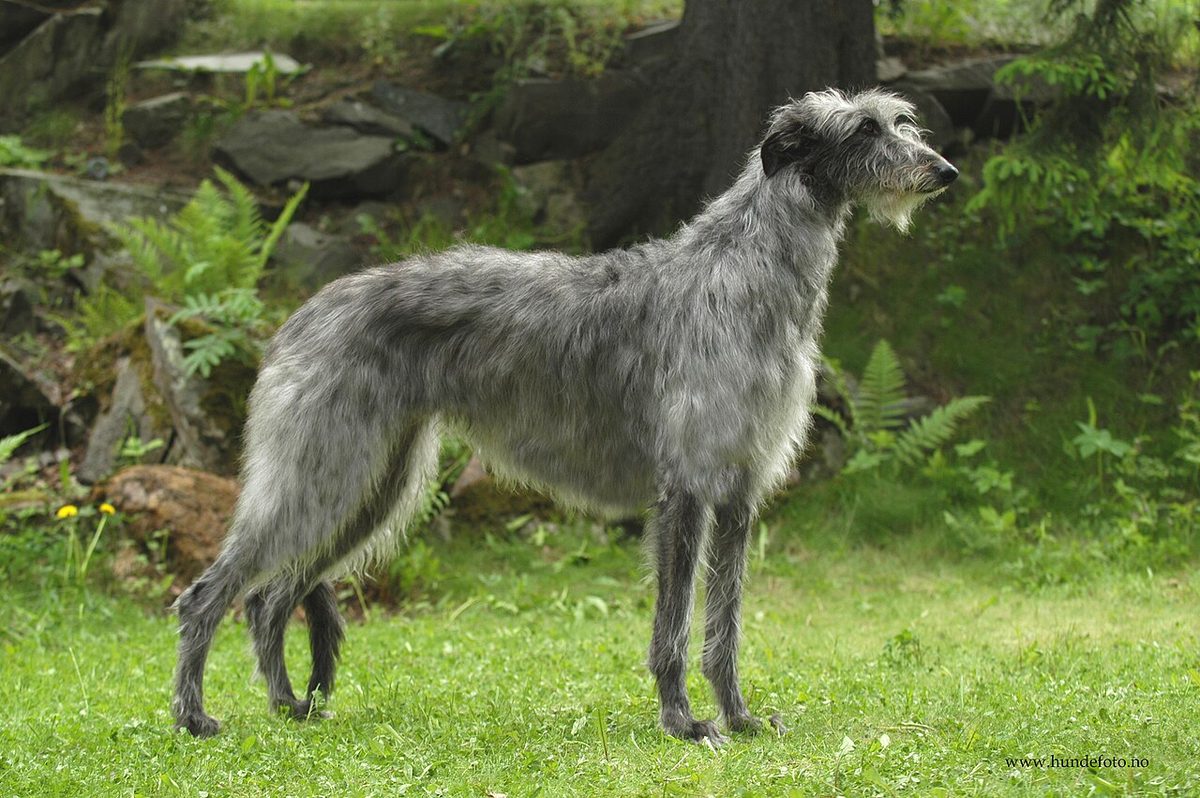
The Deerhound is one of the tallest sighthounds. Males should stand at least 76 cm (30 in) at the withers and weigh 39–50 kg (85–110 lb). Females stand from 71 cm (28 in) and weigh 34–43 kg (75–95 lb).
The coat is harsh and wiry, 8–10 cm (3–4 in) long, with a mane, a softer beard and mustache, and softer hair on the chest and belly. Modern dogs come only in shades of gray, with blue-gray preferred. Brindle, yellow and red fawn dogs existed in the past, but those colors have been lost. A white chest, white toes and a small white tail tip are allowed. A white blaze or collar is not.
The head is long with a flat skull, little stop and a tapering muzzle. The eyes are dark. The small, dark ears fold back against the head and are raised half-erect in excitement. The long tail, well covered with hair, nearly reaches the ground.
On smooth, firm ground a Deerhound is slower than a Greyhound, but on rough or heavy going it can outrun one. The cool, wet, hilly glens it worked in helped shape its size and rough coat.
Care and health
A 2024 UK study found a life expectancy of 10.5 years. In a survey of British breed club members, heart problems were the most common cause of death, accounting for nearly a quarter, followed by cancer at 18%. Dilated cardiomyopathy is more common in the Deerhound than in other breeds: one American study found it in 6% of the dogs, the highest rate of any breed.
Facts on this page were checked against Wikipedia and may have changed since.