Lancashire Heeler
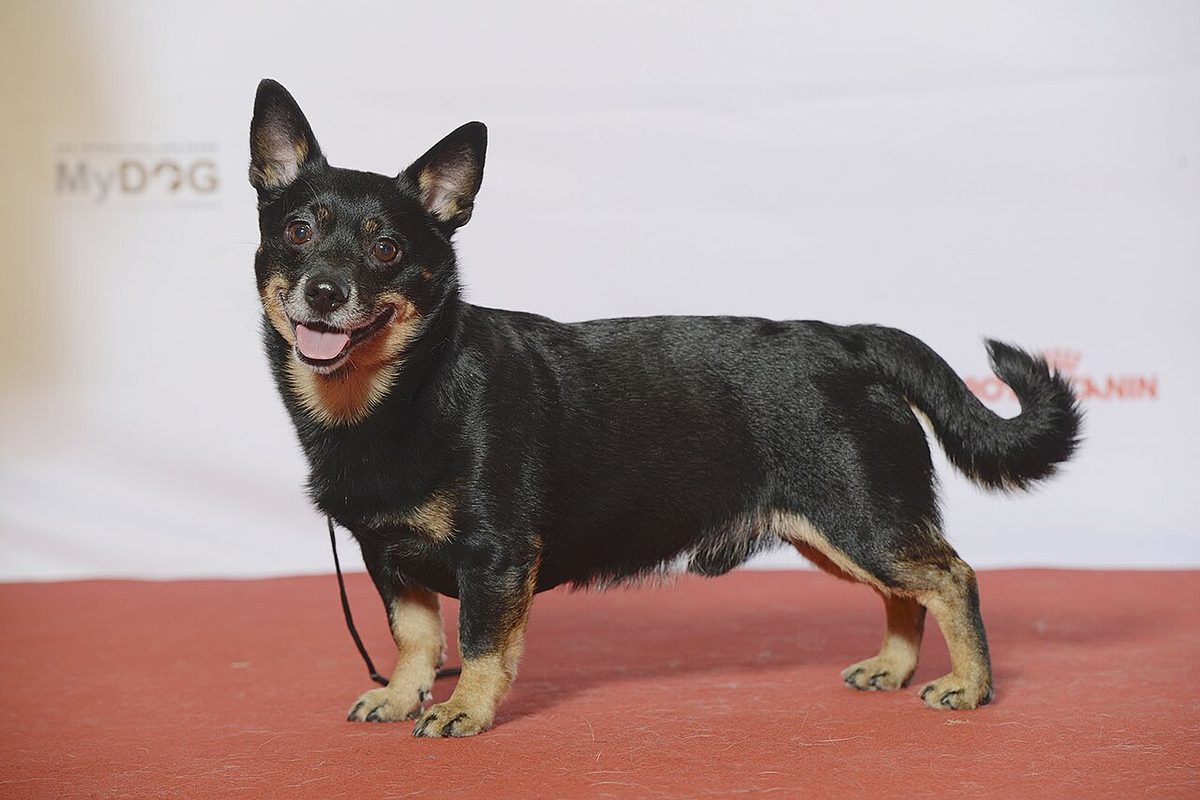

- Origin
- England
- Type
- Herding
- Size
- Small
- Height
- 25–30 cm (10–12 in)
- Weight
- 5.9–8.2 kg (13–18 lb)
- Coat
- Harsh, smooth outer coat with a weatherproof undercoat
- Colors
- Black and tan, or liver and tan
- Life span
- About 15 years
- Status
- Recognised by The Kennel Club and the AKC; provisionally accepted by the FCI
The Lancashire Heeler is a small English dog developed to drive and herd cattle. In its home county it has been known for more than 150 years as an all-round farm dog, as good at catching rats as at moving stock. The Kennel Club lists it as a vulnerable native breed.
History
It is generally accepted that the Lancashire Heeler descends from the Welsh Corgi and the Manchester Terrier. Gwen Mackintosh began breeding Heelers in the early 1960s, and in 1978 she and other enthusiasts founded the Lancashire Heeler Club, which drew up a standard and kept a register. The Kennel Club recognised the breed in 1981. Mackintosh remained the club’s president until her death in 1992.
In 2006 The Kennel Club classed the Heeler as a vulnerable native breed, a label for breeds with 300 or fewer registrations a year. That year 173 were registered in the United Kingdom, and in 2007 the number was 146. The Fédération Cynologique Internationale added it to its list of provisionally accepted breeds in 2016. The American Kennel Club recognised it in 2024, and it appeared at the AKC’s National Dog Show for the first time that year.
Appearance
The Lancashire Heeler usually stands 25 to 30 cm (10 to 12 in) at the shoulder and weighs 5.9 to 8.2 kg (13 to 18 lb). Its body is slightly longer than it is tall. The outer coat is harsh and smooth, over an undercoat that keeps the dog dry in any weather, and in winter there may be a slight mane around the neck. Most dogs are black and tan; liver and tan is also accepted by The Kennel Club.
Temperament
The American Kennel Club’s standard describes the breed as courageous, happy and affectionate to its owner. A contented Heeler may draw back its lips in something that looks like a human smile.
Care and health
A 2024 UK study found a life expectancy of 15.4 years for the Lancashire Heeler, the highest of any breed in the study.
The three most common serious conditions in the breed all affect the eyes: Collie eye anomaly, primary lens luxation and persistent pupillary membranes. The Heeler is one of the breeds more often affected by primary lens luxation, which is caused by a recessive mutation in the ADAMTS17 gene. Patella luxation also occurs.
Facts on this page were checked against Wikipedia and may have changed since.