McNab

- Origin
- United States
- Type
- Herding
- Size
- Medium
- Height
- 41–64 cm (16–25 in)
- Weight
- 14–29 kg (30–65 lb)
- Coat
- Close, dense and weather resistant; short to medium, never long
- Colors
- Black, red, blonde, blue, lilac or sable, solid or with white or white and tan
- Life span
- 13–15 years
- Status
- Not recognised by the major kennel clubs
The McNab, also called the McNab Shepherd or McNab Collie, is a herding dog from Hopland in Mendocino County, Northern California. It was bred to cope with the hard conditions of California ranch work: heat, burrs, foxtails and rugged ground. No major kennel club recognizes it as a standardized breed.
History
Alexander McNab left Scotland in the late 19th century and homesteaded a 10,000-acre sheep ranch in what became Hopland. He set out to develop a herding dog that could handle the rough conditions there, and called his dogs McNab Shepherds. In the early 1900s the ranch passed to his youngest son, John McNab, who carried on the breeding and imported more dogs from Scotland.
California ranchers came to rely on the dogs. For a long time the McNab was little known outside the state, but over the last three decades it has spread across the United States and Canada, with a few in Germany and Japan. In 2014 breeders founded the McNab Shepherd Registry, which registers dogs by DNA verification, and a study with Mars Veterinary supported a genetic signature unique to the McNab.
Appearance
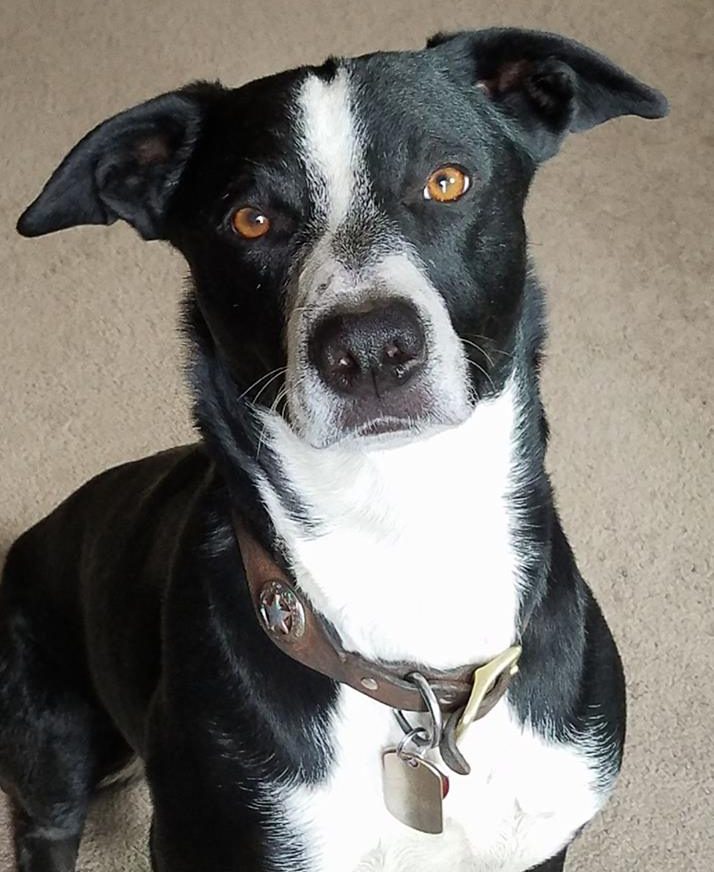
McNabs vary a good deal in looks. Females stand 16 to 21 inches (41 to 53 cm) and weigh 30 to 50 lb (14 to 23 kg); males stand 18 to 25 inches (46 to 64 cm) and weigh 35 to 65 lb (16 to 29 kg). Ears range from pricked to floppy, and tails may be long or bobbed. The coat is close, dense and weather resistant. It may be a slick short single coat, a short double coat or a medium-length single coat, but it is never long. Colors are black, red, blonde, blue, lilac and sable, either solid, with white, or with white and tan. The eyes are almond-shaped and brown, hazel or copper. Cat-like feet add to the dog’s agility.
Temperament
McNabs bond closely with their families, including other pets, and seldom wander from home. They have a strong sense of territory and are more inclined to defend it than many herding breeds. They can be assertive and demanding, and do best with firm, consistent handlers who use positive training. They are highly intelligent and quick to learn. Given enough exercise they are not hyperactive and will settle at their owner’s side.
At work the McNab is a loose-eyed, independent herder that can both head and heel stock. First bred for sheep, it proved well suited to cattle and is also used on goats, geese, llamas and horses. McNabs compete in agility, disc, dock diving, flyball and herding, and work in search and rescue and as service dogs.
Care and health
McNabs need more daily exercise and mental work than many breeds, and become restless if left alone or neglected. They are hardy, with no breed-specific health problems and an average life span of 13 to 15 years. Some carry the MDR1 gene mutation, which makes them very sensitive to ivermectin, a common ingredient in heartworm preventives, and to certain other drugs. A DNA test for the mutation is available.
Facts on this page were checked against Wikipedia and may have changed since.