Miniature Australian Shepherd

- Origin
- United States
- Type
- Herding
- Size
- Small
- Height
- 33–46 cm (13–18 in)
- Coat
- Medium-length double coat
- Colors
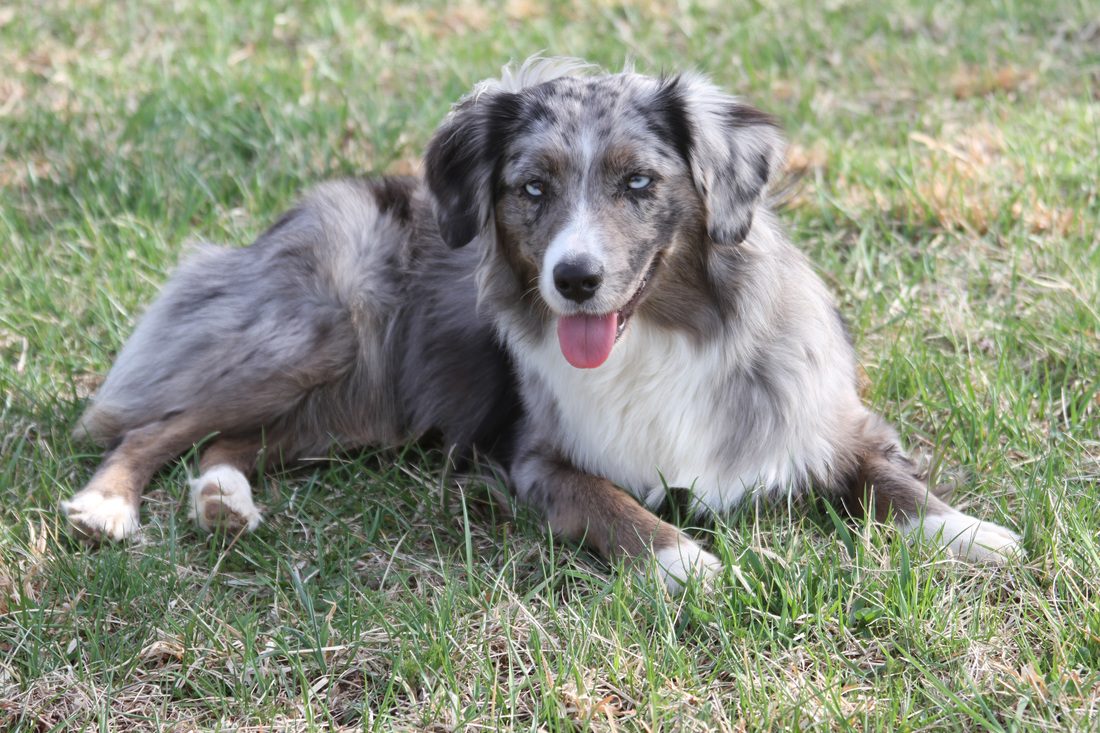
- Black, blue merle, red or red merle, with or without tan and white markings
- Life span
- 13–15 years
- Status
- Recognised by the AKC and FCI as the Miniature American Shepherd
The Miniature Australian Shepherd is a small herding dog from the United States. Under American Kennel Club rules it is now registered as the Miniature American Shepherd, often shortened to MAS. It is highly intelligent and eager to work with its handler, and it is trained for herding, agility, obedience, flyball and canine freestyle.
History
The breed was developed in the late 1960s from what were thought to be small Australian Shepherds, as a compact herding and working dog. By the mid-1970s it had reached the size wanted today.
Its name has been argued over for decades. In 1993 the American Kennel Club asked the original club to change its name, because “Miniature Australian Shepherd” was too close to that of a breed the AKC already recognized, and for a time the dogs were called North American Shepherds. Over the next fifteen years clubs formed, reorganized and folded as breeders tried to agree. Members wanting separate recognition eventually approached the AKC, and the name Miniature American Shepherd was the result. Mini Aussie breeders are still divided over that compromise, and one older club continues to register dogs as Miniature Australian Shepherds.
In May 2011 the AKC chose the Miniature American Shepherd Club of the USA as the parent club. Full AKC recognition came on July 1, 2015, making this the club’s 186th breed, and the FCI accepted it in September 2019.
Appearance
The standard asks for 36–46 cm (14–18 in) in males and 33–43 cm (13–17 in) in females. The back is level from withers to hip. The tail may be left long, be a natural bobtail, or be docked to no more than three inches.
The coat is a double coat of medium length. Recognized colors are black, blue merle, red merle and red (liver). Tan markings are allowed on the face, legs, chest and underside. White is allowed on the muzzle, as a blaze, as a collar, and on the chest, belly and legs; white elsewhere on the body can disqualify a dog from the show ring.
Temperament
This is a bright, biddable, high-energy breed, and it is still worked in competition.
Care and health
The breed needs frequent exercise and things to occupy its mind. The expected lifespan is 13–15 years. Inherited problems known in the breed include progressive retinal atrophy, hereditary cataracts, iris coloboma, microphthalmia, the MDR1 multi-drug resistance gene, hip dysplasia and degenerative myelopathy.
Facts on this page were checked against Wikipedia and may have changed since.