Swedish Vallhund

- Origin
- Sweden
- Type
- Herding
- Size
- Small
- Height
- 31–33 cm (12–13 in)
- Coat
- Short and harsh, with a soft, dense undercoat
- Colors
- Gray, grayish brown, grayish yellow or reddish brown, with lighter markings
- Life span
- About 15 years
- Status
- Recognised by the FCI and the Swedish Kennel Club
The Swedish Vallhund, also known as the Västgötaspets or Swedish cow dog, is a small, long-bodied herding dog native to Sweden. Vallhund means herding dog, and the breed was developed more than 1,000 years ago to drive and herd cattle.
History
The Vallhund is an old national breed of Sweden that may date back to the 8th or 9th century. It comes from the province of Västergötland, just south of Lake Vänern, where the little dog proved its worth at watching, guarding and herding. It is related to the larger spitz dogs and moose-hunting dogs of Scandinavia.
The breed goes back to the time of the Viking settlement of England and is thought to have played a part in the development of the Welsh Corgi and the Lancashire Heeler. Another theory holds that either the Vallhund was taken to Wales or the Corgi was brought to Sweden in the eighth or ninth century, which would explain how alike the two are.
By 1942 the breed was close to extinction. Björn von Rosen and K. G. Zettersten revived it through careful breeding and publicity. In 1943 the Swedish Kennel Club recognized it under the name Västgötaspets, after the province where the revival took place. It has since been recognized and bred in more than ten countries.
Appearance
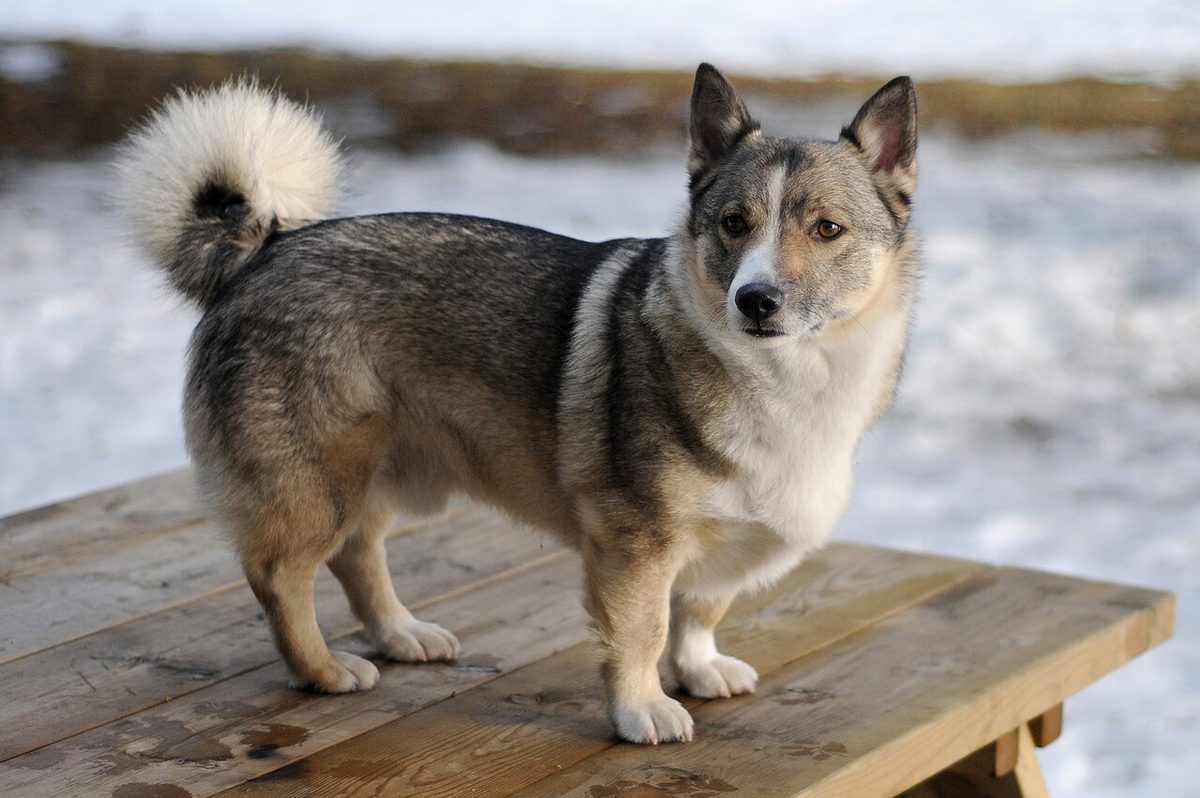
Males stand about 33 cm at the withers and females about 31 cm. The dog is strong and long in the body, with a height to length ratio of about 2 to 3. The head is wedge-shaped, with dark brown oval eyes and pricked ears. Puppies are born with tails of every length, from none at all to full length, so the dogs are often wrongly assumed to have been docked.
The coat is short and harsh, with a tight topcoat over a soft, dense undercoat. The color runs from gray, grayish brown and grayish yellow to reddish brown, darker on the back, neck and sides and lighter on the muzzle, throat, chest, belly, buttocks, feet and hocks. Lighter bands on the shoulders are known as harness markings. Some dogs have a little white, as a narrow blaze, a spot or slight necklace on the neck, or marks on the legs and chest. White may cover no more than 30 percent of the dog.
Temperament
The Vallhund takes part in a wide range of activities, including agility, obedience, rally, flyball, tracking, hiking and herding events. Dogs that show basic herding instinct can be trained for herding trials.
Care and health
The Swedish Vallhund is generally healthy, with an average lifespan of 15 years. Its upright ears mean ear problems are rare. The double coat lets it cope with hot climates as long as it has shade and water, but its short legs make very deep snow hard going. An inherited form of progressive retinal atrophy is found in 34.9 percent of the population and shows as mild to moderate night blindness at around ten years of age.
Facts on this page were checked against Wikipedia and may have changed since.