Korea Jindo Dog
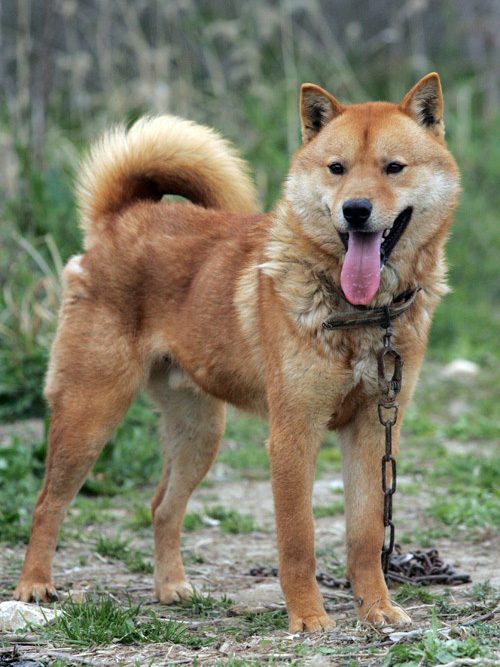

- Origin
- South Korea
- Type
- Spitz
- Size
- Medium
- Height
- 45–55 cm (18–22 in)
- Weight
- 15–27 kg (33–60 lb)
- Coat
- Medium-length double coat, harsh and straight over a soft undercoat
- Colors
- White, red fawn, wolf gray, black and tan, brindle or black
- Status
- Recognised by the FCI and UKC; in the AKC Foundation Stock Service
The Jindo is a spitz-type dog native to Jindo, an island off South Korea, where it was traditionally used to hunt game such as water deer and wild boar. It is one of South Korea’s protected national treasures and has a reputation for loyalty and for skill at tracking. Today it is mostly kept as a companion and guard dog.
History
The Jindo came through the Japanese occupation of Korea, from 1910 to 1945, because Japanese biologists saw its likeness to Japan’s own native dogs, while other Korean breeds were killed. In 1962 the South Korean government named it the 53rd Natural Treasure and protected it by law. Only dogs born on Jindo Island can be officially registered as Jindos by the government, after inspection, and exporting pure island dogs is very difficult.
The United Kennel Club recognised it on January 1, 1998, and the Fédération Cynologique Internationale in 2005. It is in the American Kennel Club’s Foundation Stock Service.
Appearance
The Jindo is a double-coated dog with a keen, alert look. Males stand about 48 to 55 cm (19 to 22 in) at the withers and females 45 to 50 cm (18 to 20 in). Weight should leave the dog lean and well muscled: typically 18 to 27 kg (40 to 60 lb) for males and 16 to 25 kg (35 to 55 lb) for females.
The skull is broad and rounded between the ears. The ears are triangular and upright, tipped forward and angled out to the sides somewhat like airplane wings. The eyes are almond-shaped and dark brown. The tail is thick and carried over the back in a loose curl or a sickle.
There are six colors: white, which is really ivory with tan on the ear tips, hind legs and tail; fawn, the color of ripe wheat; wolf gray; black and tan, with a tan spot over each eye; brindle, with tiger-like stripes on fawn; and solid black, which is very rare.
Temperament
Jindos are known for loyalty and a gentle nature, and they have a clear sense of rank within the family. They are wary of strangers and will not take food from anyone but their owner. The best-known story is of Baekgu, a female sold in 1993 to a new owner about 300 km (180 mi) away, who escaped and reached her first home seven months later; a statue of her now stands on the island.
That attachment to a first owner, together with a strong hunting drive, makes the breed hard to use for other work. Korean handlers have judged it unsuited to search, rescue and military duty.
Care and health
The Jindo has medium to high energy and needs space, walks and regular contact with people or other dogs. Its strong hind legs let it jump high, so a yard needs a fence of at least 6 ft (about 1.8 m).
Facts on this page were checked against Wikipedia and may have changed since.