Havanese

- Origin
- Cuba
- Type
- Toy and companion
- Size
- Toy
- Height
- 22–29 cm (8.5–11.5 in)
- Weight
- 3–6 kg (7–14 lb)
- Coat
- Long, soft and silky, slightly wavy
- Colors
- All colors
- Life span
- About 14 years
- Status
- Recognised by the FCI and AKC
The Havanese is a toy dog of the bichon type and the national dog of Cuba. It was developed from the Blanquito de la Habana, the “little white dog of Havana”, which is now extinct, and it has always been a companion.
History
The breed’s forerunners are believed to have come from Tenerife; ship manifests for voyages from Tenerife to Cuba list dogs on board. The Blanquito descended from the Bichón Tenerife and is thought to have been crossed later with other bichon types, the poodle among them, to give the Havanese. The little dogs became the companions of Spanish colonists in Cuba and were much admired by the nobility.
After the Cuban Revolution, many upper-class Cubans fled to the United States, and few could bring their dogs. When American breeders took an interest in the 1970s, the gene pool in the United States was just 11 dogs. Careful breeding and some dogs brought in from other countries rebuilt the numbers. The American Kennel Club recognized the breed in 1996, and it has grown quickly since: by 2013 it was the 25th most popular breed in the United States, and in 2017 it entered the top five in Canada.
Appearance
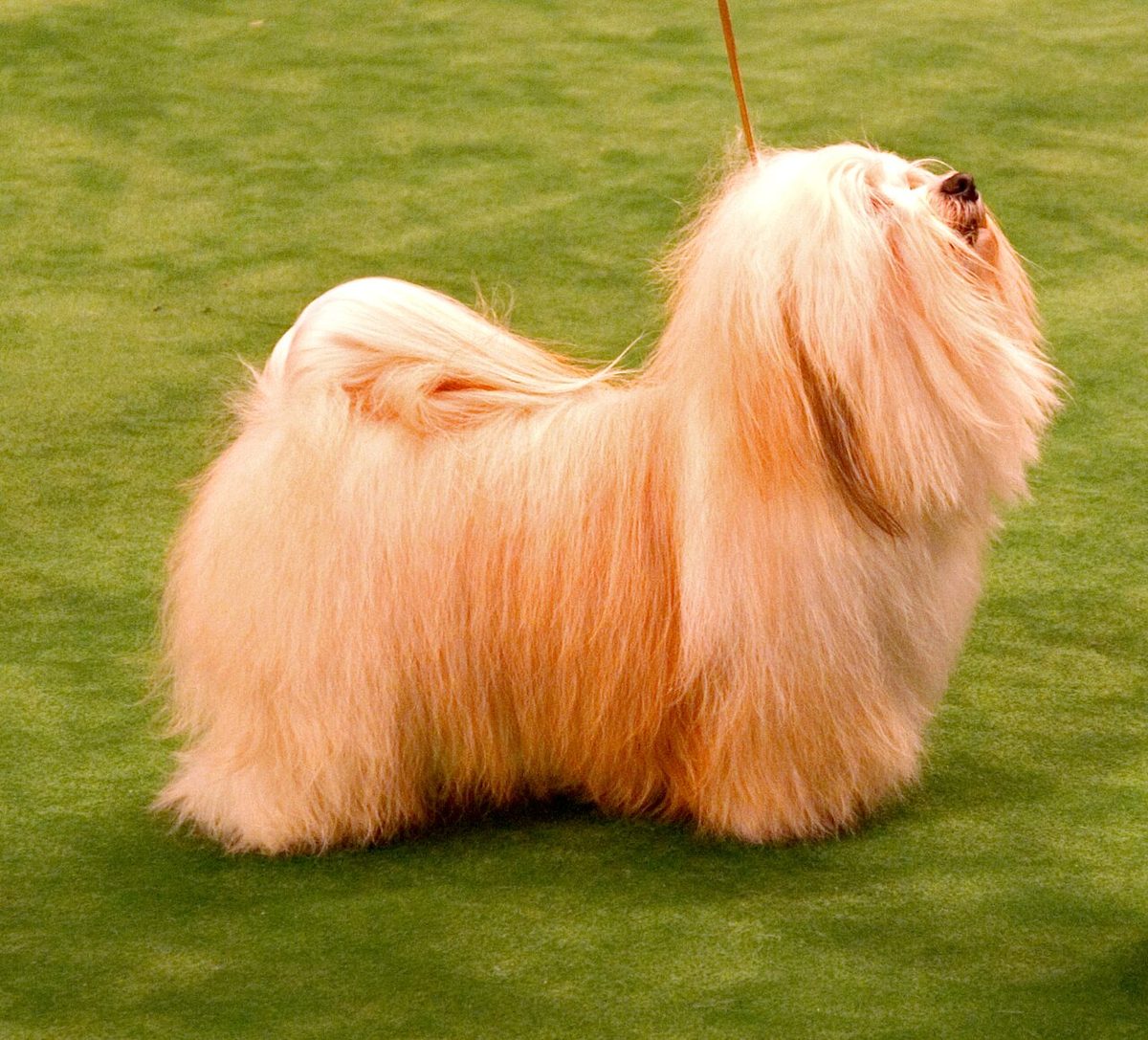
The Havanese stands 22–29 cm (8.5–11.5 in) at the withers, with 23–27 cm considered ideal, and is slightly longer than it is tall. The topline rises a little from the withers to the rump, and the gait is lively and springy. The muzzle is full and as long as the skull, the eyes are dark with almond-shaped lids, and the ears hang at the sides of the head. The tail arches forward over the back with a long plume of hair.
The coat is long, soft and light, and slightly wavy; it should feel like silk. It is a double coat, but the outer layer is not coarse and the undercoat is sometimes missing altogether. Dogs are shown with the coat brushed out naturally or formed into cords. All colors and patterns are accepted.
Temperament
The Havanese is friendly and easy to train. That has made it useful as a therapy and assistance dog, including as a signal dog for people with impaired hearing, and as a performing, tracking and detection dog. It also takes part in agility, flyball, obedience and musical freestyle.
Care and health
A 2024 UK study found a life expectancy of 14.5 years. The conditions seen most often are luxating patella, liver disease, heart disease, cataracts and retinal dysplasia. The breed is also predisposed to sebaceous adenitis and to portosystemic shunt.
For the show ring the coat is left untrimmed, apart from tidying around the feet, and the tail is never docked.
Facts on this page were checked against Wikipedia and may have changed since.