Dogo Cubano
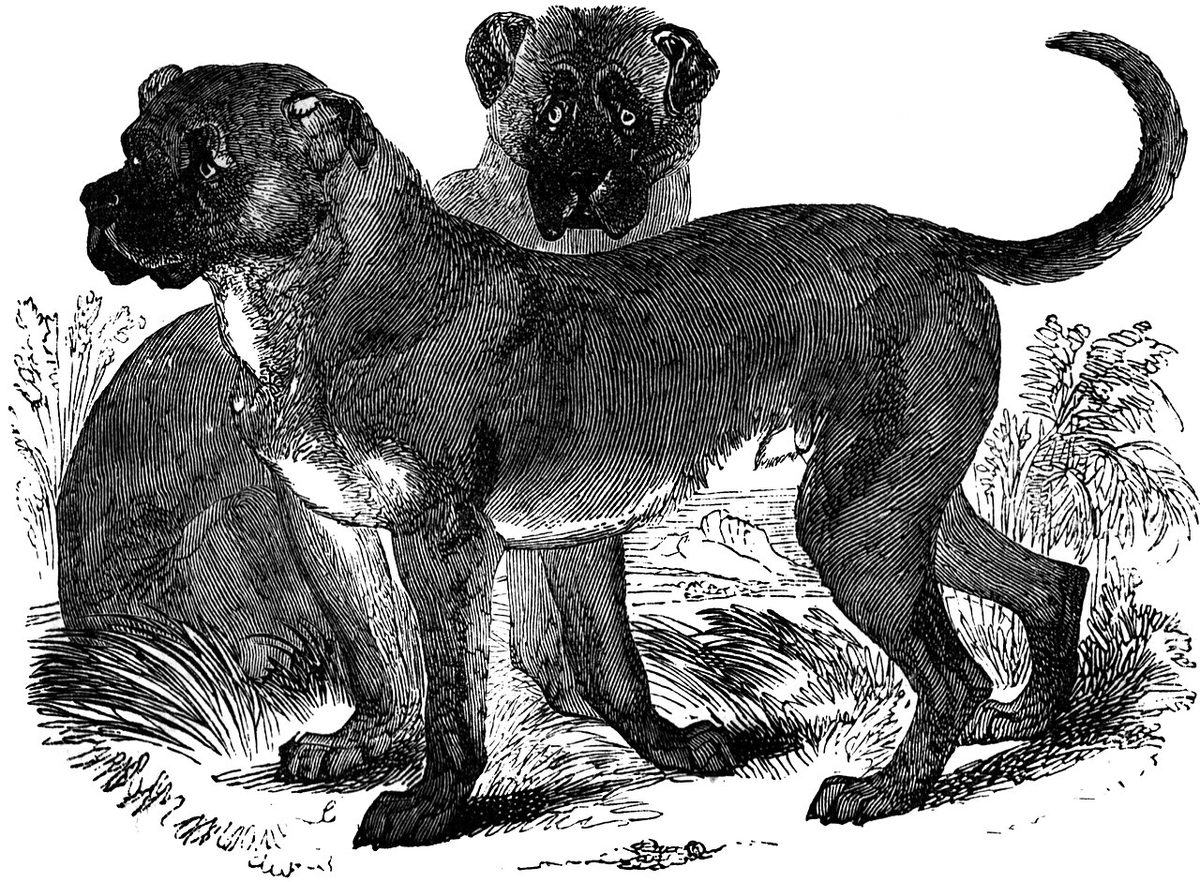

- Origin
- Cuba
- Type
- Mastiff
- Colors
- Rusty wolf color with a black face, lips and legs
- Status
- Extinct
The Dogo Cubano, also called the Cuban Bloodhound or Cuban Bullmastiff, was a Cuban dog that no longer exists. It belonged to the bulldog and mastiff family, a group used in general for bull-baiting and dog fighting. In Cuba it was kept to track and capture people who had escaped slavery. After slavery was abolished the dogs blended into other populations and ceased to be a separate breed.
History
The Cuban mastiff was developed from several kinds of bulldogs, mastiffs and cattle dogs, and became a fighter and a guardian of property. When it came to be seen as a distinct breed is not known, though a description of it was written in 1803.
The dogs were used well beyond Cuba. In early 1795 the governor of Jamaica, the Earl of Balcarres, sent agents to Havana to buy 100 of them after hearing how the Spanish used them, and British forces employed them in Jamaica during the Second Maroon War. Cuban breeders supplied hundreds more to French forces in Saint-Domingue in 1803. Slave patrols in the southern United States used the breed as well, and some dogs may have been taken to North America as guard dogs.
Appearance
The Dogo Cubano stood between a bulldog and a mastiff in size. The head was broad and flat, with a short, wide muzzle that ended abruptly and deeply hanging lips. The ears were of medium size and partly dropped. The tail was fairly short and round, turning up and forward toward the tip.
The color was described as a rusty wolf shade, with black on the face, lips and legs.
An account written in 1803 by Robert Dallas describes a somewhat different dog: the size of a very large hound, with upright ears usually cropped at the tips, a more pointed nose that widened greatly toward the back of the jaw, and a coat or skin much harder than that of most dogs.
Facts on this page were checked against Wikipedia and may have changed since.