Dingo

- Origin
- Australia
- Type
- Primitive
- Size
- Medium
- Height
- 53–59 cm (21–23 in)
- Weight
- 14–19 kg (31–42 lb)
- Coat
- Short; single in the tropical north, thick and double in the cold south
- Colors
- Ginger or tan, black and tan, or creamy white
- Life span
- 3–5 years in the wild; 14–16 years in captivity
- Status
- Not evaluated by the IUCN; a native animal under Australian law
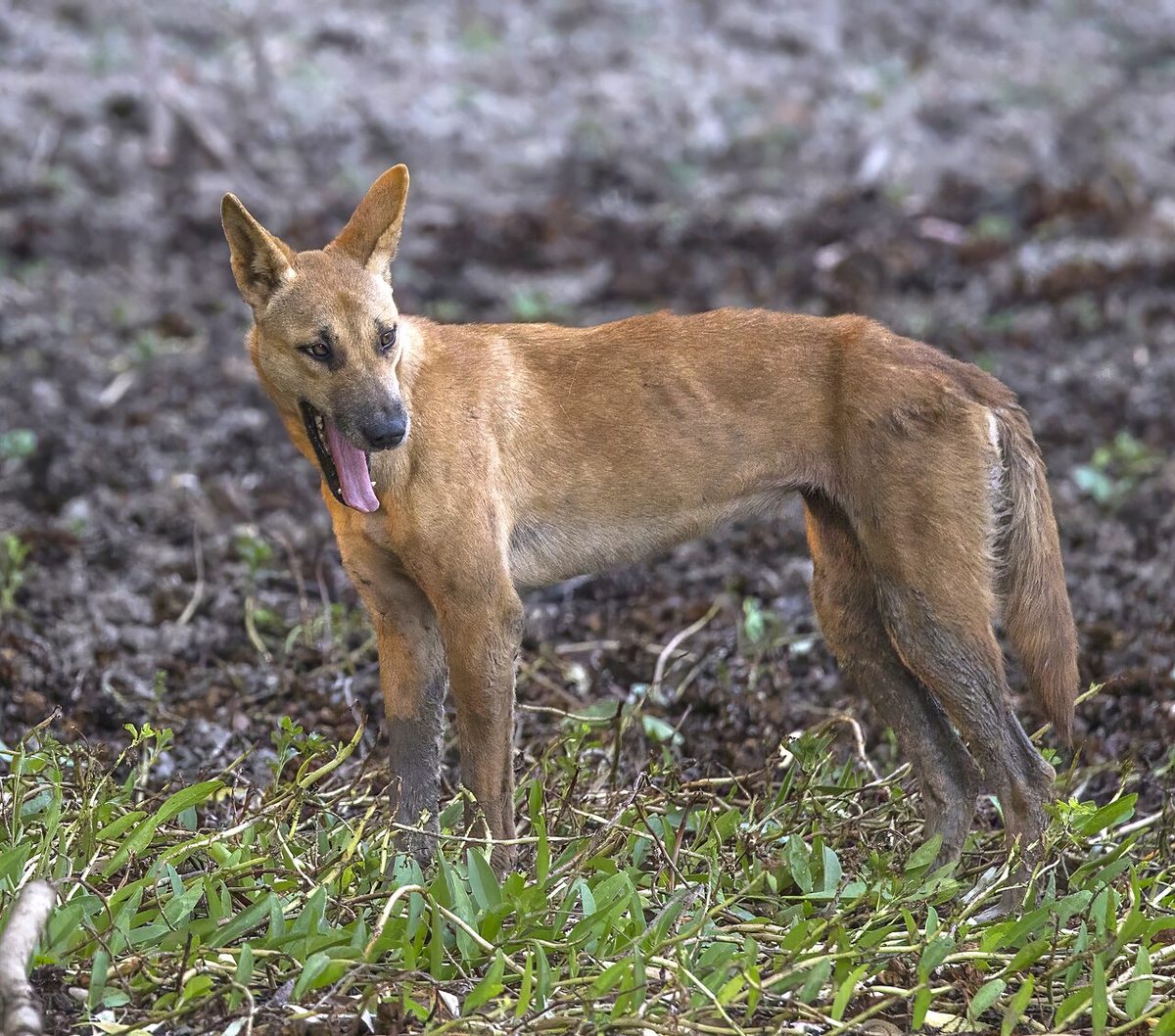
The dingo is an ancient lineage of dog that lives wild in Australia. It is a lean, medium-sized canine built for speed, agility and stamina. Scientists disagree about how to classify it: as a domestic dog, as a subspecies of dog or wolf, or as a species of its own. Its closest relative is the New Guinea singing dog, and the line the two share split early from the one that led to modern domestic dogs.
History
The dingo’s ancestors can be traced back through the islands of Southeast Asia to southern East Asia. Reaching Australia meant crossing at least 50 km of open sea, so the dogs must have come with people in boats. The oldest dingo bones found in Australia, from the Madura Caves on the Nullarbor Plain, are roughly 3,300 to 3,450 years old, though some genetic studies point to an arrival as early as 8,300 years ago. No dingo remains have been found in Tasmania. Skeletons show the animal has not changed in 3,000 years, which suggests it was never selectively bred.
Its genome indicates that the dingo was once a domestic dog that went wild after arriving. With Indigenous Australians it lived in loose partnership, hunting and sleeping alongside people while staying able to fend for itself. The name comes from the Dharug language of the Sydney area and was first written down in 1789.
Range and habitat
Before European colonization dingoes lived all over mainland Australia. Farming, land clearing, poisoning, trapping and barrier fences such as the Dingo Fence removed them from most sheep country in the south and east. They remain common across the rest of the continent, in habitats from tropical wetlands and forests to hot deserts and alpine moorland. Well-known populations live on K’gari (formerly Fraser Island) in Queensland and in north-western Victoria.
Every Australian jurisdiction recognizes the dingo as a native animal, but protection varies; it is protected in many parks and treated as a pest elsewhere. The IUCN listed it as vulnerable in 2008 because of crossbreeding with domestic dogs, then removed it from the Red List as a feral dog. Recent DNA studies suggest pure dingoes are more common than was thought.
Appearance
Wild males average 59 cm at the shoulder and 15.8 kg, and females 56 cm and 14.1 kg. Captive dingoes are heavier. The head is wedge-shaped, large for the body and its widest part, with upright ears and almond-shaped eyes. The tail is carried low and does not curl over the back. About three in four dingoes are ginger, from deep rust to pale cream, often with small white marks on the feet, chest and tail tip. Others are black and tan, and a few are solid white or black.
Dingoes have unusually flexible wrists and shoulders. They can climb fences, rocks and trees, and can turn doorknobs or lift latches.
Behavior
Dingoes are most active around dusk and dawn. Most are seen alone, but breeding adults form packs, usually a mated pair with the current year’s young and sometimes the previous year’s. They breed once a year. They have been recorded eating 177 species, mostly mammals: kangaroos, wallabies, rabbits, rats, possums and wombats, along with birds, reptiles and livestock. Packs bring down large kangaroos by chasing them in relays until they tire.
Dingoes generally avoid people. Most attacks involve wild dingoes that have been fed and are minor, though a few have been fatal.
Facts on this page were checked against Wikipedia and may have changed since.