Hawaiian Poi Dog

- Origin
- Hawaii
- Type
- Primitive
- Coat
- Very short
- Colors
- Many colors
- Status
- Extinct
The Hawaiian Poi Dog was a pariah dog of Hawaii, now extinct. Native Hawaiians, who called it ʻīlio, kept it as a spiritual protector of children and as a source of food.
History
The poi dog descended from the dogs that Polynesian settlers brought to the Hawaiian Islands. Genetic studies of the related Kurī dog of New Zealand point to Indonesia as the origin of both.
The modern name comes from poi, the Hawaiian staple made from cooked and mashed taro root. The dogs were fattened on it, because meat from land or sea was thought too valuable to feed to a dog. Hawaii had no large land mammals apart from feral hogs, so there was little call for a hunting dog. The dogs were never bred to a standard, though selection by people and by nature still shaped them.
The poi dog had two purposes, as food and as a lucky charm, and suited little else. It declined as the islanders’ old beliefs faded and eating dog went out of fashion. Free-ranging and feral dogs brought by European and American settlers interbred with it, and by the early 20th century at the latest it had disappeared as a distinct breed.
In 1967 Jack L. Throp, director of the Honolulu Zoo, tried to re-create it. His team studied descriptions from before 1825 and surviving skeletons, then chose local dogs and bred them for the old traits. In the third generation a female was born with the look they wanted. The program is thought to have ended soon afterward. In 1976 a dog from it, named Hoku, sailed on the voyaging canoe Hōkūleʻa from Hawaii to Tahiti.
Today “poi dog” in Hawaii usually means a mixed-breed dog.
Appearance
European explorers such as Captain Cook met pot-bellied, short-legged dogs that mixed freely with the village hogs. Their coats were very short and came in many colors, and brown dogs had a name of their own. The head looked oddly flattened. This is sometimes put down to the diet: poi needs little chewing, so the jaw muscles may have weakened over time.
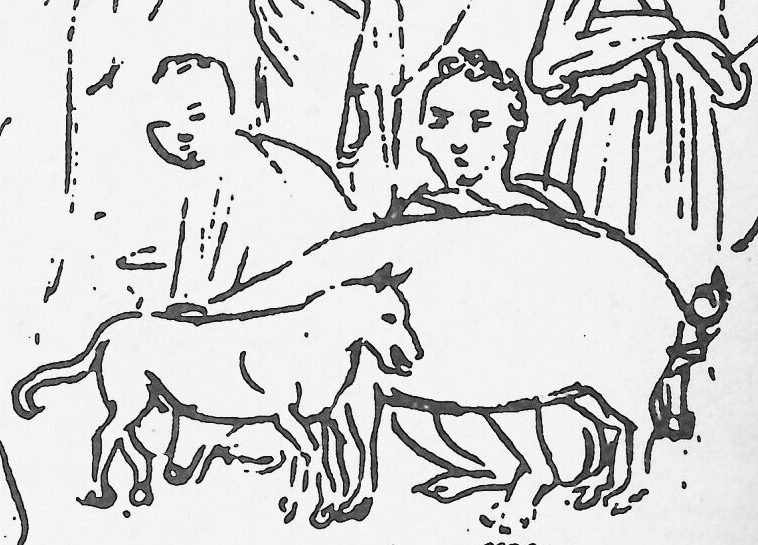
No surviving picture is known for certain to show a poi dog. Two writers on the subject agree that an unfinished drawing by the French artist Louis Choris, made around 1816 or 1817, may show one. Ancient Hawaiian petroglyphs show simple dog figures, often with the curled tail and pointed ears typical of the breed.
Temperament
Poi dogs were thought of as slow and dull. Most seemed to lack sharp senses and were of little use for hunting. They were also said to be strong-willed and hard to train.
Facts on this page were checked against Wikipedia and may have changed since.