Kintamani

- Origin
- Indonesia
- Type
- Primitive
- Size
- Medium
- Height
- 44–57 cm (17–22 in)
- Weight
- 13–18 kg (29–40 lb)
- Coat
- Medium to long, harsh double coat with a collar
- Colors
- White, fawn, red, brindle or black
- Status
- Recognised by the FCI
The Kintamani is a dog native to the Indonesian island of Bali. It comes from the Kintamani region and was developed from the island’s free-roaming street dogs. It is popular with the Balinese and is the region’s only official breed.
History
The ancestors of Bali’s street dogs reached the island about 3,000 years ago. A genetic study found that the Kintamani is related to these local dogs. Bali’s dogs in turn are closest to the Australian dingo and the New Guinea singing dog, more distant from Asian breeds, and further still from European ones.
In 1926 a rabies control measure banned foreign dogs from entering Bali, so the island’s dogs have bred within their own gene pool for nearly a century.
The Fédération Cynologique Internationale recognised the breed in 2019. The local Bangli Regency authority holds a Kintamani dog show and contest every year, guides breeders and sets rules on the breed standard.
Appearance
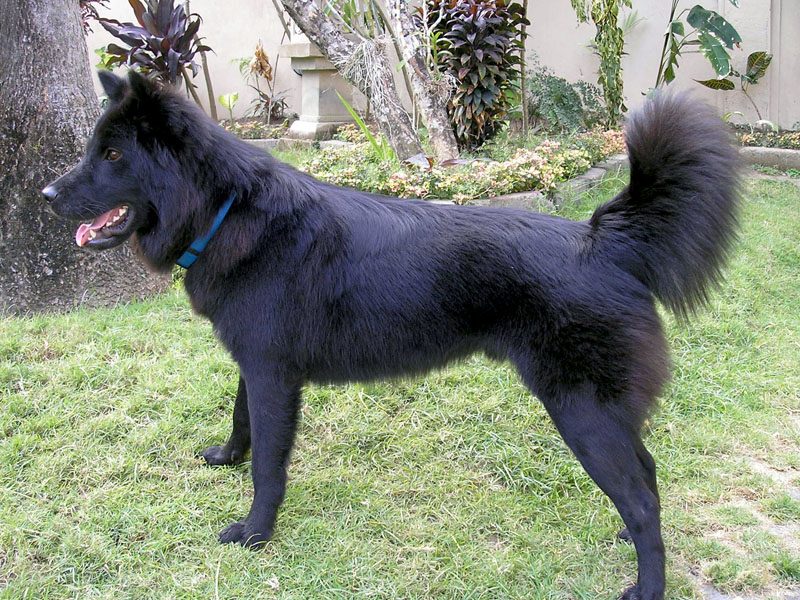
The Kintamani looks something like a cross between a Samoyed and an Alaskan Malamute. It has a broad face with a flat forehead and flat cheeks, erect ears, almond-shaped brown eyes and a tail that curves forward over the back. The coat is medium to long. Females stand 44–52 cm (17–20 in) at the withers and males 49–57 cm (19–22 in), about the same as a Bali street dog.
White is the most prized color, ideally with apricot-tipped ears. The FCI standard also accepts fawn, red, brindle and black, and a black mask is preferred on fawn, red and brindle dogs. Black skin pigment is wanted.
Temperament
Kintamanis are fiercely independent. They can be aggressively territorial and yet tender and affectionate with their own families. They are gentle with people but alert enough to make good watchdogs without being vicious, and they bark at unfamiliar sights and sounds.
Unlike most dogs, they like heights. They climb onto roofs and into trees, and will happily sit or sleep on top of a garden wall. They are light-footed and move smoothly.
Care and health
Many Kintamanis on Bali have no formal owner and are fed by local people. They spend much of their lives outdoors, digging holes for shelter, and some live in small caves among the boulders around Kintamani. Females still whelp in burrows dug into the earth.
Facts on this page were checked against Wikipedia and may have changed since.