Skye Terrier

- Origin
- Scotland
- Type
- Terrier
- Size
- Small
- Weight
- 12–18 kg (26–40 lb)
- Coat
- Hard, straight topcoat over a short, soft undercoat
- Colors
- Fawn, dark or light silver-gray, or cream, with black points
- Life span
- About 12 years
- Status
- Recognised by The Kennel Club and the FCI; a Vulnerable Native Breed in the United Kingdom
The Skye Terrier is a Scottish terrier: long, low, hardy and short-legged. In the twenty-first century it is among the most endangered breeds of the United Kingdom.
History
The notes say little about the breed’s past. Skye Terriers were pictured in a color lithograph in Vero Shaw’s Illustrated Book of the Dog in 1881.
Today the concern is the breed’s survival. Only 30 puppies were born in the United Kingdom in 2005, and the Skye is one of the most endangered of that country’s Vulnerable Native Breeds. It has been said that it could disappear completely within 40 years.
Appearance
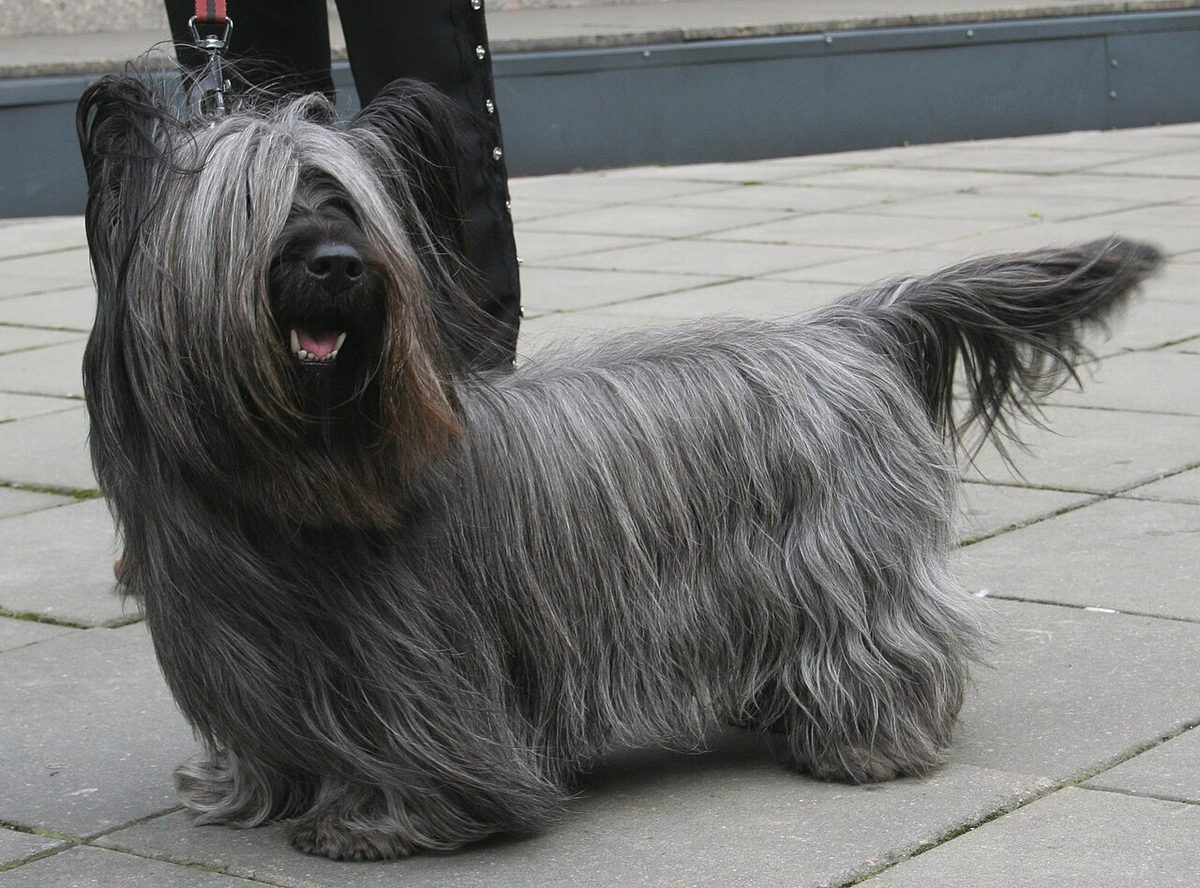
The Skye has a double coat: a short, soft undercoat beneath a hard, straight topcoat. The hair of the head falls over the forehead and eyes and forms a moderate beard. Dogs weigh 12–18 kg.
The ears may stand up or hang down, and neither kind is preferred. Prick ears are of medium size, carried high on the skull and angled slightly outward. They are well feathered, the hair falling from them like a fringe and blending with the hair at the sides of the head.
The standard colors are fawn, dark or light silver-gray, and cream. Whatever the color, a Skye should have black points on the ears, muzzle and nose. The body usually has no other markings, though a small white spot on the chest is fairly common.
Care and health
A liver disease known as Skye terrier hepatitis was described in 1998 from nine related dogs. It is not known in any other breed. It causes severe liver damage with scarring that may progress to cirrhosis. Researchers at Cambridge later found that it is not in fact a form of hepatitis. Its cause is unknown, no gene has been identified, and it has not been shown to be inherited.
A 2024 study in the United Kingdom found a life expectancy of 12.4 years for the breed, based on 39 deaths, against an average of 12.7 years for purebred dogs.
Facts on this page were checked against Wikipedia and may have changed since.