Glen of Imaal Terrier
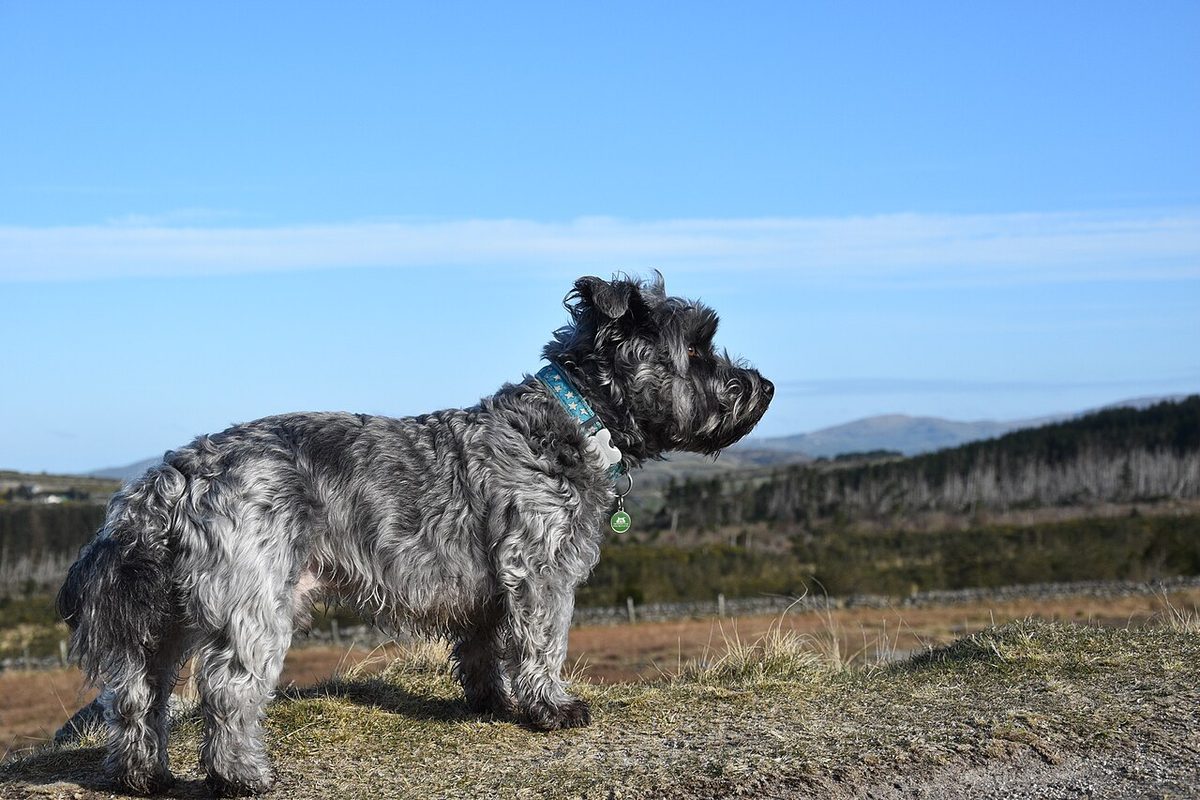

- Origin
- Ireland
- Type
- Terrier
- Size
- Small
- Height
- 30–36 cm (12–14 in)
- Weight
- About 16 kg (35 lb)
- Coat
- Wiry outer coat over a soft undercoat
- Colors
- Wheaten or blue, often brindled
- Status
- Recognised by the FCI, AKC and The Kennel Club
The Glen of Imaal Terrier is a rare terrier from County Wicklow in Ireland, and one of the four terrier breeds native to the country. It was bred to hunt vermin and do general farm work, and it is known for its strength, its low build and a quiet manner that is unusual in a terrier.
History
The exact origin of the Glen is not known. Some link it to the Soft-Coated Wheaten Terrier or the Kerry Blue Terrier, and DNA analysis suggests it is closer to the mastiff-type dogs than to other terriers. The breed came close to dying out and was revived in the 20th century. The Irish Kennel Club recognized it in 1934, and the American Kennel Club followed in 2004.
It remains one of the rarest dog breeds and the least known of the Irish terriers. The Kennel Club in the UK lists it as a vulnerable native breed, and the world population is put at about 3,100.
Appearance
The Glen is often described as a big dog on short legs. It is a dwarf breed, and heavier than photographs suggest: a typical adult weighs about 16 kg (36 lb) and stands 36 cm (14 in) at the withers. The American standard asks for 30–36 cm (12–14 in) and about 16 kg (35 lb) for males, with females somewhat less. A Glen can take up to four years to mature fully.
The head is large, with rose or half-prick ears. The legs are short and bowed with the front feet turned out, and the topline rises slightly toward the tail. The coat on the back is double, wiry over a soft undercoat; the head, sides and legs carry only the softer hair. Colors are wheaten or blue, the blue usually brindled.
Temperament
Glens can be energetic and tenacious, but they are calmer, more easygoing and less vocal than most terriers. They enjoy activity without demanding it and are content to rest beside their owner. The bark is deep, like a larger dog’s, and they are said to make good watchdogs. They are intelligent, quick to learn, loyal and very good with people, children included, though they have a stubborn streak. Some are aggressive toward other dogs. Most develop a strong prey drive, so they should be introduced early to cats, rabbits and other small pets.
Care and health
The coat sheds little. It needs brushing every week or two, and the dead hair is stripped from the hard coat two to four times a year.
A genetic test exists for a form of progressive retinal atrophy that brings on blindness from about five years of age. Some Glens have allergies and itchy skin, especially on the paws. Hip dysplasia is seen now and then but is usually mild, and heart problems are almost unknown. Young dogs are prone to growth plate injuries in the front legs, so jumping down from furniture is discouraged during the first year.
Facts on this page were checked against Wikipedia and may have changed since.