Shiba Inu

- Origin
- Japan
- Type
- Spitz
- Size
- Small
- Height
- 35–41 cm (14–16 in)
- Weight
- 8–10 kg (18–22 lb)
- Coat
- Double coat with a stiff topcoat and soft undercoat
- Colors
- Red, sesame, or black and tan, with cream to white undersides
- Life span
- About 15 years
- Status
- Recognised by the FCI, AKC and The Kennel Club
The Shiba Inu is a hunting dog from Japan and the smallest of the country’s six original native breeds. Its name means brushwood dog, after its work flushing game. It is small, alert and agile, and copes well with mountain terrain.
History
The Shiba is a basal breed, older than the modern breeds that arose in the 19th century. Clay figures from Japan’s prehistoric Jōmon period show dogs that look much like it. It was bred to hunt and flush small game such as birds and rabbits in the mountains of the Chūbu region.
After the Meiji Restoration, imported Western dogs were widely crossed with native ones, and between 1912 and 1926 almost no pure Shiba remained. From about 1928 hunters and scholars began working to protect the few left. The first standard was published in 1934, and in December 1936 the Shiba was declared a Natural Monument of Japan.
The breed nearly died out again through food shortages in World War II and distemper outbreaks in the 1950s and 60s. All later dogs come from three surviving bloodlines: the Shinshu Shiba of Nagano, the Mino Shiba of what is now Gifu, and the San’in Shiba of Tottori and Shimane.
A military family took the first Shiba to the United States in 1954, and the first recorded American litter was born in 1979. The American Kennel Club recognised the breed in 1992. It is now mainly a pet, and is said to be the number one companion dog in Japan.
Appearance
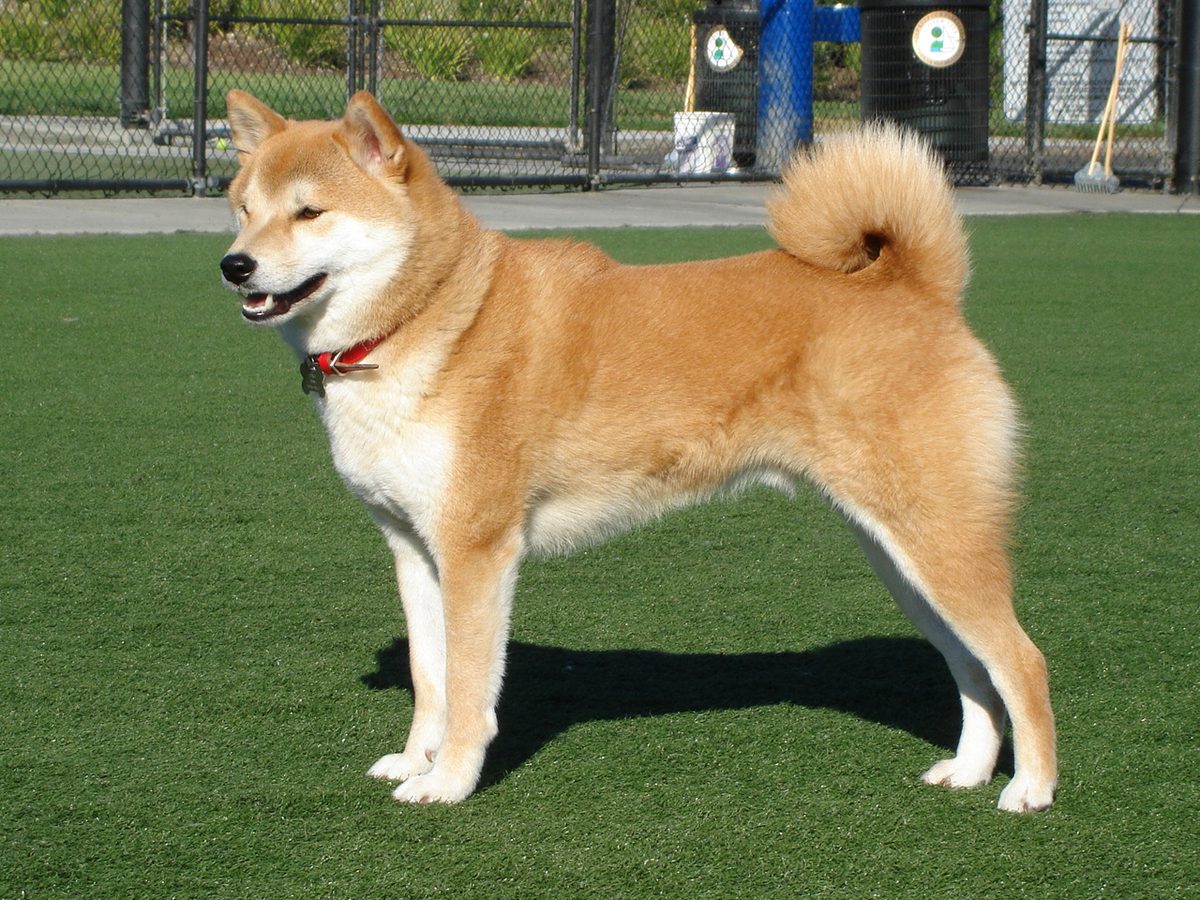
Males stand 38 to 41 cm and weigh about 10 kg; females are 35 to 38 cm and about 8 kg. The coat is double, with a stiff topcoat over a soft, plush undercoat. Most modern Shibas carry a curled tail.
The standard colors are red, sesame, and black and tan. Every color must show cream to white markings, called urajiro, on the sides of the muzzle, the cheeks, inside the ears, the throat, chest, belly, insides of the legs and underside of the tail. An all-cream coat hides these markings and is a major fault in Japan, the United States and under the FCI, though The Kennel Club in Britain accepts it.
Temperament
The Shiba is alert, affectionate and independent. It is highly intelligent but also stubborn and strong-willed, and has a reputation for being aloof, so early socialisation matters. It needs plenty of exercise and stimulation; without them it can become anxious and resort to unwanted behavior, including the high-pitched cry known as the shiba scream. One survey of experts rated the breed high in aggression and reactivity and medium in trainability.
Care and health
Shibas are long-lived. Japanese cemetery records gave a life expectancy of 15.5 years, the highest of any breed, and a 2024 UK study found 14.6 years.
A Japanese study of small breeds found patella luxation in 35 percent of the Shibas surveyed. The breed is strongly over-represented among glaucoma cases and is predisposed to atopic dermatitis. An autoimmune condition resembling Vogt-Koyanagi-Harada syndrome occurs, as does GM1 gangliosidosis, an inherited disease of the nervous system.
Facts on this page were checked against Wikipedia and may have changed since.