Chart Polski
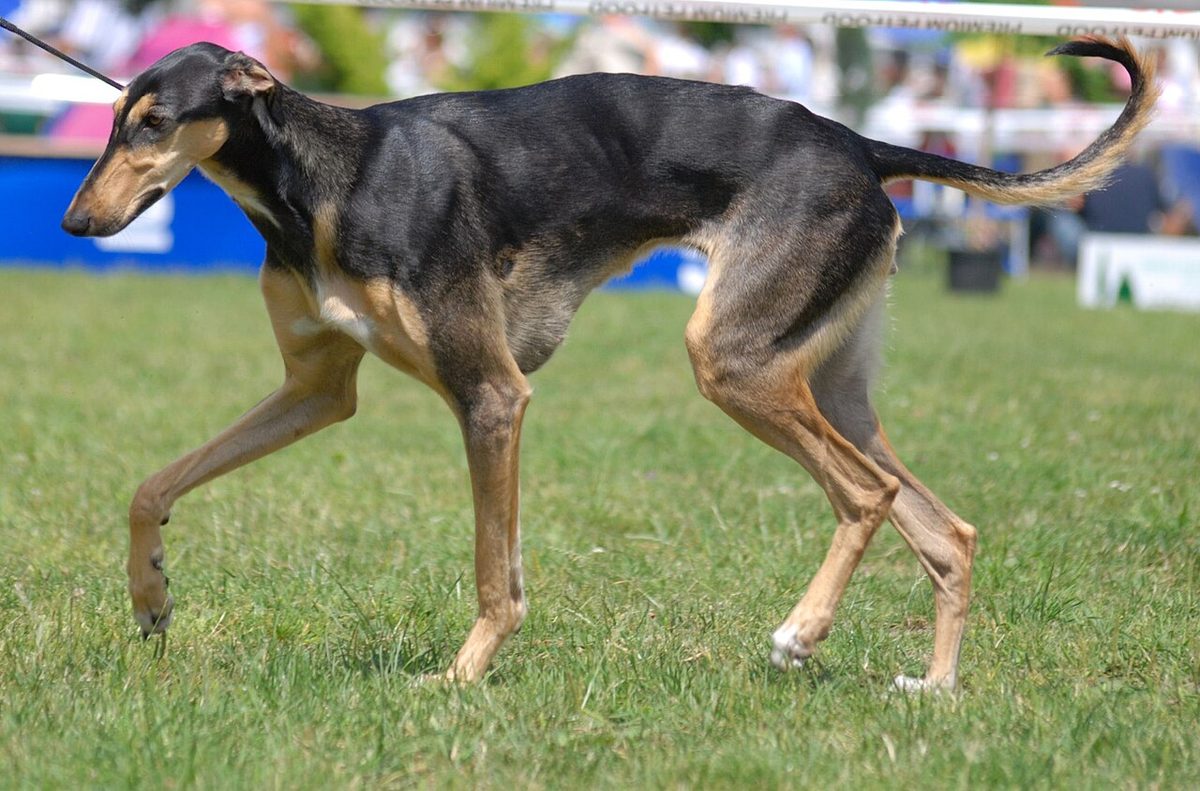

- Origin
- Poland
- Type
- Sighthound
- Size
- Large
- Height
- 66–81 cm (26–32 in)
- Weight
- 27–32 kg (60–70 lb)
- Coat
- Double coat that thickens in winter
- Colors
- Varied; black, tan, blue and beige are most common
- Status
- Recognised by the FCI
The Chart Polski, or Polish Greyhound, is a sighthound from Poland. Despite the English name, it is not a direct relative of the Greyhound. It is thought to share ancestors with the Borzoi and the Hortaya Borzaya.
History
Sighthounds have been recorded in Poland since the time of the medieval chronicler Gallus Anonymus, and Polish hunting books and artworks have shown them since the 13th century. The Chart Polski was originally bred to hunt wolves and great bustards, and it was the favorite dog of the Polish nobility.
After World War II, breeding in Poland largely stopped. In the 1970s a group of enthusiasts set out to restore the breed, and modern breeding was started by Stanisław Czerniakowski. A preliminary studbook opened in 1981. The Fédération Cynologique Internationale gave the breed provisional recognition on 13 June 1989 and full recognition on 1 March 2001.
Appearance
Like many sighthounds, the Chart Polski has long legs and a slim, muscular build. Males usually stand 27–32 inches (about 69–81 cm) tall and females 26–30 inches (66–76 cm). Weight averages 60–70 lb (27–32 kg).
The dog is double coated, and the undercoat thickens in winter to keep it warm. Colors vary, with black, tan, blue and beige seen most often. The tail is long and sickle-shaped, curving upward at the end.
Temperament
The Chart Polski is protective and territorial. It tends to be affectionate with its owners and reserved around strangers.
Facts on this page were checked against Wikipedia and may have changed since.