Borzoi
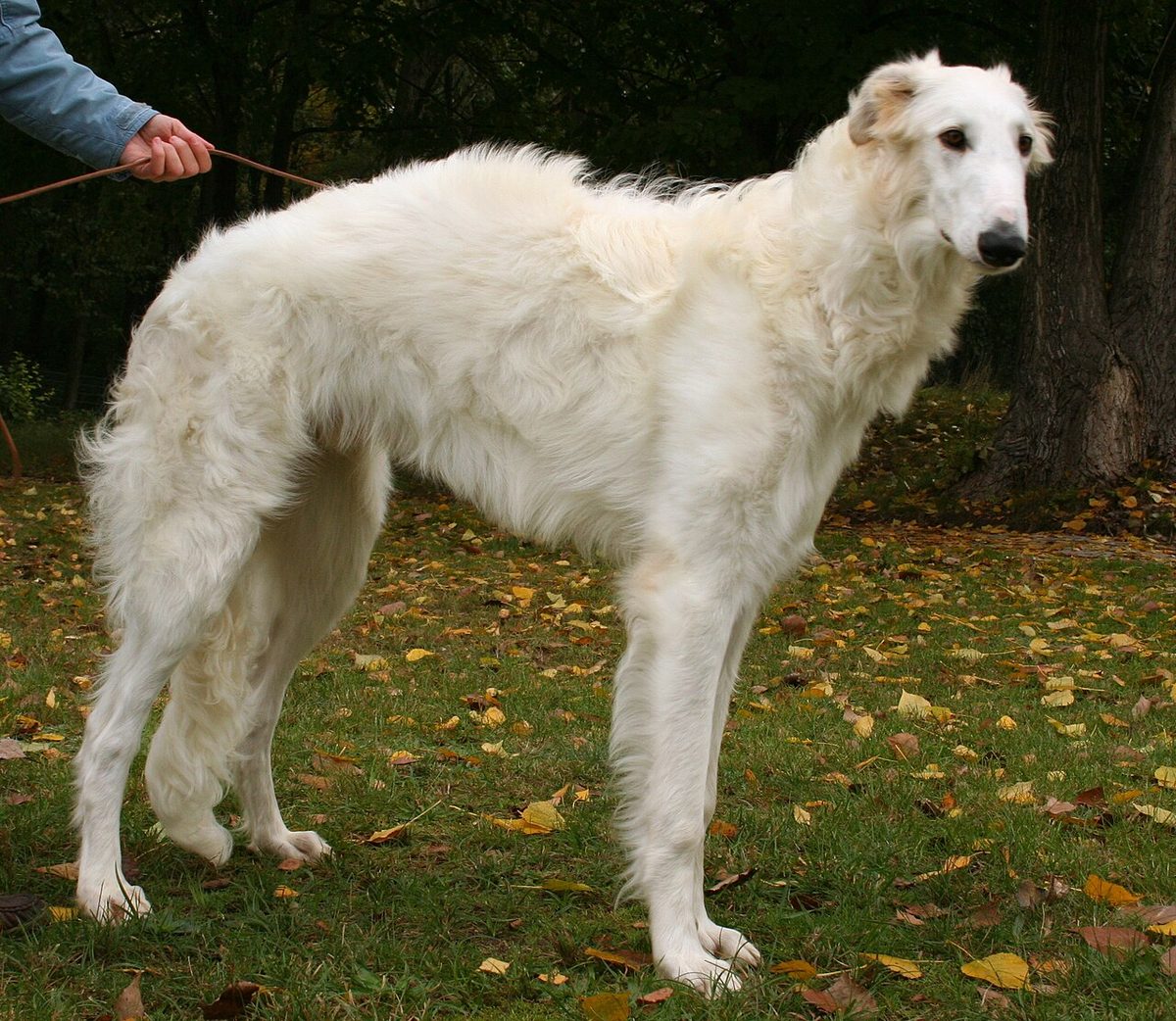

- Origin
- Russia
- Type
- Sighthound
- Size
- Large
- Height
- 68–85 cm (27–33 in)
- Weight
- 27–48 kg (60–106 lb)
- Coat
- Long, silky and flat, often wavy
- Colors
- Any color
- Life span
- About 12 years
- Status
- Recognised by the FCI
The Borzoi is a large Russian sighthound that was once used to hunt wolves. Until 1936 it was known as the Russian Wolfhound. Its name comes from an old Russian adjective meaning swift or fast, and in Russia the breed is officially called russkaya psovaya borzaya, where psovaya refers to its wavy, silky coat.
History
The breed took shape in sixteenth-century Russia, when Salukis and European sighthounds were crossed with thick-coated Russian dogs.
Before the 1917 revolution the Borzoi was a favorite of the Tsars. For centuries the dogs could not be bought at all and changed hands only as gifts from the Tsar. Grand Duke Nicholas Nicolaievich bred great numbers of them at Perchino, his private estate.
The Fédération Cynologique Internationale gave the breed full acceptance in 1956.
Appearance
Borzois are tall dogs that resemble some Central Asian sighthounds, such as the Afghan Hound, the Saluki and the Kyrgyz Taigan. Males stand 75–85 cm (30–33 in) and females 68–78 cm (27–31 in). The muzzle is strikingly long.
The coat is silky and lies flat, often with some wave or a slight curl. There is a frill on the neck and feathering on the hindquarters and tail. A soft undercoat thickens in winter or in cold climates and is shed in hot weather so the dog does not overheat. Borzois come in a wide range of colors.
Temperament
The Borzoi is affectionate, athletic and calm. In training it is a selective learner. It gets bored quickly with repetition and can be hard to motivate. With enough work, though, Borzois can enjoy and do well in competitive obedience and agility.
Care and health
A 2024 study in the United Kingdom found an average life expectancy of 12 years for the breed.
An American study that examined the hearts of apparently healthy Borzois found that just over half had heart murmurs and 14.4% had cardiac disease. Like other large breeds, Borzois are prone to gastric dilatation volvulus because of their build. Like other sighthounds, they are also slower to recover from anesthesia, owing to their lean muscle and low body fat.
Facts on this page were checked against Wikipedia and may have changed since.