Croatian Sheepdog
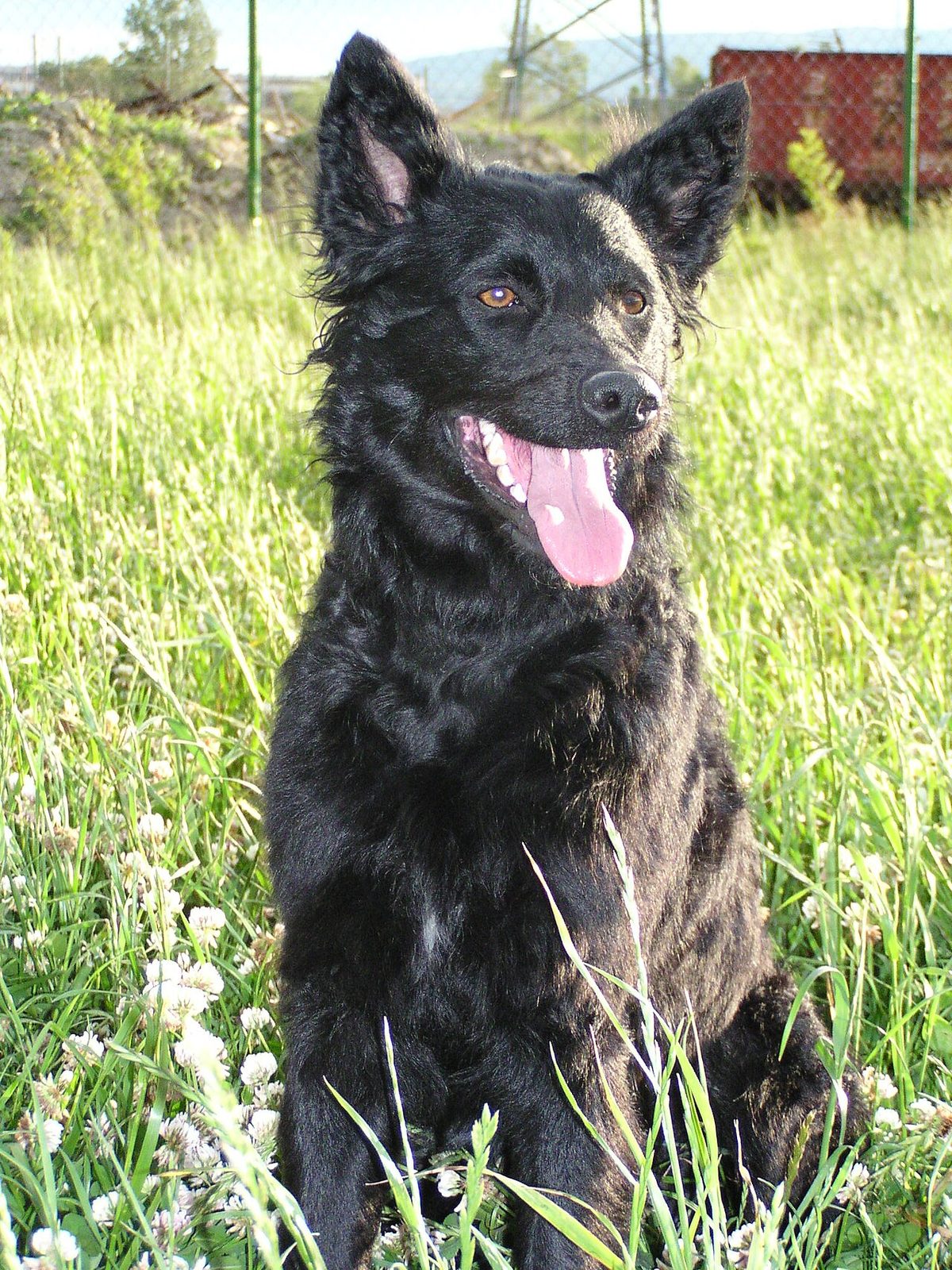

- Origin
- Croatia
- Type
- Herding
- Size
- Medium
- Height
- 43–50 cm (17–20 in)
- Coat
- Long, soft and wavy or curly, with a dense undercoat
- Colors
- Black
- Status
- Recognised by the FCI
The Croatian Sheepdog, also called the Croatian Shepherd Dog or Hrvatski Ovčar, is a herding breed from Croatia of the South-European spitz type. It is one of seven recognised Croatian breeds and one of the country’s two sheepdogs, the other being the Tornjak. It is very like the Mudi of Hungary, whose range overlaps its own, but slightly larger.
History
Nobody knows where the breed came from. It is the traditional dog of Baranja and Bačka, historic regions of Slavonia near the Hungarian border, and may descend from dogs brought there from Greece, Turkey or another part of the Balkans. A manuscript of 1374 in the archives of the Archdiocese of Đakovo–Osijek is reported to mention sheepdogs in Croatia under the Latin name canis pastoralis croaticus.
The modern breed dates from about 1935, when Stjepan Romić, an agronomist and veterinary surgeon, began to breed black Slavonian dogs selectively. Dogs were shown in Zagreb in 1949, and Otto Rohr drew up a standard in 1951. The Fédération Cynologique Internationale gave the breed full acceptance in 1967.
Appearance
This is a medium-sized dog. Males stand about 45–50 cm (18–20 in) at the withers and females about 2 cm less. For dogs of especially good type the standard allows up to 3 cm either side of those limits.
Over most of the body the coat is double, with a dense, soft undercoat and a long, soft topcoat that is wavy or curly and from 6 to 14 cm long. On the face, ears and lower legs the hair is short. The coat is always black, though a few small white markings are tolerated.
Temperament
The notes say only that the Croatian Sheepdog has a well-developed herding instinct. It is used both to work sheep and as a watchdog.
Facts on this page were checked against Wikipedia and may have changed since.