Huntaway

- Origin
- New Zealand
- Type
- Herding
- Size
- Large
- Height
- 56–66 cm (22–26 in)
- Weight
- 25–45 kg (55–99 lb)
- Coat
- Smooth, rough or grizzled
- Colors
- Variable; usually black and tan, sometimes with white or brindle
- Status
- Recognised by the New Zealand Kennel Club
The Huntaway is a large, strongly built sheepdog from New Zealand. It was bred to drive sheep with its loud, deep bark, and it is judged on how well it works, not on how it looks.
History
The Huntaway grew out of the conditions on New Zealand’s high-country sheep stations, above all those of the South Island. These runs covered many thousands of hectares, were often unfenced, and needed teams of dogs that could muster for days over steep, rough ground.
The British sheepdogs the first farmers brought with them mostly worked in silence, but now and then one would bark to move sheep. Some farmers liked this, especially on hill country where a dog may drop out of sight and a silent dog that works by eye is less use. Collies and other sheepdogs that barked were crossed with any breed offering size, stamina and a steady bark. The exact ancestry is not known.
The first mentions date from the late 19th century. A sheepdog trial with a class for Huntaways was advertised in the Upper Waitaki in 1870, and newspapers carried advertisements for huntaway sheepdogs in the 1880s. During the 20th century the Huntaway was developed further as a breed apart from the heading dog.
The New Zealand Kennel Club recognised it in 2013, the first breed of New Zealand origin to be recognised. The standard carries a note from the New Zealand Sheep Dog Trial Association saying that a Huntaway should never be shown and should not be kept solely as a pet. The association enters only trial winners in its studbook. In 2016 the Huntaway was the second most commonly registered dog in New Zealand, after the Labrador Retriever. The town of Hunterville in the North Island has a statue of one.
Appearance
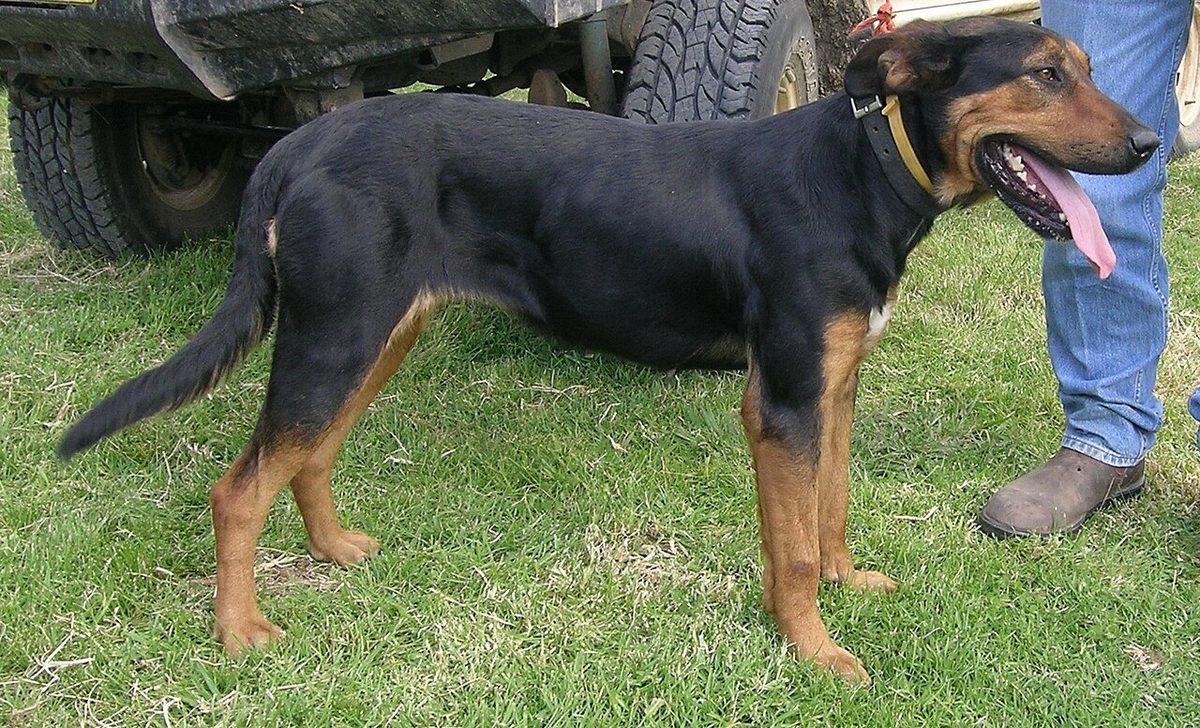
There is no set appearance or bloodline. Huntaways are large, deep-chested dogs, usually 56 to 66 cm (22 to 26 in) tall and 25 to 45 kg (55 to 99 lb) in weight. Most are black and tan, some with white or brindle. The coat may be smooth, rough or grizzled, and the ears generally flop over.
Temperament
The work calls for intelligence, agility and the stamina to drive very large mobs over long distances. The bark is deep and repeated, with a short pause between barks that lets the dog keep it up for a very long time. Shepherds direct the dogs from far off with spoken commands and whistles. Huntaways are known as noisy dogs, above all when working.
Care and health
A possible predisposition to dilated cardiomyopathy has been identified in the breed. Hereditary diseases found in Huntaways include mucopolysaccharidosis, sub-aortic stenosis, black hair follicular dysplasia and fetal anasarca.
Facts on this page were checked against Wikipedia and may have changed since.