Black Norwegian Elkhound
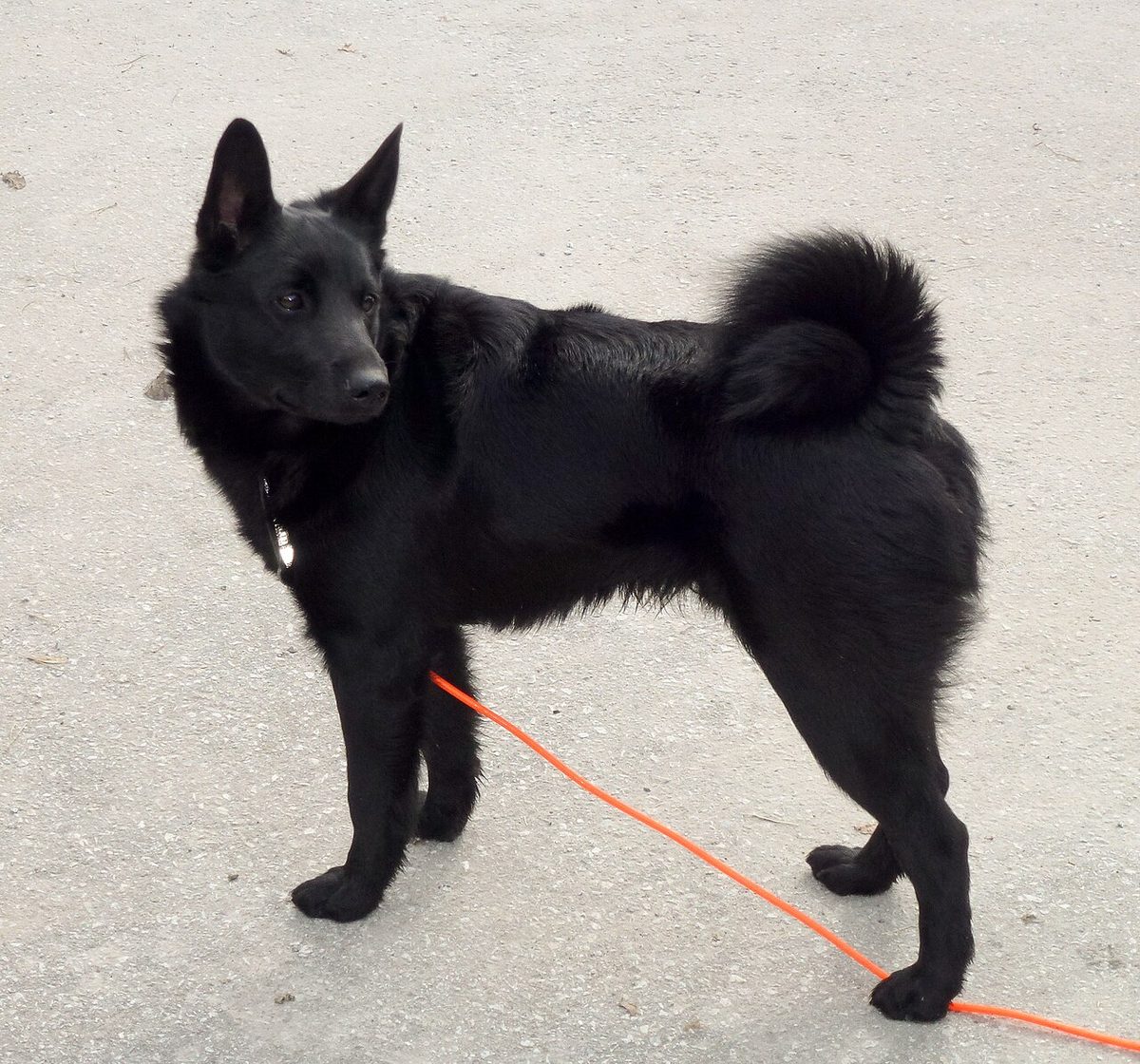

- Origin
- Norway
- Type
- Spitz
- Size
- Medium
- Height
- 43–49 cm (17–19 in)
- Weight
- 16–20 kg (35–44 lb)
- Coat
- Dense, short double coat
- Colors
- Solid black
- Status
- Recognised by the FCI; rare outside the Nordic countries
The Black Norwegian Elkhound is a small black spitz from Norway, classed by the FCI as a hunting dog. It is the sibling breed of the gray Norwegian Elkhound, but smaller, more agile and far quieter, and it was bred specifically to hunt on a leash. It is uncommon in Norway and very rare outside the Nordic countries.
History
The breed grew out of the local spitz dogs of the border country between Norway and Sweden, and has existed as a breed in its own right since the middle of the 19th century. The Welsh hunter Llewelyn Lloyd, who hunted bear in that area in 1828, wrote with approval of two black dogs he borrowed there, both with curled or bushy tails and one with upright ears.
The name comes from the Norwegian elghund, meaning moose dog; elg is the animal called an elk in Eurasia and a moose in North America.
The breed was once close to dying out. It has kept its looks and its working ability for over a hundred years, and demand for puppies now exceeds the number born each year, which has been steady for the past two decades.
Appearance
This is a compact spitz with a short body, dark eyes, upright ears and a tail curled over the back. Males stand about 47 cm and females about 44 cm, and adults weigh 16 to 20 kg. The double coat is dense, short, thick and coarse, lies close to the body, and is solid black with a soft black undercoat. It keeps out the Scandinavian autumn rain and the cold.
Temperament
The Black Norwegian Elkhound is calm, highly intelligent and rarely barks. As a family dog it is tolerant of children, smaller pets and other dogs, likes being petted and prefers to stay near its people.
In the field it is used mainly on moose, deer and bear. It works on a leash in close cooperation with its handler and picks up scent from the air, often climbing to higher ground to catch it, which also makes it a good search dog. It stays calm and silent near game so the hunter can approach unnoticed.
Care and health
The coat needs moderate care; brushing two or three times a week is recommended. It is described as hypoallergenic and suits many people with dog allergies, though no dog is completely allergy-friendly.
Breeders work to limit inbreeding: under the Norwegian kennel club’s rule, no male should have more than 40 registered offspring. Hereditary glaucoma and ataxia occur in the breed, and matings are only approved when at least one parent is known to be free of hereditary glaucoma. All breeding dogs must have a known hip dysplasia status; over ten years, 83.2 percent of dogs tested were free of it.
Facts on this page were checked against Wikipedia and may have changed since.