Spitz

- Type
- Spitz
- Coat
- Double, with a dense undercoat
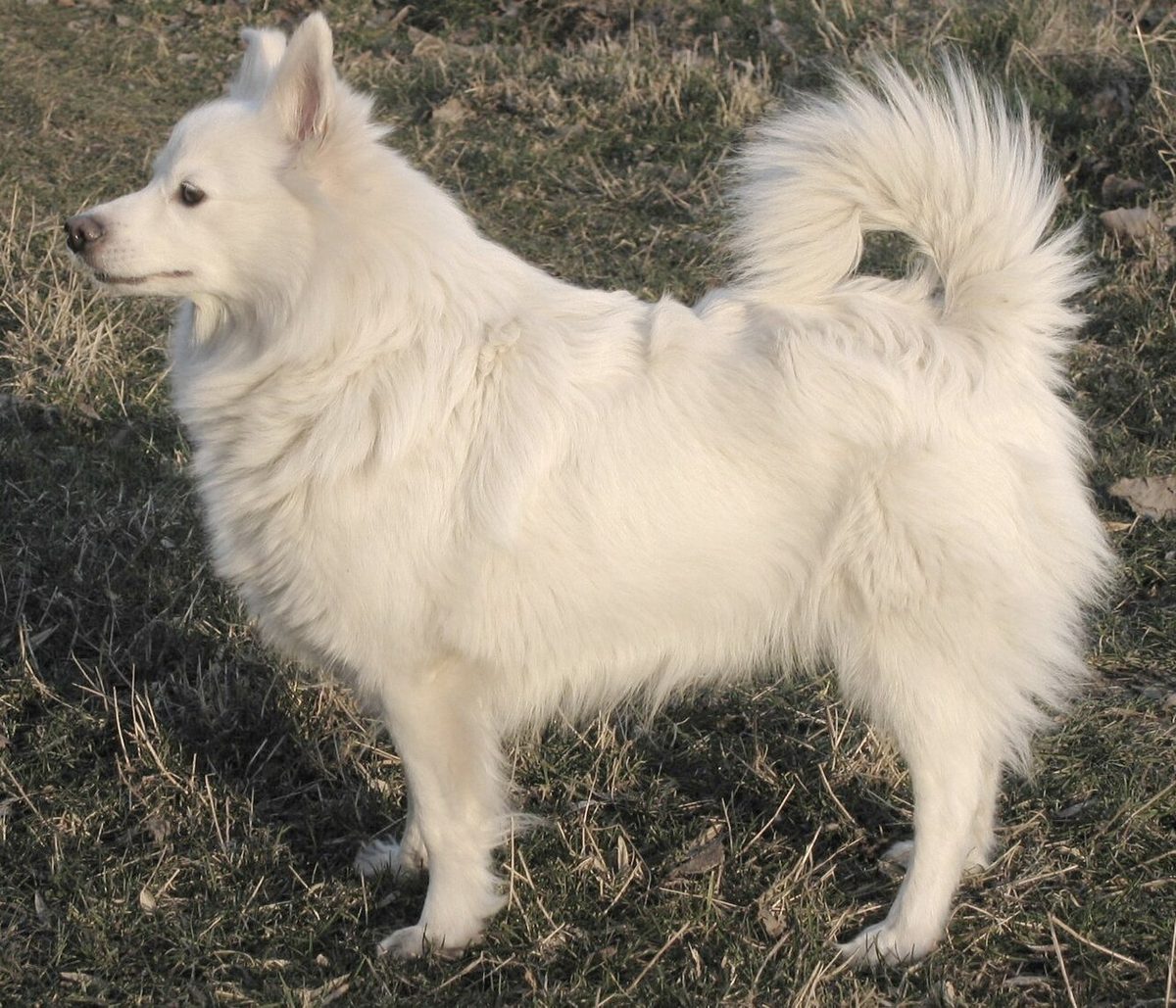
The spitz is a type of dog and not a single breed. It takes in between 50 and 70 breeds, depending on who is counting. There is no exact definition, but most spitz breeds have pricked ears, almond-shaped eyes, a pointed muzzle, a double coat and a tail that curves over the back. The name comes from the German Spitz, meaning pointed, after the shape of the muzzle. Most of the spitzes seen today come from the Arctic or from Siberia.
History
Dogs of spitz type appear on Egyptian tombs of the 4th dynasty, and toy dogs of the type are shown on Greek pottery from 500 BC onward. In 1788 the naturalist Johann Friedrich Gmelin described the type under the name Canis pomeranus.
Appearance
Spitzes are built for harsh northern climates. Many have a waterproof undercoat, denser than the topcoat, that holds in warmth. Small upright ears are less likely to get frostbitten, and thick fur on the paws protects them from sharp ice. The body is square in its proportions. Smaller breeds have fox-like faces and larger ones wolf-like faces. Some, such as the Pomeranian, have a mane.
Temperament
Many spitz breeds, the Akita and the Chow Chow among them, keep something of the wolf: they are independent, suspicious, and can be aggressive toward strange people and dogs. They need a good deal of training and socializing as puppies before they are manageable in a town. Some, such as the Karelian Bear Dog, are harder still to train as companions.
Uses
A few spitz breeds, huskies for example, were bred for a single job. Many others, such as the Russian laikas, are general-purpose dogs in their homelands, used for hunting, hauling, herding and guarding.
Some spitzes have been bred away from work to become companions and lap dogs, kept for their thick fur, fluffy ruffs, curled tails and small muzzles and ears. The Pomeranian shows this most clearly. It was once much bigger, close to the size of a Keeshond, before it was bred down for life at court. The Keeshond itself was a watchdog on barges before it became a companion. Other spitzes bred as companions are the American Eskimo Dog, Alaskan Klee Kai, German Spitz, Volpino Italiano and Japanese Spitz.
Facts on this page were checked against Wikipedia and may have changed since.