Arctic Fox

- Origin
- Arctic
- Type
- Wild canid
- Size
- Small
- Height
- 25–30 cm (10–12 in)
- Weight
- 1.4–9.4 kg (3.1–20.7 lb)
- Coat
- Dense and multilayered; long and thick in winter, short in summer
- Colors
- White morph: white in winter, brown in summer; blue morph: dark gray, brown or black all year
- Life span
- 3–4 years in the wild; up to 11
- Status
- Least Concern (IUCN)
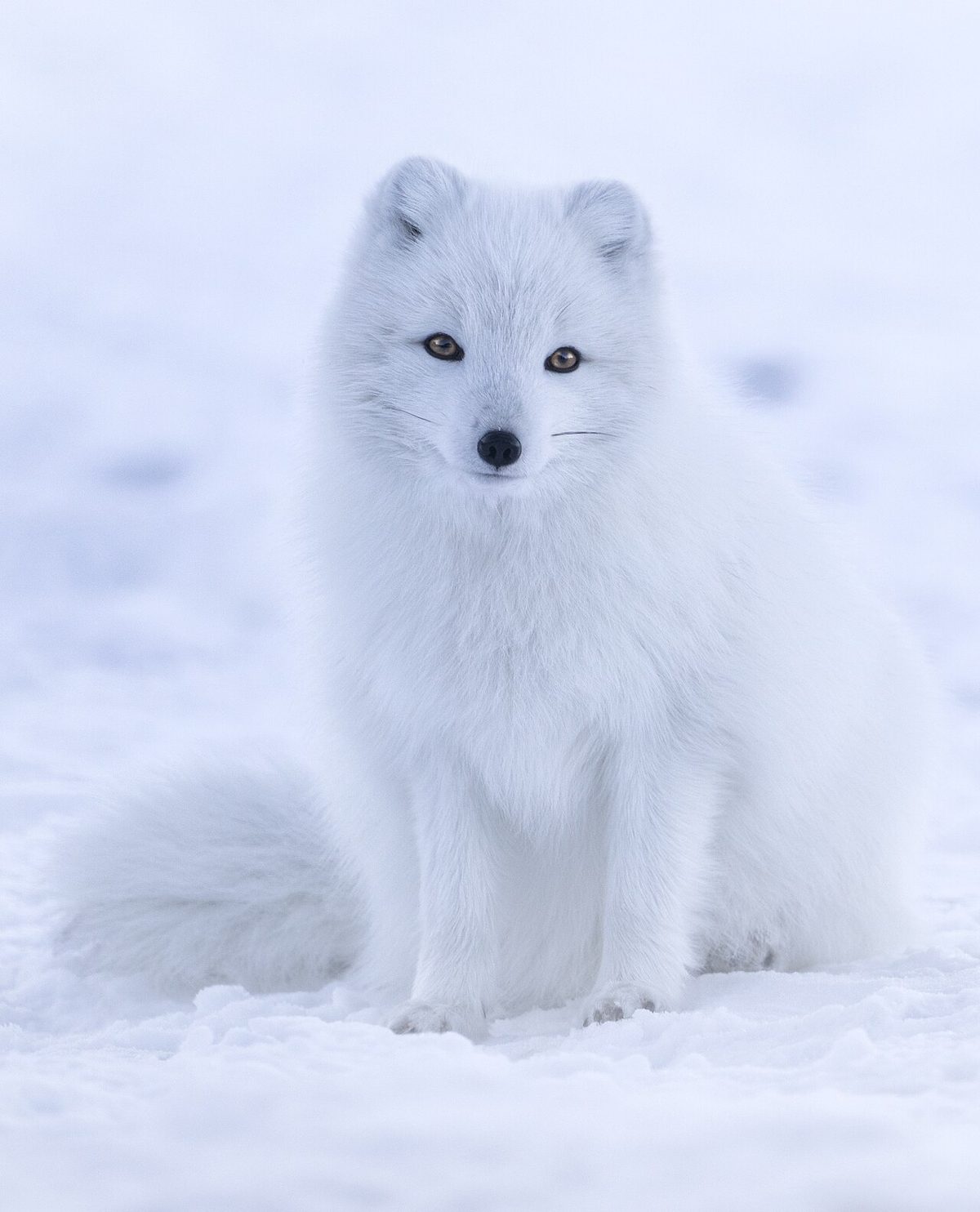
The Arctic fox (Vulpes lagopus) is a small wild fox native to the Arctic regions of the Northern Hemisphere, where it is common across the tundra. It is a true fox of the genus Vulpes, not a domestic dog, and it is built for cold: a rounded body, a short muzzle, short legs, small thick ears and a large, fluffy tail.
Range and habitat
The species lives all around the pole, in northern Europe, northern Asia and North America. Its range takes in Iceland, Fennoscandia, Svalbard, northern Russia, Greenland, Alaska and Canada as far south as Hudson Bay. It mostly lives on tundra and pack ice, though it also occurs in Canadian boreal forest, and it has been seen on sea ice close to the North Pole. It is the only land mammal native to Iceland.
The species as a whole numbers several hundred thousand animals and is listed as least concern. Two populations are in trouble: the one on Medny Island in Russia, hit by mange, and the one in Fennoscandia, which was hunted heavily for fur around the start of the 20th century. The larger red fox is also pushing into its range and kills Arctic foxes and their kits.
Appearance
The Arctic fox stands 25–30 cm at the shoulder, smaller than a red fox. Males average 3.5 kg and females 2.9 kg, and the tail is about a third of the body length.
It sheds twice a year. The winter coat is twice as long as the summer coat, and about 70% of it is fine underfur. There are two color morphs. The white morph is brown with paler sides and belly in summer and entirely white in winter. The blue morph is black, brown or gray in summer and only slightly lighter in winter. Around 90% of the world’s Arctic foxes are white; the blue morph is most common in Iceland and lives mainly on coasts, where dark fur blends with rock.
Behavior
Arctic foxes eat almost any small animal they can find: lemmings, voles, hares, birds, eggs, fish and carrion, along with berries and seaweed. Where lemmings live, they are the main prey, and the fox can hear them moving under the snow before pouncing through it. It also scavenges polar bear kills and caches eggs to eat months later.
The foxes stay active all winter and do not hibernate. They put on fat in autumn, sometimes adding more than half their body weight, and curl up tightly with the tail over the face to hold in heat.
Pairs are mostly monogamous and both parents raise the pups. They breed in April and May in large dens with many entrances, often dug into ridges and used by generations of foxes. Litters are the largest of any carnivore, from 3 up to 25 pups, and rise and fall with the lemming supply. Most foxes do not survive their first year. Their predators include golden eagles, wolves, wolverines, bears and red foxes.
Facts on this page were checked against Wikipedia and may have changed since.