Jämthund
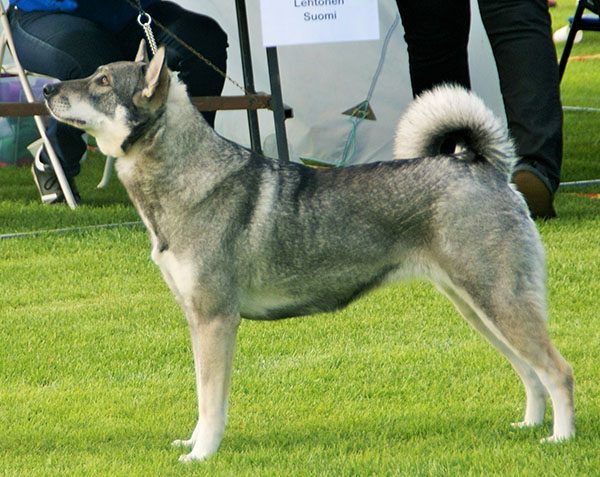

- Origin
- Sweden
- Type
- Spitz
- Size
- Large
- Height
- 52–65 cm (20–26 in)
- Weight
- 25–35 kg (55–77 lb)
- Coat
- Long, hard, close-lying double coat
- Colors
- Gray with light gray or cream muzzle, underside and legs
- Status
- Recognised by the FCI
The Jämthund, also called the Swedish Elkhound, is a spitz-type hunting dog from Northern Europe. It takes its name from Jämtland, a province in the middle of Sweden.
History
Spitz-type hunting dogs have been known across Scandinavia for centuries, and the Jämthund is one of them. Such dogs were used on a wide range of game, including bear, elk, wolf and lynx.
Until 1946 the Jämthund and the Norwegian Elkhound were treated as one breed. The Jämthund was recognized in its own right that year, thanks to determined work by Aksel Lindström and others. Both breeds are used to hunt large game such as moose and bear.
Genetic studies place the Jämthund in a maternal lineage found only in northern Scandinavia, which it shares with the Lapphunds, the Lapponian Herder and the other elkhounds. The lineage goes back to a cross between a male dog and a female wolf that took place after dogs were domesticated.
Appearance
The Jämthund has upright ears set well apart, a muzzle of medium to long length and brown eyes. The tail curls loosely over the back, neither thin nor tightly curled, and hangs straight down when the dog is relaxed. The double coat comes in shades of agouti gray, with a white or cream muzzle and cheeks and wolf-like markings.
Males usually stand 57 to 65 cm (22 to 26 in) and weigh 30 to 35 kg (66 to 77 lb). Females stand 52 to 60 cm (20 to 24 in) and weigh 25 to 30 kg (55 to 66 lb).
The Norwegian Elkhound is much shorter and stockier, carries its tail differently and has a black mask on the muzzle where the Jämthund’s is pale.
Temperament
The Jämthund is calm and affectionate with its family and settles easily at home after a day’s hunting. It is steady, not easily ruffled, and eager to learn and to please its owner. It can be dominant with other dogs and has a strong prey drive.
Facts on this page were checked against Wikipedia and may have changed since.