Shih Tzu
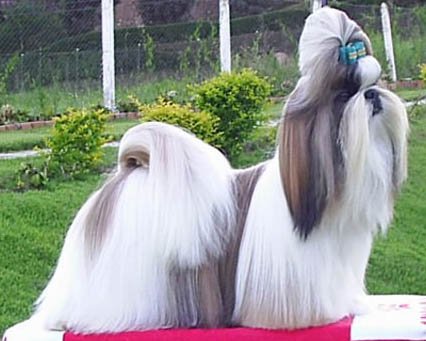

- Origin
- Tibet
- Type
- Toy and companion
- Size
- Toy
- Height
- 20–28 cm (8–11 in)
- Weight
- 4–7.5 kg (9–17 lb)
- Coat
- Long, soft double coat
- Colors
- Any color
- Life span
- 11–15 years
- Status
- Recognised by the FCI, AKC and The Kennel Club
The Shih Tzu is a toy dog that originated in Tibet and is believed to have been bred from the Pekingese and the Lhasa Apso. Its name is an old romanization of the Mandarin word for “lion”, because the dog was bred to look like the lion of traditional Asian art.
History
Shih Tzus were favorites of the Chinese court during the Ming dynasty, and were so prized that for years the Chinese would not sell, trade or give any away. Empress Dowager Cixi ran a breeding program for them, and court eunuchs bred them to win imperial favor.
The first dogs reached Europe in the 1920s and 1930s, arriving in England and Norway. Lady Brownrigg brought two to England in 1928, where the Kennel Club at first classed them as Apsos. After the dogs were gathered at Crufts in 1933, it became clear that the Tibetan Terrier, the Apso and the Shih Tzu were different breeds. The Shih Tzu Club wrote the first European standard in 1935. The Kennel Club recognized the breed on May 7, 1940.
American servicemen brought Shih Tzus home in the mid-1950s, and the American Kennel Club recognized the breed in its Toy Group in 1969. The Fédération Cynologique Internationale places it among the Tibetan breeds.
Whether the breed should be called Tibetan or Chinese is still argued over. In Buddhist legend the Shih Tzu is the small lion dog that accompanied the Buddha, and a white patch on the top of the head is called the Star of Buddha.
Appearance
The Shih Tzu is a sturdy little dog with a short muzzle and large, dark brown eyes. It should stand no more than 26.7 cm (10.5 in) at the withers and ideally weighs 4 to 7.5 kg (9 to 17 lb). The drop ears are covered in long hair, and the heavily coated tail curls over the back. The breed standard requires an underbite.
The double coat is long and soft. It may be any color; white with gray is often seen.
Care and health
The coat tangles and mats easily and needs brushing at least every two or three days. Hair grows inside the ears, and ear infections are common if the ears are not kept clean.
The short nose causes breathing difficulties. Dogs with brachycephalic airway obstruction syndrome struggle with exercise, sleep badly and are prone to heat stroke.
Eye problems are very common at any age. The large eyes are easily scratched, which can lead to ulcers; hair on the eyelids rubbing the eye causes watering and tear stains; and older dogs develop cataracts. A Japanese study found Shih Tzus made up 16 percent of glaucoma cases while forming 8.2 percent of the dogs examined. The breed is also prone to mitral valve disease, and a UK study found it four times more likely than other dogs to have reduced blood flow to the liver.
Studies of life expectancy have given 11 years and 12.8 years in the United Kingdom and 15 years in Japan.
Facts on this page were checked against Wikipedia and may have changed since.