Husky

- Type
- Sled dog
- Coat
- Thick double coat
- Colors
- A variety of colors
- Status
- A type of dog, not a single breed
Husky is a general term for a type of dog used in the polar regions, above all as a sled dog. It is not one formal breed. The word covers the traditional northern type, noted for hardiness and tolerance of cold, as well as several breeds and crossbreeds with husky in their names. Huskies still race, pull sleds for tour businesses and provide essential transport in some rural communities. They are also kept as pets, and groups find homes for retired racing and trekking dogs.
History
The word husky came into use in the mid to late 1700s. At that time the Arctic peoples of North America were called Esquimaux or Eskimo, with dialect forms such as Uskee and Huskemaw, and their dogs became the Huskies’ dogs and then simply husky dogs. Canadian and American settlers later applied the name to sled dogs imported from Chukotka in Russia, which gave rise to the name Siberian Husky.
Genetic studies show that several Arctic breeds, including the Siberian Husky and the Greenland Dog, carry ancestry from the extinct Taimyr wolf of North Asia. This mixing may have helped early dogs adapt to life at high latitudes.
Appearance
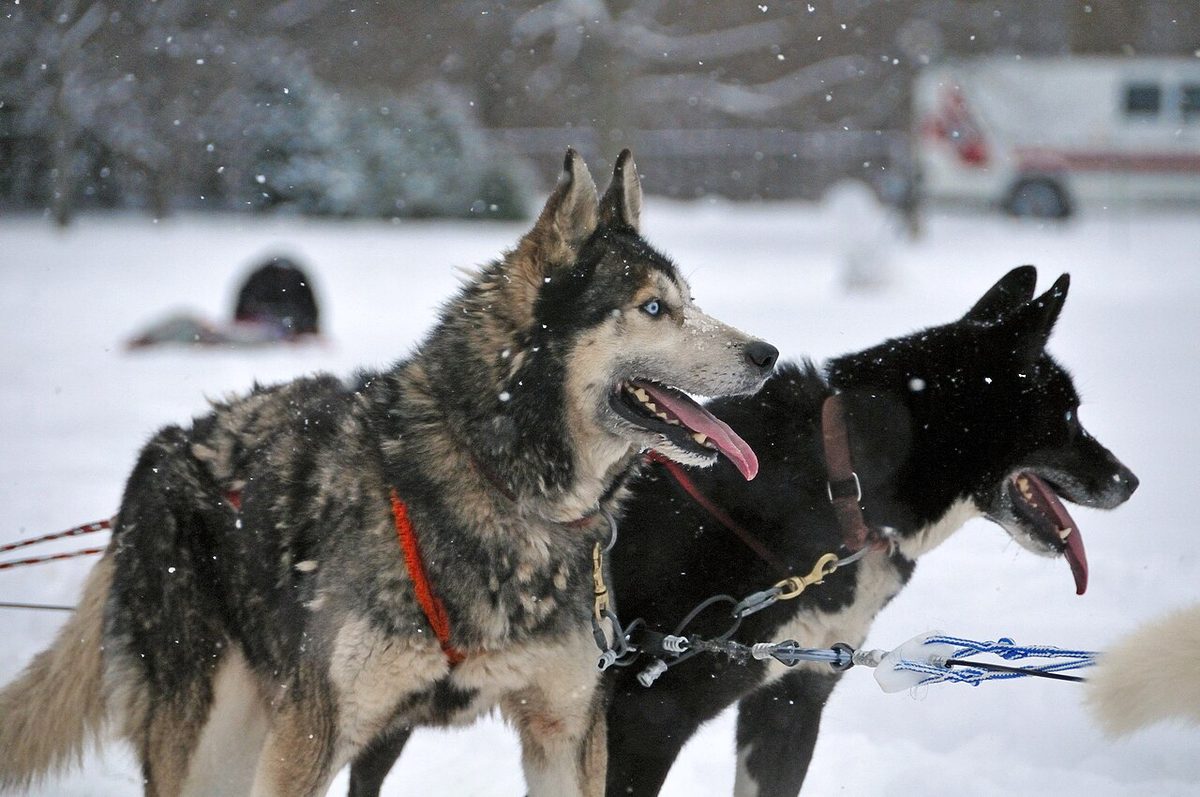
Huskies typically have a thick double coat in a variety of colors. The eyes are often pale blue, but may also be brown, green or yellow, or of two different colors.
The dogs that carry the name differ a good deal:
The Alaskan husky is a crossbreed bred purely for sled performance and the dog most used in racing. It usually weighs 18 to 34 kg (40 to 75 lb) and may have dense or sleek fur.
The Labrador Husky comes from Labrador in Canada and is most closely related to the Canadian Eskimo Dog, not the Labrador Retriever. Only an estimated 50 to 60 exist.
The Mackenzie River husky was a name for several overlapping populations of freighting dogs, made by crossing Yukon dogs with large European breeds such as St. Bernards and Newfoundlands during the Klondike Gold Rush.
The Sakhalin Husky is a critically endangered sled dog from Sakhalin Island, also used for hunting bear and for fishing. About 20 remain on the island.
The Siberian Husky descends from the sled dogs of the Chukchi people of Siberia and was brought to Alaska in the early 1900s. It stands 20 to 23.5 inches (51 to 60 cm) and weighs 35 to 60 pounds (16 to 27 kg).
Temperament
Huskies are energetic and athletic. They differ from many modern sprint sled dogs, which come from hound and pointer crosses and lack the same hardiness, and from laikas, which were developed mainly for hunting.
Care and health
The double coat protects against harsh winters, yet huskies can also live in warmer climates, shedding their undercoat to stay cool. They adjust their eating to the season, eating heavily in the cold and less in the heat. Huskies are more prone to uveitis, an inflammation of the eye, than most other dogs.
Facts on this page were checked against Wikipedia and may have changed since.