Plott Hound

- Origin
- United States
- Type
- Scenthound
- Size
- Large
- Height
- 51–64 cm (20–25 in)
- Weight
- 18–27 kg (40–60 lb)
- Coat
- Short to medium, smooth and glossy
- Colors
- Brindle in many shades; black with brindle trim; solid black
- Status
- Recognised by the UKC and AKC
The Plott Hound, often just called the Plott, is a large scenthound from the United States, originally bred for hunting bear. It has been the official state dog of North Carolina since 1989.
History
The breed is named for the Plott family. Johannes “George” Plott came from Germany to the colony of North Carolina around 1750 and brought with him five Hanover Hounds, dogs used in Germany for hunting boar and bear and bred over generations for stamina and courage. George Plott is said to have kept the strain pure, with no outcrosses. In 1780 the pack passed to his son Henry, who settled in Haywood County in the mountains of western North Carolina in the first decade of the nineteenth century and was responsible for the hound’s later development. A mountain range in the state, the Plott Balsams, also carries the family name.
Of the seven coonhound breeds registered by the United Kennel Club, the Plott is the only one that does not descend from the foxhound. It is also the only breed that originated in North Carolina. The United Kennel Club first registered it in 1946. The American Kennel Club recognized it in 2006, and Plotts were shown at Westminster in 2008.
Their tracking ability has found other uses: two Plott puppies were trained as K9 deputies for the Guilford County Sheriff’s Department in North Carolina.
Appearance
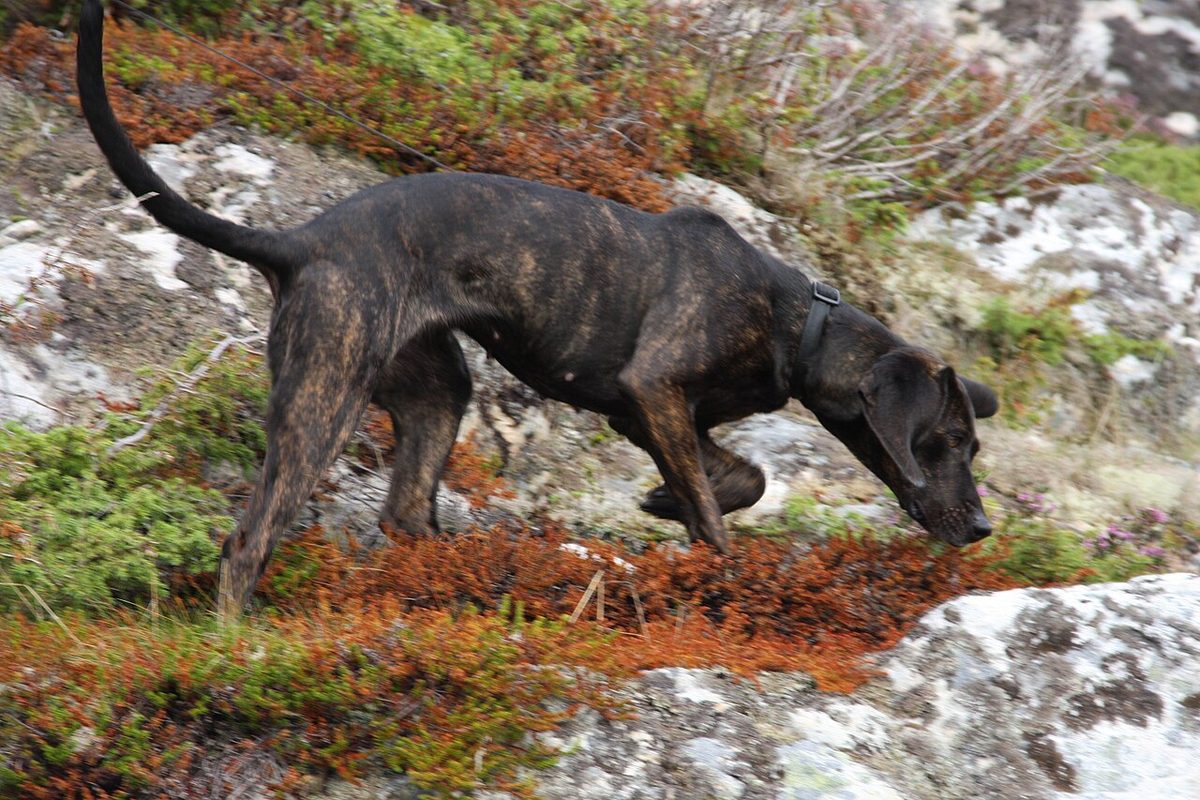
The Plott is an athletic, muscular, agile hound of medium build, strong but moderate, and it looks capable of speed and endurance. Unlike some hounds, it does not have loose, baggy skin. Males stand about 51 to 64 cm at the withers and weigh 23 to 27 kg; females are 51 to 58 cm and 18 to 25 kg.
The coat is fine to medium in texture, short or medium in length, smooth and glossy. Brindle is the breed’s hallmark, a fine streaked or striped pattern, and it is accepted in yellow, red, tan, brown, black, gray and slate-blue shades. Black with brindle trim and solid black are also allowed. A little white on the chest or feet is permitted, but white elsewhere is a fault. A hunting dog may carry an identification mark, which is not penalized in the show ring.
Facts on this page were checked against Wikipedia and may have changed since.