Alpine Dachsbracke
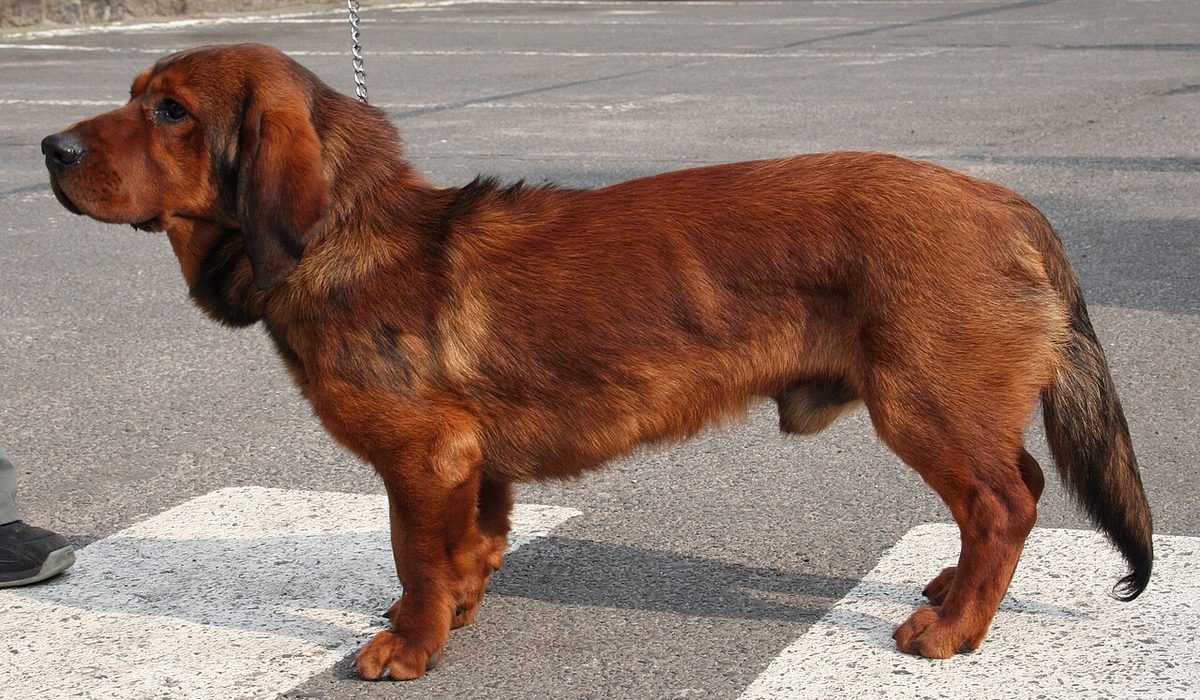

- Origin
- Austria
- Type
- Scenthound
- Size
- Small
- Height
- 34–42 cm (13.5–16.5 in)
- Weight
- 15–18 kg (33–40 lb)
- Coat
- Short, dense and smooth, with a thick undercoat
- Colors
- Dark deer red, or black with red-brown markings
- Status
- Recognised by the FCI and UKC
The Alpine Dachsbracke is a small, sturdy scenthound from Austria. It was bred to track wounded deer, and also boar, hare and fox, and it can follow a trail long after it has gone cold. It worked in rough terrain and at high altitude.
History
Like the other Bracke hounds, the Alpine Dachsbracke can be traced to the middle of the 19th century. Larger hounds were crossed with Dachshunds to bring the size down. The breed was once a favorite of German royalty, and in the 1880s Alpine Dachsbrackes went with Crown Prince Rudolf of Habsburg on hunting trips to Egypt and Turkey.
The Fédération Cynologique Internationale places the breed in Group 6, Scenthounds, in the section for leash hounds, alongside the Bavarian Mountain Scenthound and the Hanoverian Scenthound. The United Kennel Club in the United States is the only major kennel club in the English-speaking world to recognise it, in its Scenthound Group, and it uses the FCI standard.
Appearance
The Alpine Dachsbracke looks a little like a Dachshund, with a long body and short legs, though the legs are longer than a Dachshund’s. It is robust and big-boned, with strong limbs, tight toes and black toenails. The eyes are round and lively.
It stands 34 to 42 cm (13.5 to 16.5 in) at the withers and weighs 15 to 18 kg (33 to 40 lb). The ideal height is 37 to 38 cm for males and 36 to 37 cm for females.
The coat is short, dense and smooth, except on the tail and neck, with a very thick top coat and a dense undercoat lying close to the body. The preferred color is dark deer red, with or without a light scattering of black hairs. Black with red-brown markings on the head, chest, legs, feet and tail is also allowed, as is a white star on the chest.
Temperament
The Alpine Dachsbracke is fearless, friendly and intelligent. It makes a good companion, but it is a hunter first and is kept mostly by hunters. Most are very good with children and get on with other dogs and pets, though they can show the strong prey drive common in scenthounds.
Facts on this page were checked against Wikipedia and may have changed since.