Westphalian Dachsbracke
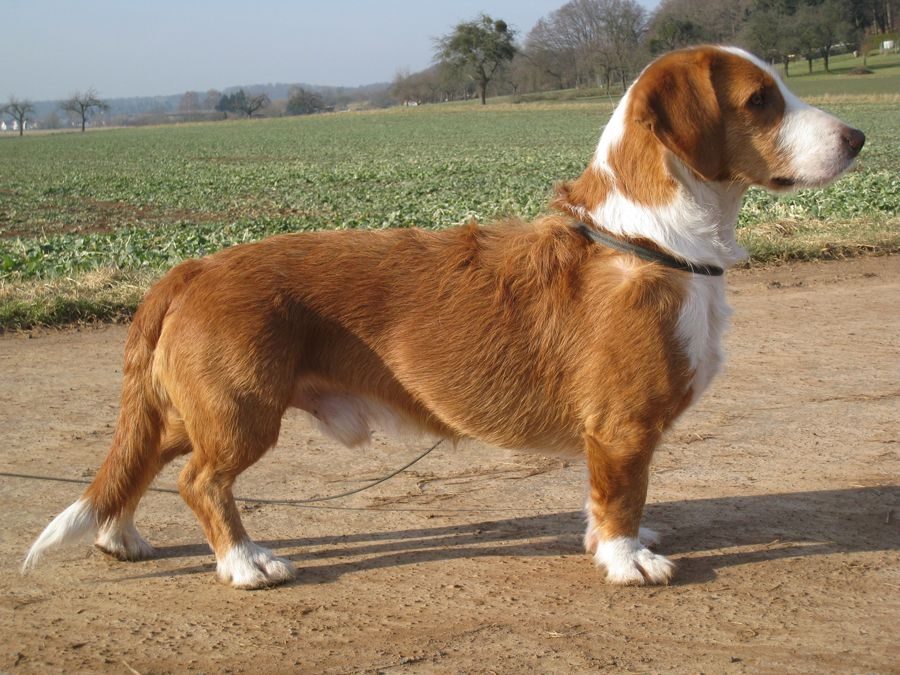

- Origin
- Germany
- Type
- Scenthound
- Size
- Small
- Height
- 30–38 cm (12–15 in)
- Coat
- Short
- Colors
- Red to yellow with a black saddle and white markings
- Status
- Recognised by the FCI and UKC; rare
The Westphalian Dachsbracke is a small, short-legged scenthound from Westphalia in Germany. It is a low-set version of the Deutsche Bracke, or German Hound, and it is the breed from which the Swedish Drever was developed.
History
The Westphalian Dachsbracke was first described in 1886, as a variety of the German Hound. The German kennel club recognized it under its present name in 1935. The Fédération Cynologique Internationale lists it among the small scenthounds. Of the major kennel clubs of the English-speaking world, only the United Kennel Club in the United States recognizes it.
The Drever was first registered in Sweden in 1910 under the name Westfälische Dachsbracke, and was renamed in 1947. It has since largely replaced its ancestor in the hunting field, and the Westphalian Dachsbracke is now seldom seen even in Germany.
Dachs is the German word for badger, and is used for short-legged hunting dogs. Bracke is the old German term for a scenthound. The name may reflect how the dogs were made: by crossing long-legged Bracken with the Dachshund to bring down their size. Bracken are usually worked in packs as running hounds on rabbits or foxes. Dachsbracken are used today mainly in Scandinavia and the Alps.
Appearance
The dog stands about 30 to 38 cm (12 to 15 in) at the withers. It is very like the Drever in size and looks, but about 2 cm shorter. The ears are drooping and of medium length, the legs short, and the long tail is set high and carried up. Compared with the Dachshund, the chest is narrower and the legs are longer.
The coat is short and usually tricolor: red to yellow with a black saddle, and the white Bracken marks. These are a white muzzle, chest, legs, collar and tail tip, and a blaze on the head.
Facts on this page were checked against Wikipedia and may have changed since.