Anglo-Français de Petite Vénerie

- Origin
- France
- Type
- Scenthound
- Size
- Medium
- Height
- 48–56 cm (19–22 in)
- Coat
- Short, dense and smooth
- Colors
- White, black and tan (bright or pale), or white and orange
- Status
- Recognised by the FCI and UKC
The Anglo-Français de Petite Vénerie is a medium-sized French scenthound that usually hunts in a pack. It belongs to the family of Anglo-French hounds, made by crossing French scenthounds with English foxhounds. “Petite vénerie” does not describe the dog’s size: it means the hunting of small game, which is the work this hound was bred for.
History
French hunting hounds have a very long history, and named local types were already on record in the 16th century. The Anglo-Français de Petite Vénerie came from crossing older Anglo-French hounds with the Harrier and the Poitevin, along with the Petit Gascon-Saintongeois and the Petit Bleu de Gascogne.
Unlike its larger relatives, it was never meant for big game. Its main use was in the chasse-à-tir, a form of hunting in which the pack, or sometimes a single dog, circles the quarry and drives it back toward a waiting hunter with a gun.
Until 1978 the breed was known as the Petit Anglo-Français, because it is the smallest of the Anglo-French hounds. The Société Centrale Canine recognises it in France, and the FCI accepted it internationally in 1983 in its scenthound group. Some dogs have been exported to North America, where the United Kennel Club also lists the breed among its scenthounds. In France it is still bred and kept mainly for hunting, not as a pet or a show dog.
Appearance
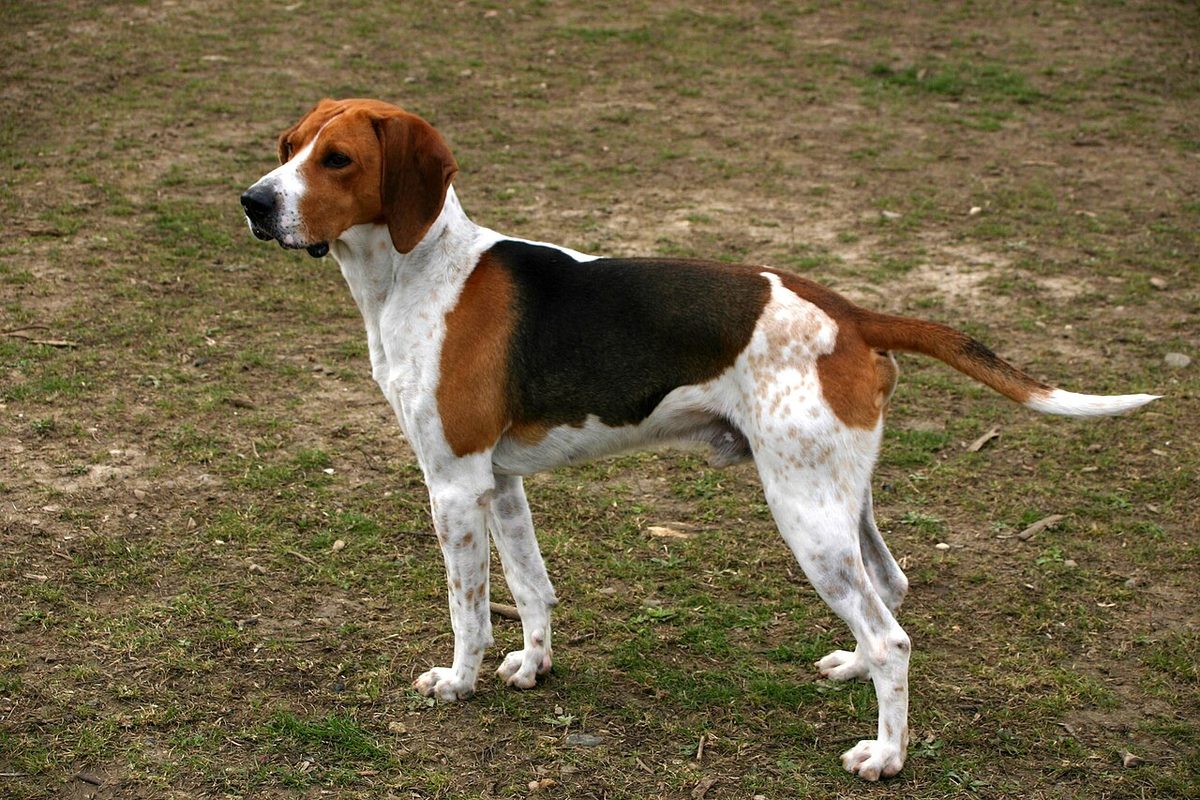
This hound stands 48 to 56 cm (19 to 22 in) tall. The coat is short, dense and smooth. Three color patterns are accepted: white and black with bright tan, white and black with pale tan, and white and orange. It has the drop ears typical of a scenthound.
Temperament
These are active working dogs, normally kept in packs in the countryside. For that reason they may not suit life in a city or as an ordinary family pet.
Care and health
No health problems particular to the breed have been documented. Like all dogs with hanging ears, it is prone to infections in the area under the ear flap.
Facts on this page were checked against Wikipedia and may have changed since.