Greyhound
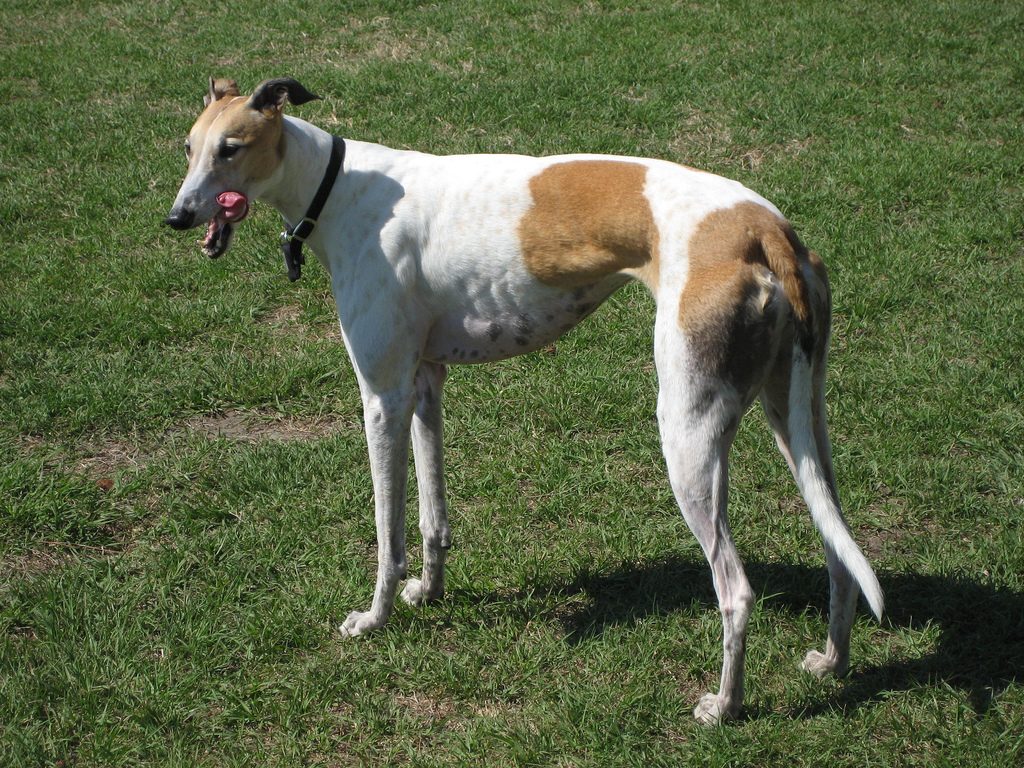

- Origin
- England
- Type
- Sighthound
- Size
- Large
- Height
- 66–76 cm (26–30 in)
- Weight
- 25–40 kg (55–88 lb)
- Coat
- Very short and smooth, with no undercoat
- Colors
- White, brindle, fawn, black, red or blue, alone or combined
- Life span
- About 11.5 years
- Status
- Recognised by the FCI and The Kennel Club
The Greyhound is a sighthound, an ancient kind of dog developed to hunt game by sight and speed. It was later used for organized coursing and for racing, and it is also kept as a show dog and companion. Its long legs, deep chest, flexible spine and slim build make it a sprinter: racing Greyhounds reach at least 69 km/h (43 mph).
History
Where the Greyhound began is not certain. Greyhound-like dogs appear in finds from Çatalhöyük in Turkey (6000 BC) and in Egyptian tombs from the Middle Kingdom onward. The first sighthound recorded in Europe was the vertragus, described by Arrian and linked to the Celts; it may be the Greyhound’s forerunner.
The oldest remains firmly identified as Greyhound come from the Chotěbuz fort in the Czech Republic and date from the 8th or 9th century AD. In the Middle Ages only rulers and nobles could own Greyhounds.
All modern pedigree Greyhounds descend from dogs recorded in private British stud books in the 18th century and public ones in the 19th. Until the early 20th century they were mainly hunting and coursing dogs. Track racing arrived in the 1920s and grew into a major betting sport before declining from the 1960s. Tracks have since closed in parts of the United States and Australia, and adoption programs have made the retired racer a familiar pet.
Appearance
The Greyhound is tall, muscular and smooth-coated, with a long tail, a long narrow head and the curving, S-shaped outline typical of sighthounds. Males usually stand 71 to 76 cm (28 to 30 in) at the withers and weigh 27 to 40 kg (60 to 88 lb). Females stand 66 to 71 cm (26 to 28 in) and weigh 25 to 34 kg (55 to 75 lb).
The coat is very short. About 30 color forms are recognized, made up of white, brindle, fawn, black, red and blue (gray), alone or in combination.
Temperament
Most Greyhounds are gentle, affectionate and sensitive, and they respond best to quiet handling. They often follow their owners from room to room. They seldom bark, and a 2008 University of Pennsylvania study ranked them among the least aggressive breeds toward strangers, owners and other dogs.
Some Greyhounds startle or snap if woken suddenly, and many sleep with their eyes partly open. The prey drive can be strong and recall weak, so cats and other small animals may be chased. Re-homing groups recommend keeping a Greyhound on a leash except in a securely fenced area.
Care and health
A 2024 study in the United Kingdom found a life expectancy of 11.5 years, against 12.7 for purebred dogs overall.
Greyhounds have no undercoat and little body fat, so they feel both heat and cold and need to live indoors.
Their physiology is unusual, and a vet who knows the breed is an advantage. Their livers break down barbiturate anesthetics poorly. Their blood test results differ from other dogs’ and can mislead anyone unfamiliar with the breed. They are very sensitive to insecticides, and many vets advise against pyrethrin-based flea products. Delayed bleeding one to two days after injury or routine surgery is more common than in other dogs.
Facts on this page were checked against Wikipedia and may have changed since.