Blue Lacy

- Origin
- United States
- Type
- Working
- Size
- Medium
- Height
- 43–56 cm (17–22 in)
- Weight
- 11–25 kg (25–55 lb)
- Coat
- Short, smooth and tight
- Colors
- Blue (gray), red or tricolor
- Status
- Not recognised by the major kennel clubs
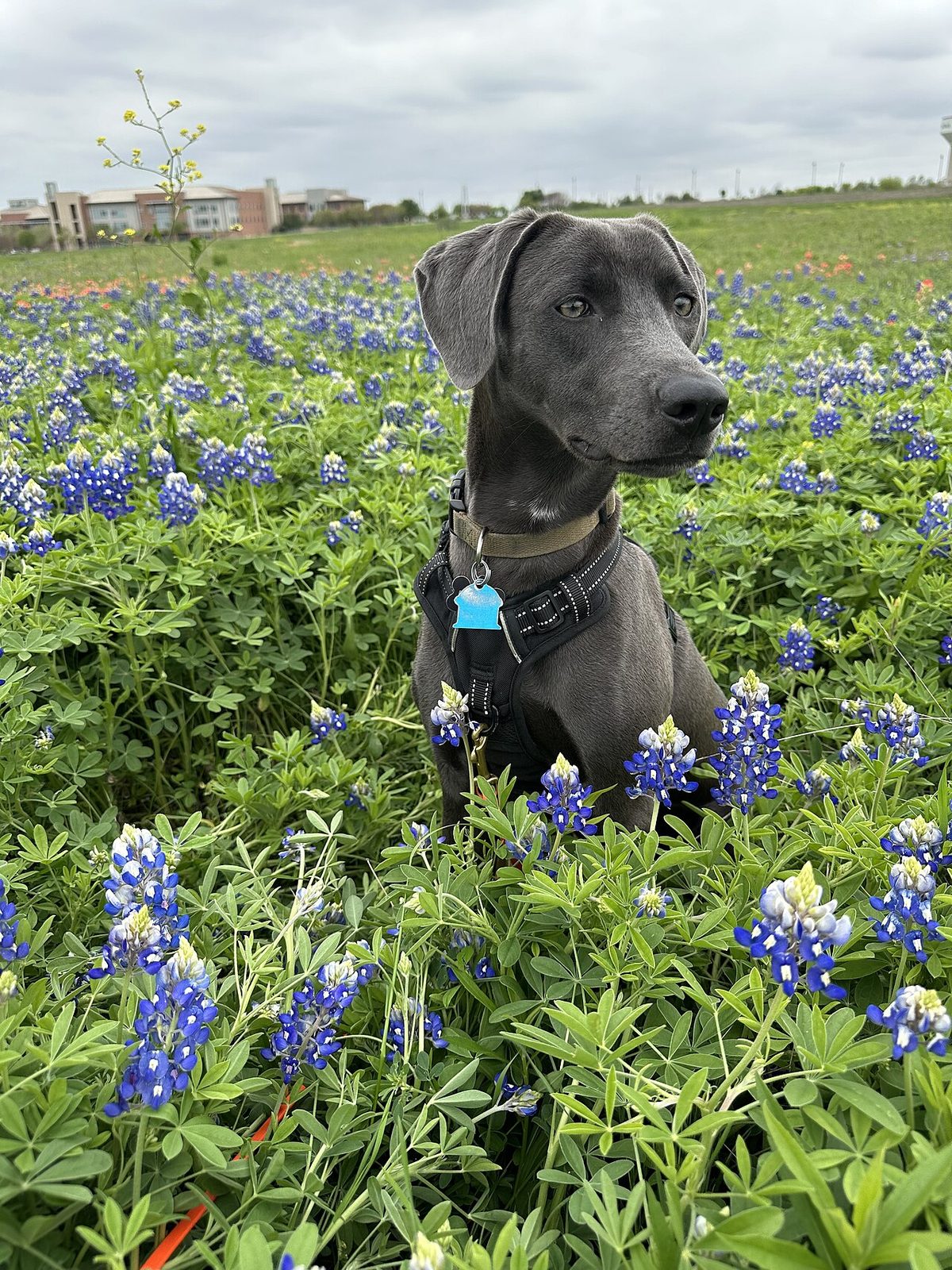
The Blue Lacy, or Lacy Dog, is a working dog that originated in Texas in the mid-19th century. It was bred as an all-purpose ranch dog, expected to herd cattle and free-roaming hogs, track and tree small game, and hunt deer and feral hogs. Most Lacys still live in Texas, though breeding populations are now being established elsewhere in the United States, in Canada and, most recently, in Europe.
History
The breed takes its name from the Lacy brothers, Ewin, Frank, Harry and George, ranchers who moved from Kentucky to Burnet County, Texas, in 1858 and brought their dogs with them. The dogs were said to be a mix of greyhound, scenthound and coyote. Their work with feral hogs earned them the local nickname of Lacy hog dog.
The Texas Senate first recognized the Lacy in 2001, honoring it as a true Texas breed. In March 2005 a resolution was filed in the Texas House proposing it as the state dog, partly to honor the Lacy family, who had also given granite from their ranch quarry for the State Capitol in Austin. Both chambers adopted it in May, and on June 18, 2005 the governor signed the legislation making the Blue Lacy the official State Dog Breed of Texas.
Appearance
Lacys are strong and fast, lightly built but well proportioned. They stand 43–56 cm (17–22 in) at the withers. Females weigh about 11–20 kg (25–45 lb) and males about 16–25 kg (35–55 lb), depending on height and condition. The Texas resolution quotes slightly different figures: 46–64 cm (18–25 in) and 14–23 kg (30–50 lb).
Despite the name, there are three accepted colors. Blues are any shade of gray from light silver to dark charcoal. Reds run from light cream to rust. Tricolors have a blue base with red trim and white, which may appear on the brisket and run from chin to groin, and on one or more paws. Too much white is discouraged, and white on the face or above the mid-line is a disqualifying fault. The eyes are sharp and alert, ranging from bright yellow to rich amber.
The coat is short, smooth and tight. A long or rough coat is a disqualification.
Temperament
Lacys are intelligent, intense, active and alert, with great drive and determination for working big game and difficult livestock. They learn new skills quickly and are easy to train. Young dogs may have too much energy and drive for small children.
This is a working breed that does much better with a job to burn off its energy. Traditional work includes herding, blood trailing, treeing game, running trap lines and hunting wild hogs, and in recent years Lacys have become known for tracking lost game animals. Agility and herding trials can stand in for ranch work.
Care and health
Lacys shed but need very little grooming. They are generally healthy and sturdy, bred to cope with rough terrain, hard work and both hot and cold Texas weather. Skin problems and food allergies can occur. Color dilution alopecia is very rare but has been seen in the breed.
Facts on this page were checked against Wikipedia and may have changed since.