Australian Terrier

- Origin
- Australia
- Type
- Terrier
- Size
- Small
- Height
- About 25 cm (10 in)
- Weight
- About 6.5 kg (14 lb)
- Coat
- Medium-length, shaggy, harsh double coat
- Colors
- Blue or silver with tan, or solid red or sandy
- Life span
- 11–12 years
- Status
- Recognised by the FCI and the ANKC
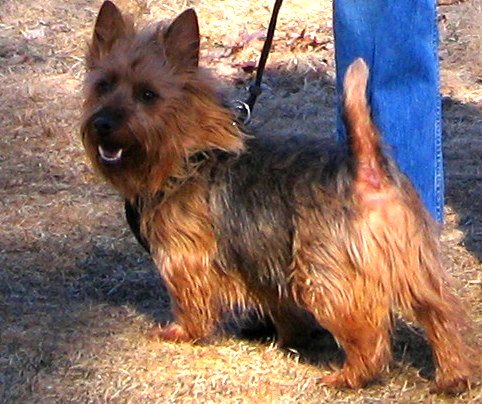
The Australian Terrier is a small, short-legged terrier with a harsh, shaggy coat. It was developed in Australia, though the dogs it descends from came from Great Britain, where their kind were kept to kill mice and rats.
History
Rough-coated terriers arrived in Australia from Britain in the early 19th century, and work on a local breed began around 1820. The dogs were first known simply as the Rough Coated Terrier. The Australian Terrier shares ancestors with the Cairn Terrier, the short-haired Skye Terrier and the Dandie Dinmont Terrier, and Yorkshire Terriers and Irish Terriers were also crossed in along the way.
The breed was officially recognised in 1850 and took the name Australian Terrier in 1892. It first appeared at a dog show in Melbourne in 1906, and was shown in Great Britain at about the same time.
Appearance
This is a small dog, about 25 cm (10 in) at the withers and around 6.5 kg (14 lb); females are slightly smaller than males. The double coat is of medium length, harsh and shaggy, and is not usually trimmed. The hair is shorter on the muzzle, lower legs and feet, and forms a ruff around the neck.
There are two color types. One is blue or silver with tan markings on the face, ears, body and legs, topped by a lighter topknot; the standard asks for a tan that is “never sandy”. The other is solid red, with a sandy variation. The tail was traditionally docked, to protect the dog from injury while working.
Temperament
The breed standard describes the ideal Australian Terrier as spirited and alert, with the natural aggressiveness of a ratter and hedge hunter. It ranks 34th in Stanley Coren’s The Intelligence of Dogs, which places it above average for working and obedience intelligence and suggests it is readily trained.
Care and health
The Australian Terrier is known to be susceptible to an autoimmune disease, Vogt-Koyanagi-Harada-like syndrome.
A 2002 survey by the Australian Terrier Club of America found that the leading causes of death were old age (17%), cancer (15%) and diabetes (13%). The conditions most often reported in living dogs were diabetes mellitus, luxating patella, ear infections, cataracts, flea allergy dermatitis, ruptured cranial cruciate ligament and hypothyroidism.
Life expectancy in that American survey was 11 years, with females living about a year longer than males. A survey of breed club members in the United Kingdom found a median of just over 12 years.
Facts on this page were checked against Wikipedia and may have changed since.